O Irão testa o poder da “geração K”

Os “pragmáticos” – grupo que inclui “reformistas, centristas e conservadores moderados” – conseguiram, aparentemente, suplantar a “linha dura” no Parlamento. Se na política interna se admitem ajustamentos, na política externa não deverá haver alterações. O apoio à Síria e a estabilidade de um Iraque de maioria xiita são questões consensuais de segurança nacional. (Ler mais | Read more…)

© Foreign Policy

A balançar no espelho retrovisor de um miniautocarro, acompanhando as curvas da estrada entre Yazd e Shiraz, um crucifixo dourado abençoa as viagens de Ali Reza Ghougassian.

Este motorista nascido no bairro cristão arménio de Nova Julfa, em Isfahan, nem precisaria de votar nas eleições de 26 de Fevereiro. Sabe que dois dos 290 deputados da República Islâmica do Irão serão membros da sua comunidade.

Têm mais sorte os cristãos arménios, como Ali Reza (e também os assírios e caldeus, zoroastras e judeus, cada uma destas minorias com direito a um lugar no Parlamento), do que os reformistas, como Mohammad Khatami.

A maioria dos seus candidatos, ao Majlis-e shoura-ye eslami e ao Majlis-e Khobregan (Assembleia de Peritos), que escolhe o Líder Supremo, foi vetada pelo Conselho dos Guardiões.

A participação do antigo Presidente na campanha foi interdita, depois de ter apoiado o Movimento Verde da oposição que, em 2009, ameaçou a legitimidade do Líder Supremo, Ali Khamenei.

Apesar das proibições e da repressão contra os seus partidários, Khatami conseguiu formar uma “Lista da Esperança”, coligação de grupos moderados apoiantes do Governo do actual Presidente, Hassan Rouhani.

Para se dirigir às massas, sobretudo à “geração K” – os jovens com menos de 25 anos, mais de 60% da população, que só conhecem a teocracia de Khomeini e Khamenei – usou redes sociais. O YouTube e uma nova aplicação móvel, Telegram, ainda não censurada e com mais de 20 milhões de utilizadores só no Irão.

© The New York Times

Foram os jovens que deram 70% dos votos a Khatami em 1997 e o reelegeram em 2001. Em 2005, desiludidos por ele não ter enfrentado Khamenei e todos os que boicotaram a sua promessa de mais liberdades individuais, a maioria faltou às urnas. E o messiânico Ahmadinejad chegou ao poder.

Para Khatami, a vitória espantosa de Rouhani, em 2013, foi o prelúdio para “um segundo passo”, que é afastar figuras ultraconservadoras como Ahmad Jannati, o ayatollah que lidera o Conselho dos Guardiões, e Mohammad Yazdi, o ayatollah que dirige a Assembleia dos Peritos. Rouhani convenceu Khamenei a aprovar negociações com o “grande Satã” (América) das quais resultou um acordo nuclear histórico. O compromisso pôs fim a três décadas de sanções internacionais.

“As eleições deste ano são muito importantes”, diz-me, em entrevista telefónica, Sanam Vakil, investigadora da Chatham House, em Londres. “Permitem avaliar se Rouhani vai ser capaz de continuar o programa de reformas. São, igualmente, um referendo ao acordo nuclear e um barómetro das mudanças que podem ou não acontecer.”

A iraniana que é também professora no pólo de Bolonha (Itália) da Escola de Estudos Internacionais Avançados de Johns Hopkins surpreendeu-se mais com o número sem precedentes dos que concorreram do que com o que foi excluído pelos “guardiões” (6.229 de um total de 12.123 para o Parlamento e 161 dos 861 para a Assembleia de Peritos).

“Foram impressionantes os meios usados pelos reformistas para garantir que um número significativo deles será eleito. A desqualificação poder ser entendida como sinal de que a ‘linha dura’ se sente ameaçada, mas não que esteja enfraquecida.”

“O sistema político no Irão é estável e equilibrado. O êxito da República Islâmica deve-se à partilha de poder por muitos e diferentes actores. Todos têm uma fatia para satisfazer os seus interesses.”

Farideh Farhi, outra académica iraniana, da Universidade do Havai, crê que Rouhani não terá dificuldade em obter um segundo mandato, mesmo que falhe os seus objectivos.

“O Presidente introduziu alguma abertura política e cultural, mas teve de se concentrar na economia, em muito mau estado, para que terminasse o embargo. O acordo nuclear foi aceite por uma maioria, e nada impede que Rouhani venha a ser reeleito. Os adversários não têm um candidato único que concorra contra ele em 2017.”

© Kaveh Rostamkhani

Se o Parlamento vai ser “um campo de batalha” entre vitoriosos e derrotados, a Assembleia de Peritos será uma incógnita. “Talvez os centristas melhorem a sua posição, mas não os imagino a deter o controlo”, observou Sanam Vakil.

“Terá algum dos eleitos influência suficiente para designar o próximo Líder Supremo? Não sabemos quando Khamenei vai morrer, e em que circunstâncias. Não sabemos como os diferentes grupos vão reagir quando sair de cena. Ele tentará, provavelmente, preservar o sistema, assegurando uma transição pacífica. Para isso, precisa que uma maioria concorde com o sucessor que ele escolher.”

Esta opinião é partilhada por Farideh Farhi, antiga professora de Política Comparada na Universidade de Teerão.

“Os cenários pós-Khamenei dependerão da transição. Ele precisa de facilitar um processo de escolha que reflicta o equilíbrio de forças interno. Se isso não acontecer, são mais prováveis a instabilidade e o conflito. Seja quem for, o herdeiro de Khamenei dificilmente exercerá tanto poder, pessoal e institucional, como o que ele acumulou nos últimos 27 anos.”

O que não deverá mudar é a política externa, salientou a ex-conselheira do Banco Mundial. “Actualmente, entre as várias facções, há consenso. A desintegração do Estado sírio é considerada uma ameaça, daí o apoio a Bashar al-Assad.”

“A estabilidade do Iraque e a existência, aqui, de um governo aliado de Teerão são vistas como fundamentais para a segurança nacional. Quanto à Arábia Saudita, é responsabilizada pela animosidade entre os dois países e pelo seu medo irracional do Irão.”

A guerra na Síria dura há cinco anos. Já causou mais de 250 mil mortos e milhões de refugiados/deslocados internos. O Irão enviou guardas da revolução para impedir a queda de Assad. Mais do que uma parceria religiosa – os alauitas em Damasco são uma subseita do Xiismo –, é uma aliança política e militar estratégica.

No Iraque, onde a maioria xiita conquistou o poder após a invasão americana em 2003, o Irão trava outra guerra. Contra o Daesh sunita, que emergiu das fileiras do antigo exército de Saddam Hussein. No Iémen, o Irão apoia os Houthis, também eles xiitas, contra os sauditas que invadiram o país para restabelecer um governo amigo em Áden.

“Se Khamenei morresse agora, não mudaria a unanimidade no que diz respeito a estas questões, a não ser que beligerantes regionais mudem também a sua postura”, refere Farideh Farhi.

“O acordo nuclear será irreversível enquanto o Irão tiver garantias de que não haverá nova aliança, como a que Obama formou para impor sanções. Um resultado eleitoral que confirme o Governo de Rouhani poderá ajudar a melhorar, no futuro, os laços com os Estados Unidos.”

“O Irão é, no entanto, apenas um dos lados da história. Quase todos os candidatos presidenciais americanos (com excepção de Bernie Sanders e incluindo Hillary Clinton) têm demonstrado antagonismo ostensivo ou suspeições profundas. Muitos anunciaram vontade de revogar as medidas que facilitaram o compromisso. Tudo dependerá, portanto, da dinâmica entre os dois países, e não apenas das acções de um deles.”

[Os chamados “pragmáticos”, o que a revista “Fortune” definiu como “amálgama entre reformistas, centristas ec onservadores moderados”, conquistaram todos os lugares que representam Teerão no Parlamento.

No total elegeram 83 deputados contra 64 da “linha dura”. No entanto, cerca de 1/4 dos 290 assentos só serão preenchidos após uma segunda volta em meados de Abril. Na eleição da Assembleia de Peritos, os “pragmáticos” também obtiveram bons resultados, conseguindo afastar dois “ayatollahs” ultraconservadores, Mohammad Yazdi and Mohammad Taghi Mesbah-Yazdi.]

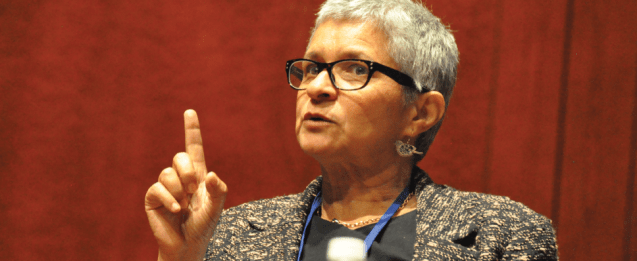
Sanam Vakil

Farideh Farhi

Khamenei: O dono de quase tudo

No Irão, só Deus é mais poderoso do que Ali Khamenei. O Vali-e Faqih (Líder Supremo) controla tudo. O Governo e o Parlamento. Os Pasdaran (Guardas da Revolução) e as Forças Armadas. Os tribunais e os serviços secretos. Os media e os imãs. As Bonyads, fundações que gerem milhões de dólares, e a milícia Bassij.

Nem todas as decisões são tomadas por iniciativa quase octogenário que, em 1989, sucedeu a Khomeini, o fundador da República Islâmica. Mas nenhuma é aprovada sem a sua bênção. O exemplo mais recente é o acordo nuclear que abriu caminho ao fim das sanções internacionais. Negociado pelo Presidente Hassan Rouhani, só foi assinado quando Khamenei consentiu.

Nascido em 1939, em Mashhad, no Nordeste, Khamenei é o segundo de oito filhos de uma família pobre de origem azeri. O pai era pregador e ele seguiu-lhe as pisadas. Aos cinco anos, iniciou os estudos religiosos num modesto hawza (seminário) e não mais parou. Formou-se nos grandes centros teológicos de Najaf, no Iraque, e de Qom, no Irão. Aqui se tornou discípulo de Khomeini, e começou a envolver-se nas revoltas contra o Xá Mohammad Reza Pahlavi.

Em 1964, quando Khomeini foi “deportado” para Najaf, Khamenei ajudou-o a propagar a doutrina de Velayat-e faqhi (governo do jurista), que deu autoridade temporal aos religiosos. Até ao final da década de 1970, a Savak prendeu Khamenei várias vezes.

Na cadeia, torturado e isolado por longos períodos, reforçou o ódio aos EUA e a Israel, porque a CIA e a Mossad treinaram a polícia política do Shahanshah (Rei dos reis).


????? ????? ?????????? ?? ????? ?????????? ??? ?????? ??????

A lealdade a Khomeini foi recompensada. Após o regresso do mentor do último exílio, em França, Khamenei foi nomeado ministro da Defesa, supervisor dos Pasdaran, líder das orações em Teerão. Em Junho de 1981, sobreviveu a um atentado bombista reivindicado pelos Mujahedin-e Khalq (Combatentes do Povo).

Ficou com um braço paralisado. No final do mesmo ano, depois da impugnação de um presidente, Abolhassan Bani Sadr, e do assassínio de outro, Mohammad Ali-Rajai, os Guardas da Revolução convenceram-no a candidatar-se ao lugar vago.

Foi um mandato de dois anos, dominado pela guerra contra Saddam Hussein. Nesse período, Khamenei era uma figura apagada, em comparação com o primeiro-ministro Mir Hossein Mousavi – um dos actuais líderes da oposição, há cinco anos sob detenção domiciliária –, com o presidente do parlamento, Ali Akbar Rafsanjani, e com o comandante dos Pasdaran, Mohsen Rezaee.

Khomeini morreu de ataque cardíaco, em 1989. Meses antes, renegara o herdeiro designado, Hussein-Ali Montazeri, crítico da execução sumária de milhares de dissidentes.

Como a Constituição exigia que o Líder Supremo fosse um Ayatollah al-Ozma (Grande Ayatollah ou Sinal de Deus), o texto foi revisto, requerendo que o sucessor tivesse apenas “competências de política e gestão”.

Num ápice, convencidos por Rafsanjani, os 88 membros da Assembleia de Peritos promoveram Khamenei de hojjat ol- Islam (Prova do Islão) a ayatollah e proclamaram-no (com 14 votos contra) sucessor de Khomeini. As elites religiosas em Qom sentiram-se ultrajadas.

Khamenei não tem as credenciais religiosas, o apoio popular (perdeu legitimidade nas legislativas de 2009, quando se colocou ao lado de Ahmadinejad) nem o carisma de Khomeini, mas foi com ele que o Irão voltou a ser uma potência regional. Graças às guerras no Iraque e na Síria.

Teoricamente, é a Assembleia de Peritos que nomeará o sucessor de Khamenei. Na prática, poucos duvidam que essa escolha está nas mãos dos Guardas da Revolução, força paramilitar da qual ele é comandante-supremo.

Quem será o futuro líder?

Hassan Khomeini: Fora de jogo

Ainda é cedo para identificar o herdeiro político e religioso de Ali Khamenei. Mas há já uma certeza: não será Hassan Khomeini. O neto do fundador da República Islâmica foi excluído das eleições para a Assembleia de Peritos, que tem competência para escolher o Líder Supremo. Formado no seminário de Qom, descendente directo de Maomé e guardião do legado do avô, como director do Instituto para a Compilação e Publicação das Obras do Imã, Sayyid Hassan Khomeini surpreendeu-se ao ver o nome chumbado pelo Conselho de Guardiões. O veto foi justificado com “preparação insuficiente para interpretar a lei islâmica”. A ijtihad é central no Xiismo, e Hassan Khomeini não é mujtahid, apenas hojatoleslam, dos primeiros graus na hierarquia. A razão principal terá sido a ligação aos reformistas. Ser hojatoleslam não foi impedimento para que Khamenei sucedesse ao ayatollah Khomeini – graças a Ali Akbar Hashemi Rafsanjani.

Rafsanjani: O pragmático

Rafsa

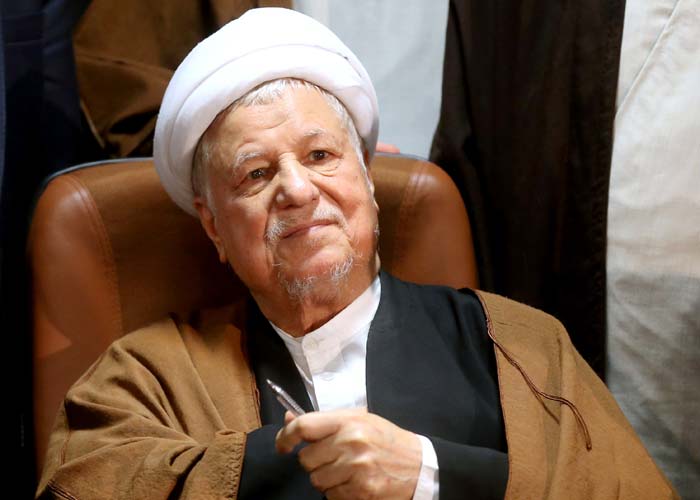
Antigo presidente da Assembleia de Peritos, Ali Akbar Hashemi Rafsanjani é novamente candidato. A sua ambição será afastar a “linha dura” dos principais pilares regime. Mais do que suceder a Khamenei, pretenderá desempenhar um papel decisivo na escolha do Líder Supremo. Vem defendendo o fim deste cargo, a favor de um coletivo de teólogos. Se controlar o Velayat-e faqhi (governo do jurista), poderá alterar, também, a favor dos “moderados”, a composição do Corpo de Guardas da Revolução e do sistema judicial. Outrora mais poderoso do que o ex-protegido, o milionário a quem chamam kusseh – palavra persa com significado duplo de “imberbe” e “tubarão” – mantém-se influente. Ainda presidente do Conselho de Discernimento, árbitro entre o Parlamento e Conselho de Guardiões, Rafsanjani foi sempre leal a Khomeini. Hoje é temido como a maior ameaça ao regime.

[Rafsanjani morreu de paragem cardíaca, aos 82 anos, em 8 de Janeiro de 2017.]

Shahrudi: A ponte

shahroudi

Nascido e formado em Najaf (Iraque), o ayatollah Mahmoud Hashemi Shahrudi é considerado o mentor de Khamenei. Em 1982, ajudou a criar uma das organizações de resistência a Saddam Hussein da qual emergiram duas milícias treinadas pelo Irão. De 1999 a 2009, foi chefe dos juízes, durante a presidência de Mohammad Khatami, e tentou reformar um sistema de má fama. Analistas admitem que possa vir a adoptar políticas internas e externas mais moderadas do que as de Khamenei, se lhe suceder.

Larijani: O carrasco

Larijani

Também nascido em Najaf, Sadeq Larijani deve o cargo de chefe dos juízes à obediência cega a Khamenei. Não seguiu o exemplo do sogro, ayatollah Hossein Vahid Khorasani, que não reconhece legitimidade ao Líder Supremo. Sadeq pertence à “linha dura”, tal como o irmão mais velho, Mohammad Javad (Ardeshir) Larijani, que dirige “a divisão de direitos humanos” do sistema judicial. São ambos responsáveis pela repressão de dissidentes. Outro irmão é Ali Larijani, presidente do parlamento cessante, um conservador que defendeu o acordo nuclear.

Mojtaba: O filho

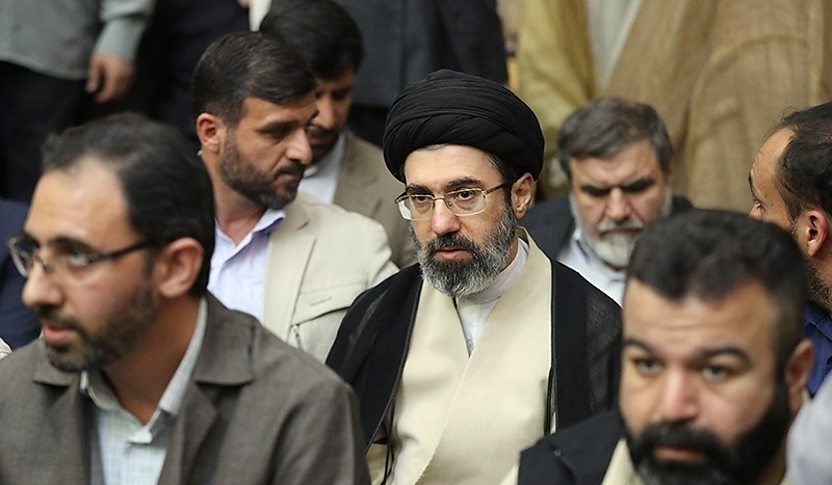
Das figuras mais temíveis no Irão, Mojtaba Khamenei exerce grande influência sobre a milícia Basij. Terá sido comanditário dos assassínios de opositores entre 1988 e 1998 e dos ataques contra o Movimento Verde, entre 2009 e 2011. Um dos seis filhos de Khamenei, Mojtaba tem como conselheiro, entre outros radicais, o ayatollah Mohammad Mesbah Yazdi, responsável pela perseguição aos Bahá’ís, a maior minoria religiosa do Irão. Para os Guardas da Revolução, é o candidato preferido a ocupar o lugar do pai.

Estes artigos, agora actualizados, foram publicados no jornal EXPRESSO em 27 de Fevereiro de 2016 | These articles, now updated, were originally published in the Portuguese newspaper EXPRESSO, on February 27, 2016

A “deskhomeinização” do Irão

O resultado das eleições de Fevereiro para o Parlamento e para a Assembleia de Peritos, com competência para designar o Supremo Líder, indicam que os “moderados” se impuseram à “linha dura”. Entre os vencedores – ainda que a sua candidatura tenha sido chumbada – estará um dos netos do fundador da República Islâmica, considerado um “reformista”. Na política interna, ele parece ganhar influência. Na política externa, os Guardas da Revolução ainda são quem mais ordena. (Ler mais | Read more…)

Dos 290 membros do Parlamento eleito em Fevereiro, pelo menos 14 serão mulheres © Behrouz Mehr | AFP | Getty

Dos 290 membros do Parlamento eleito em Fevereiro, pelo menos 14 serão mulheres
© Behrouz Mehr | AFP | Getty

A auto-estrada que liga Teerão a Qom cheira a água de rosas e a tulipas vermelhas. Uma fileira extensa de homens estende os braços tentando vender as flores aos que seguem para Behesht-e Zahra, o maior cemitério do Irão.

A cúpula e os minaretes do mausoléu de Khomeini dominam o horizonte. Mas o que a multidão procura são as campas dos shahid (mártires) da mais longa guerra convencional do século XX.

Neste “Paraíso de Zahra”, é visível quem mais ordena. Não são os mullahs que instauraram a República Islâmica, em 1979. São os Pasdaran (Guardas da Revolução), que sacrificaram vidas, para vencer o Iraque de Saddam Hussein, entre 1980 e 1988, e desde o fim dos combates controlam quase todas as esferas de poder.

Uma das esferas é o Conselho dos Guardiões, organismo não eleito que avalia a “lealdade e competências” dos que concorrem a órgãos eleitos: Parlamento e Assembleia de Peritos. Nas eleições de 26 de Fevereiro, dos 800 teólogos aspirantes a membros desta instituição – de onde deverá sair o próximo Líder Supremo – só 161 foram aprovados.

Também foram excluídos 40% dos 12.000 candidatos aos 290 lugares no Majlis, dominado há mais de uma década pelos ultraconservadores. De 3000 reformistas, só 100 foram qualificados.

Para choque de muitos, e surpresa do próprio, Hassan Khomeini está entre os candidatos à Assembleia de Peritos cuja candidatura foi chumbada e o recurso indeferido. Os 12 membros do Conselho dos Guardiões justificaram o veto com “conhecimento insuficiente da Ijtihad”, interpretação da lei islâmica.

No entanto, o neto do ayatollah que destronou 2500 anos de monarquia é um hojatoleslam formado no seminário de Qom, onde o avô mudou a doutrina xiita para dar aos religiosos poder temporal. O turbante negro e o título de sayyid identificam-no como descendente directo de Maomé.

O juízo primário para o afastamento terá sido a proximidade aos que querem reformar o regime instaurado pelo avô. [Hassan não recorreu da decisão de o excluírem. Encorajou um afluência maciça às urnas, e acabou por virar o feitiço contra o feiticeiro.]

“Os que foram desqualificados não são dissidentes, activistas, secularistas e outros que constituam ameaça ao poder teocrático”, anotou International Campaign for Human Rights in Iran, organização não governamental com sede em Nova Iorque. “Pelo contrário, são dignitários da república e responsáveis do sistema clerical.”

Iranianos celebram o acordo nuclear assinado entre o Irão e a comunidade internacional © Ebrahim Noroozi | AP

Iranianos celebram o acordo nuclear assinado entre o Irão e a comunidade internacional
© Ebrahim Noroozi | AP

Apesar da razia no seu campo, os chamados “centristas” não perderam o entusiasmo e coligaram-se. O Presidente Hassan Rouhani, eleito em 2013, e um dos candidatos à Assembleia de Peritos, criticou publicamente o Conselho dos Guardiões (“O Parlamento é a casa do povo, não a casa de uma só facção”) e apelou a uma votação em massa. Ele sabe que só vencendo os adversários pode assegurar um segundo mandato.

Há unanimidade em considerar históricas estas eleições. Porque se trata de um referendo que consolidará o acordo nuclear e o fim das sanções internacionais, ganhem os conservadores ou os moderados. E porque a próxima Assembleia de Peritos deverá escolher o rumo da nação, ao designar o herdeiro de Ali Khamenei, que ocupa o lugar de Khomeini desde 1989.

Khamenei tem 78 anos e uma saúde débil. Suspeita-se de uma doença terminal. Ficou com um braço imobilizado após um atentado bombista que, em 1981, decapitou quase toda a liderança do Partido da Revolução Islâmica. A sua escolha para Líder Supremo não foi consensual.

Era um hojatoleslam. Foi promovido à pressa a ayatollah, o que enfureceu as elites xiitas. Ali Montazeri, o sucessor designado de Khomeini, tinha caído em desgraça, por condenar a execução extrajudicial de prisioneiros políticos.

O responsável pela ascensão de Khamenei foi Ali Rafsanjani, o ex-Presidente que convenceu Khomeini a “beber o cálice de veneno” do cessar-fogo na guerra com Saddam. Rapidamente, o protegido se tornou rival.

Ao candidatar-se à Assembleia de Peritos, o milionário exportador de pistáchios, dos maiores apoiantes do Movimento Verde contra Ahmadinejad, ambiciona ser escolhido, e não apenas escolher o futuro “Guia”.

Khamenei deve a Rafsanjani legitimidade religiosa, mas foram os Guardas da Revolução que lhe ofereceram omnipotência. Em troca, deu-lhes rédea livre. E Behest-e Zahra é um dos lugares onde essa aliança é bem visível.

O ayatollah Khamenei e o general Qasem Suleimani (à direita): O comandante da Força Qods, unidade de elite dos Guardas da Revolução, é hoje dos "heróis vivos" do Irão. A sua fotografia compete visibilidade, nas parede, de Teerão, com a de Khomeini © Gabinete do Supremo Líder

Ali Khamenei, o Supremo Líder, e o general Qasem Soleimani (dir.): O comandante da Força Qods, “unidade de elite” dos Guardas da Revolução, é hoje um dos “heróis vivos” num país de shahid (mártires).  A sua fotografia parece concorrer, em visibilidade, nas paredes de Teerão, com a do Ayatollah Khomeini
© Gabinete do Supremo Líder

No cemitério que começou a ser construído no final dos anos 1950, antes de se tornar repouso de mártires, está o complexo de ShahreAftab (Cidade do Sol). Inclui o jazigo de Khomeini, uma universidade, um hotel de cinco estrelas, um hospital, um museu, um parque para “dezenas de milhares” de veículos, uma estação de metro e várias lojas.

O ayatollah ficaria escandalizado com os produtos à venda: calças de ganga de cintura descaída e leggings, hambúrgueres e pizzas, e até Coca-Cola americana (importada), não o refrigerante nacional que a imita.

Talvez ficasse mais indignado com a arquitectura extravagante e kitsch do seu jazigo. Contrasta tanto com a simplicidade extrema da casa térrea onde viveu em Teerão que não lhe custaria juntar-se aos que bradaram contra “um palácio de Hollywood”.

Na defesa do mega-projecto, juntaram-se a família do ayatollah e os Guardas da Revolução. Hassan Khomeini, o candidato vetado, dirige o museu e o Instituto para a Compilação e Publicação das Obras do Imã, legado do avô. No entanto, são pasdaran barbudos e não mujtahids (juristas) que controlam o recinto onde fiéis acariciam as grades do sarcófago, rezam, lêem ou dormem no chão coberto por riquíssimas carpetes persas.

Os poucos visitantes do mausoléu e os lojistas quase sem clientes parecem pertencer à mesma classe social desfavorecida dos numerosos grupos que se concentram junto às campas dos shahid.

Num dos acessos, está uma fonte que jorra água tingida de vermelho, para simbolizar o sangue dos mártires, tal como as tulipas à beira da auto-estrada. No caminho de regresso à capital, já não são flores que se vendem, mas hortaliças.

O controlo é, mais uma vez, assegurado pelos Pasdaran, que fazem sentir ostensivamente a sua presença. Distribuem chá quente, bolos e sumos. Sozinhas ou acompanhadas, mães, filhas e viúvas, mulheres de chador negro ajoelham-se e choram frente às pedras tumulares.

Algumas contêm os restos mortais de mais do que um familiar. Em cacifos verticais envidraçados guardam-se, amarelecidas pelo sol, fotos dos defuntos; exemplares do Corão; objectos pessoais, como anéis e brinquedos.

Muitas das vítimas pertenciam à Vahid-e Basij-e Mustazafin (Unidade de Mobilização dos Deserdados). E muitas eram miúdos, alguns com 10-12 anos, que desminavam as frentes de batalha. Eram os sapadores dos Guardas da Revolução. Na testa, levavam fitas amarelas com palavras de louvor a Khomeini. No peito, chaves de plástico para “abrir as portas do paraíso”.

Todas as famílias iranianas têm um ou mais mártires da guerra contra Saddam. Muitos deram nomes a ruas que antes homenageavam reis.

Ao “Paraíso de Zahra” chegam agora, também, shahid de outros combates, no Iraque e na Síria, onde os Guardas da Revolução protegem interesses, nacionais e pessoais. Vê-se pelas fotografias recentes, não apenas no cemitério mas em outdoors que se vão sobrepondo aos velhos cartazes com a cara de Khomeini.

No meio dos mortos há um “herói vivo” que simboliza a vontade de dominar o Golfo Pérsico: Qasem Soleimani [que mostrou a sua força ao anunciar a continuação do programa de mísseis balísticos, depois de Rouhani ter selado o acordo nuclear].

O misterioso general que comanda a Força Quds, a unidade de elite dos Pasdaran, responsável pelas operações militares na Síria e no Iraque, tem o seu rosto em destaque em Teerão: das estações de metro ao pórtico da antiga embaixada dos EUA, “o ninho dos espiões”, de onde desapareceram os graffiti de Morte à América.

Dia das eleições, 26 de Fevereiro, em Teerão © The Independent

Dia das eleições, 26 de Fevereiro, em Teerão
© The Independent

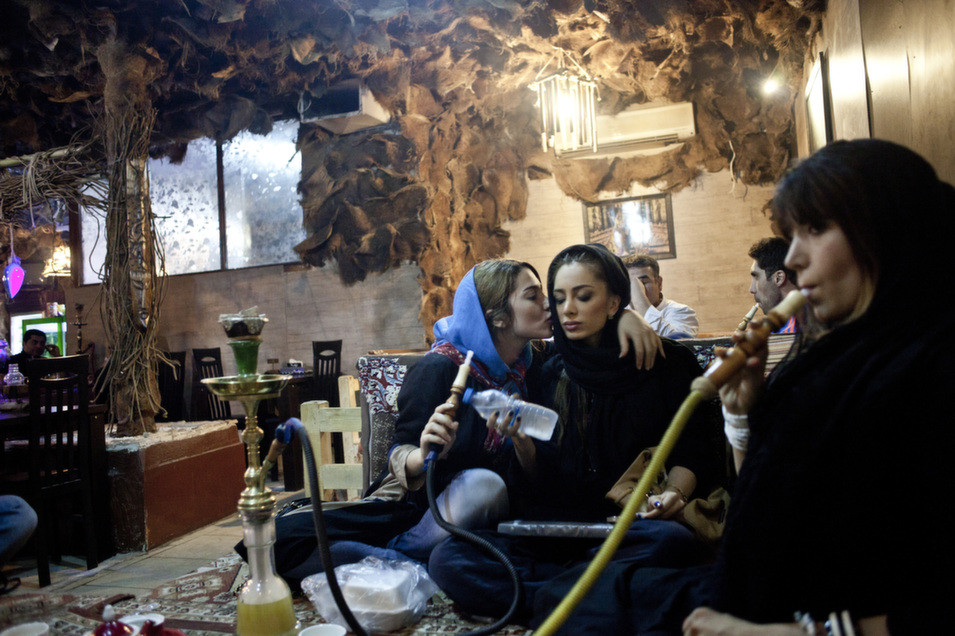
Os jogos de poder na capital não passam despercebidos aos iranianos. Sejam eles mullahs, responsabilizados por uma gestão económica desastrosa, ou jovens com menos de 30 anos, que constituem 60% dos quase 80 milhões de habitantes, mais interessados em empregos e liberdades individuais.

Em Isfahan, grandiosa cidade de Abbas I, o xá safávida que expulsou os portugueses de Ormuz, no século XVII, dois hojatoleslam confessam que já tiveram dias melhores.

“Hoje, só em Qom ou em Mashad [santuários xiitas], consigo movimentar-me livremente com este hábito – até posso andar de motorizada”, diz Maysan, 43 anos, puxando para cima a longa batina castanha. “Há preceitos para usar estas roupas. Não posso ir assim ao cinema, porque vou atrair as atenções.”

Mahdi, 26 anos, olha para o mestre a quem pedirá conselhos e sorri. Ele guardou a túnica e o turbante no escritório da mesquita, e esconde-os num saco plástico se quiser convencer os taxistas a transportá-lo.

Num passado recente, admite, não teria dificuldade em cativar audiências. No presente, tenta convencer crentes e não crentes a comprar livros de propaganda, para financiar as actividades religiosas.

Num café com Internet grátis, à entrada do bazar, o empregado de balcão Bahman, de 25 anos, não tem pena dos religiosos. Apenas lastima a sua sorte. “Licenciei-me em Artes e só consegui trabalhar aqui, a tempo parcial”, diz-nos. “Gostaria de estudar no estrangeiro, mas não posso. Estamos limitados em tudo. Vou dar o benefício da dúvida ao Presidente Rouhani. Porque estamos cansados de revoluções. Os protestos depois das eleições em 2009 desmoralizaram-nos. Perdemos a fé. Não acredito em religiões”

Em Kashan, também na província de Isfahan, outros dois jovens, Farshad e Kian, 22 e 26 anos, estão seguros de que “50% dos iranianos são ateus”.

Não sabem explicar esta percentagem, que será um palpite ou um desejo. “Não me interessa o que a sociedade exige de mim”, declara Farshad, de origem curda, ajeitando o blusão de cabedal e o chapéu. “Sou eu que defino as minhas regras, e uma delas é quebrar as regras.”

Kian, elegante num corpo moldado pelo ioga, diz que confia mais em Darwin do que em Deus. “Enquanto o governo islâmico tinha dinheiro, o povo adorava-o; agora, já nem olham para os retratos dos religiosos”, observa o professor que sonha estudar Física Quântica na Europa.

Que sistema serviria melhor o país? “Uma monarquia constitucional”, responde Farshad, sem hesitar. “O erro do Xá [Mohammad Reza Pahlavi] foi achar que devíamos imitar o Ocidente. Tentou acelerar a modernização do país, mas as pessoas não estavam preparadas. Hoje, com as redes sociais, há maior abertura ao mundo. Podem tentar isolar-nos mas já não conseguem.”

Uma família muito rebelde

Se fosse vivo, o que diria Khomeini ao ver a maioria dos 15 netos (oito homens e sete mulheres) entre os que tentam reformar o regime? Talvez desse razão à filha Zahra Mostafavi, que acusou os Guardas da Revolução de desobedecerem à ordem do pai: “Todos os homens de farda devem afastar-se dos jogos políticos.”

Hassan Khomeini

Hassan Khomeini


O neto mais carismático do fundador da República Islâmica, Hassan Khomeini, 43 anos, é a prova de que, hoje, são os “homens de farda” e não os mullahs quem mais ordena. O Conselho dos Guardiões, dominado pelos Guardas da Revolução, concluiu que o hojatoleslam formado no seminário de Qom “não tem conhecimento suficiente da lei islâmica” para integrar a assembleia que irá designar o sucessor do actual líder, Ali Khamenei. O que impediu a desqualificação de Hassan é o seu apoio aos reformistas do regime. Em 2002, defendeu um professor acusado de “insultar o Islão”, dizendo que cada geração “deve ter a sua própria interpretação da religião”. Foi logo acusado de “corrupção”. Em 2008, declarou: “A presença das armas na política levará ao fim de todo o diálogo.” Em 2009, apoiou o candidato da oposição às legislativas, Mir Hossein Mousavi, e faltou à tomada de posse do contestado Presidente Mahmoud Ahmadinejad. Em 2011, afirmou: “O extremismo é o maior perigo.”

Zahra Eshraghi

Zahra Eshraghi


Rebelde como a tia Zahra Mostafavi, a feminista Zahra Eshraghi, 52 anos, não aprova sequer o véu imposto pelo avô. “Não deve ser obrigatório”, declarou a activista de lenços coloridos e calças de ganga, cunhada do ex-Presidente Mohammad Khatami. Em 2004, foi impedida de concorrer às legislativas. Em 2006, inscreveu o nome na petição Um Milhão de Assinaturas, exigindo a revogação de leis que discriminam as mulheres. “O Governo ilude-se ao pensar que o pensamento único e a limitação das escolhas dos eleitores impedirão ameaças externas”, disse à agência IPS. Durante os protestos do Movimento Verde contra Ahmadinejad, em 2011, Zahra e o marido, Mohammad-Reza Khatami, foram detidos por apoiarem a oposição. Em 2013, ambos regozijaram com a vitória do pragmático Hassan Rouhani.

Naeimeh e Ali

Naeimeh Eshraghi


Ali Eshraghi, com a mulher e as filhas


Irmãos de Zahra, a engenheira petroquímica Naeimeh e o engenheiro civil Ali Eshraghi são também reformistas. Em 2011, Naeimeh apoiou uma campanha de mulheres contra o véu obrigatório. Defende negociações directas com os EUA, “porque não há inimigos eternos”, e tem acusado o ayatollah Ali Khamenei, sucessor do avô, de obstruir a democracia. Quanto a Ali Eshraghi, o irmão mais novo, foi impedido de concorrer às legislativas em 2008. A decisão nunca foi explicada, mas ele contou à Associated Press, que os vizinhos foram questionados sobre se rezava e jejuava. “Atacam-nos porque se desviaram do caminho traçado pelo nosso avô”.

Ali, Yasser e Hossein
Yasser Khomeini © Direitos Reservados | All Rights Reserved

Yasser Khomeini

Hossein Khomeini © Direitos Reservados | All Rights Reserved

Hossein Khomeini

Casado com uma neta do Ayatollah Ali al-Sistani, a mais importante autoridade religiosa xiita no Iraque, Ali Khomeini está ligado a duas famílias rivais. Sistani jamais aceitou o conceito de velayat-e faqhi (governo do jurista) e o estatuto de Marja-e Taqlid (Fonte de Emulação) do teólogo de Qom. Ali Khomeini passou grande parte da infância com o avô no exílio mas, em 2009, apoiou Mousavi, avisando que o regime “se tornaria menos legítimo” se não se reformasse. O irmão Yasser Khomeini deu o voto a Mehdi Karroubi, outro candidato da oposição. O mais controverso de todos os netos é Hossein Khomeini, teólogo como Ali e Yasser. Em 1981, foi preso por dizer que a teocracia é pior do que foi o reinado do Xá. Em 2003, defendeu para o Irão uma intervenção militar americana como a do Iraque: “A revolução do meu avô devorou os seus filhos.”

O Ayatollah Khomeini e alguns dos seus familiares mais próximos
© trackpersia.com


Estes artigos, agora actualizados, foram publicados originalmente na revista VISÃO, em 25 de Fevereiro de 2016 | These articles, now updated, were originally published in the Portuguese news magazine VISÃO, on February 25, 2018

Iran and America unfreeze their history

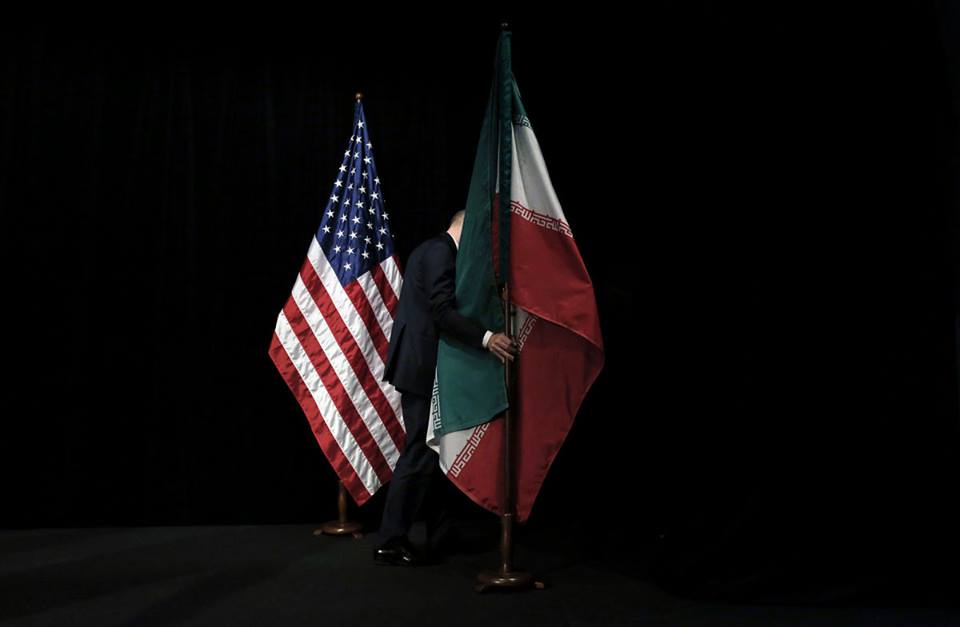
The Islamic Republic is complying with a deal to restrict its nuclear program. International sanctions are beginning to be lifted. It was a symbolic date to end a “cold war”: January the 16th. On the same day in 1979, the last Shah left for exile. In an interview, former prisoner Omid Memarian tells me that, after Obama, Tehran intends to “continue the path of diplomacy with anyone who will be elected to the White House”. (Read more…)

© Carlos Barria | AFP | Getty

© Carlos Barria | AFP | Getty

An iron gate leading to the splendid Madrasah-ye Madar-e Shah, or School of the Mother of the King, in Isfahan, is half open. Those who enter this seminary built under Safavid Sultan Hossein have to footstep the red and white stripes of the American flag painted on the floor. But what we read on it looks like a harbinger of a new era: “With U.S.A.”. The word “Down almost goes unnoticed to those leaving the building.

This Iranian theological center is one of the few spaces where we spot slogans against “the great and the little Satan” – America and Israel – coined by Khomeini, the founder of the Islamic Republic.

A few months ago, the entrance to women was still banned here. Now, they pay a ticket before covering their bodies with a chador. The religious severity was probably loosed by the need for revenue (the current government has been cutting funding to hardline institutions).

Signs of a “more relaxed atmosphere” are not only apparent in, or exclusive of, the city that Iranians call Nesf-e jahan (“Half of the World”). The New York Statue of Liberty still has a face of death in the walls of the former US embassy in Tehran.

However, there is almost no trace of the slogans painted when and after revolutionary students occupied what they called the “Nest of Spies” by holding 52 diplomats as hostages, for 444 days, in 1979-1980.

On the streets of Iran, whether in the capital, in Shiraz, city of the poets Hafez and Sa’adi, or in Yazd, Zoroastrians and Jews’ sanctuaries, foreign visitors, or “Guests of God”, are cheered with sincere enjoyment: “Welcome to my country!”

Iranian Foreign Minister and foreign ministers of major world powers stand for a photo after reaching a historic nuclear accord in 2015
© Dragan Tatic

Asphyxiated by a severe economic crisis, the result of a long international embargo mixed with an internal corrupt mismanagement, Iranian society is openly challenging the regime. And in order to survive, the regime had to make concessions.

“When it comes to Iran’s politics, nothing is irreversible”, said, in an interview, Omid Memarian*, an Iranian-American journalist, human rights activist and former prisoner. “The only thing that is irreversible is the people’s willingness for change.”

“Iranian people have, repeatedly in massive numbers, expressed that they are tired of being isolated from the outside world, tired of petty politics and of hardliners increasing repression. In its attempts to normalize relations with the international community, and in particular the US, the Iranian Government is just voicing people’s demands.”

It was a victory of diplomacy, and so history was made on the 16th of January – the same day when, in 1979, the Shah Mohammad Reza Pahlavi left for exile. It was the end of 2,500 years of monarchy.

The International Atomic Energy Agency (IAEA) confirmed that Iran has met its obligations under a landmark nuclear deal with six world powers, signed in July 2015. And the lifting/suspension of sanctions was immediately announced.

In a parallel process (negotiated in secret for 14 months), Tehran and Washington have agreed to an exchange of prisoners. Previously, American sailors who had bee captured by the Pasdaran (Guardians of the Revolution), after entering Iranian waters, were promptly released.

This was surprising since the resolution of similar incidents on previous occasions had been sorely deferred. The merit was given to John Kerry, American Secretary of State, and to Javad Zarif, the Iranian Foreign Minister, who have been establishing friendly ties.

In this January 18, 2016 handout photo provided by the Washington Post journalist Jason Rezaian (left), freed after 18 months of incarceration in an Iranian prison, reunites with his wife Yeganeh Salehi, mother Mary Rezaian and brother Ali Rezaian, on Jan. 18, 2016 ©Martin Baron—Washington Post | AFP |Getty Images

The Washington Post Tehran Bureau Chief, Jason Rezaian (left), freed after 18 months of incarceration in an Iranian prison, reunites with his wife Yeganeh Salehi, mother Mary Rezaian and brother Ali Rezaian, on January 18
© Martin Baron | Washington Post | AFP |Getty Images

After the release of Jason Rezaian, The Washington Post Tehran Bureau chief, and of four other American Iranians arrested for “espionage” and other charges, Omid Memarian felt “really happy for them”, but he could not avoid to remember his own captivity.

“Prison changes people’s lives forever,” he grieved. “I was kidnapped in 2003 for a month [in the judiciary complex], and spent another month in Evin Prison [where Rezaian was held for 545 days], both in Tehran.”

“My case was similar to all Iranian Americans who were released from prison [on January 16] as there was no real charge in my case. The captors had political purposes in their mind and by arresting people like me they enhanced their leverage. During the interrogation I went through a lot of physical and mental pressure.”

Accused of “spreading a dark picture image of the country and stoking women’s issues” while working with pro-reform newspapers and blogs, Memarian endured solitary confinement, during his 55 days in detention. His head was bashed against a wall repeatedly.

The “moderate” Mohammad Khatami was then President but he was not in a position to help, since his policies were being boycotted, at all levels, by the hardliners.

Under death threats if he denounced the torture to which he was subjected, Memarian was forced to confess that he accepted foreign bribes, and had to apologize to the Supreme Leader, Ayatollah Ali Khamenei. It was a humiliation broadcasted by the national TV.

Memarian’s parents tried to visit him every day while he was in prison. In one of those days, when he was escorted to a court hearing, his mother “pleaded with the guards for a few minutes to embrace” her son. He took the opportunity to talk about his conditions, and asked her to contact human rights organisations abroad.

Iranian President Hassan Rouhani, left, and Italian Premier Matteo Renzi talk to eachother ahead of their joint press conference following their meeting at the Campidoglio, Capitol Hill, in Rome, Monday, Jan. 25, 2016. Rouhani arrived Monday in Rome on the first state visit to Europe by an Iranian president in almost two decades, eager for foreign investments after the lifting of international sanctions. © Gregorio Borgia | AP

In the first state visit to Europe by an Iranian president in almost two decades, Hassan Rouhani (left) and Italian Premier Matteo Renzi talk to each other ahead of a joint press conference following their meeting at the Campidoglio, Capitol Hill, in Rome, January 25
© Gregorio Borgia | AP

Unlike Khatami, who was snubbed by Ali Khamenei, the current Iranian President has been “blessed” by Ayatollah Khomeini’s successor. The end of sanctions, Hassan Rouhani proclaimed, “is the beginning of a new era”. In the US, his counterpart Barack Obama hailed “a rare opportunity to follow a new path – a different and better future.”

Counting the advantages of a sanctions relief – the embargo restricted trade and investment, exports of oil and gas –, Rouhani promised that his country will not use “for hostile purposes” more than 50 billion dollars of funds that were seized in foreign institutions and are going to be recovered.

“It should be noted that the arrest of journalists and activists in Iran is political”, said the recipient of a Human Rights Defender Award (2005), the highest honor given by Human Rights Watch. “No one of these people did anything wrong in the first place.”

“They were arrested as a pawn for the revolutionary guards that, from the beginning, had an eye on doing a prisoners swap. From previous experiences, they knew that sooner or later Americans would come to the negotiation table, and they finally did. It’s really inhumane.”

While happy that Rezaian and other prisoners are now released, Omid Memarian did not approve Obama’s involvement in the swap.

“It makes traveling to Iran risky for foreigners as the IRGC [Guardians of Revolution] might do the same thing, as they know that it works! International pressure by the media and civil society is the best way to embarrass the government and judiciary in Tehran, rather than being involved in a process that just emboldens belligerent forces within the Iranian intelligence forces.”

The embargo was not yet fully lifted, as the US. American companies are still forbidden to invest in the prospection of Iranian oil, a lucrative business already being exploited by European companies.

America has also imposed new sanctions on Iran’s ballistic missile program, for “violating UN resolutions”. Last October, the Iranians tested one of these missiles, but denied they are capable of delivering nuclear warheads.

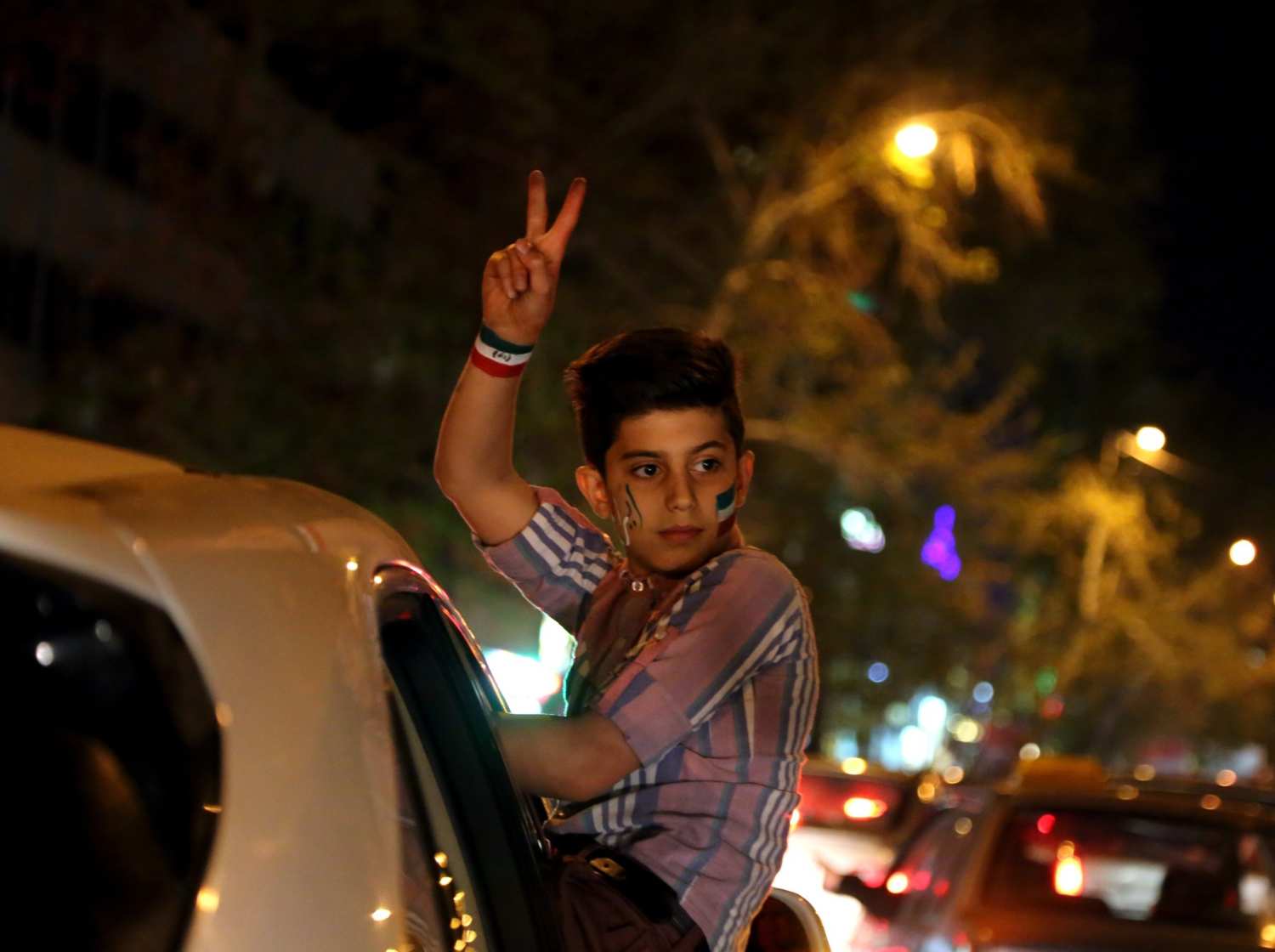
Iranians celebrated in Tehran after the framework was announced. Photo: © Fatemeh Bahrami | Anadolu Agency | Getty Images

Iranians celebrated in Tehran after the nuclear deal framework agreement reached in 2015 between the Islamic Republic and the P5+1 group of world powers
© Fatemeh Bahrami | Anadolu Agency | Getty Images

Omid Memarian explains: “Iran finds itself surrounded by powerful countries that are armed to their teeth by world powers. Many in Iran and also in the Arab world believe that Iran’s nuclear program was not targeted towards Israel, even though Iran’s rhetoric looked like that was the case, but towards Saudi Arabia.”

“It was more to balance the power. With all the arms sales to Saudis and Pakistanis and Turkey, Iran wants to show strength.”

“It was also a sign from hardliners in Iran to the moderate government that, despite the nuclear deal, they still continue their programs, as they believe that nothing has changed between Tehran and Washington, except the signing of a deal that many people in the Revolutionary Guards find troubling. They think Iran compromised so much and in return didn’t receive that much.”

“There is a serious power struggle inside the country, between the moderate government and hardliners who control both the military, the judiciary and Iran’s state TV and radio”, added Omid Memarian.

Nevertheless, “the more diplomacy works and the more Iran finds out that it could be more effective in the region in pursuing its national interests by continuing the current path, the more hardliners will be pushed back.”

“It also shows that the Iranian government doesn’t have that much power. It walks on a very thin rope, which could be stronger if its diplomatic efforts receive attention and bring impact.”

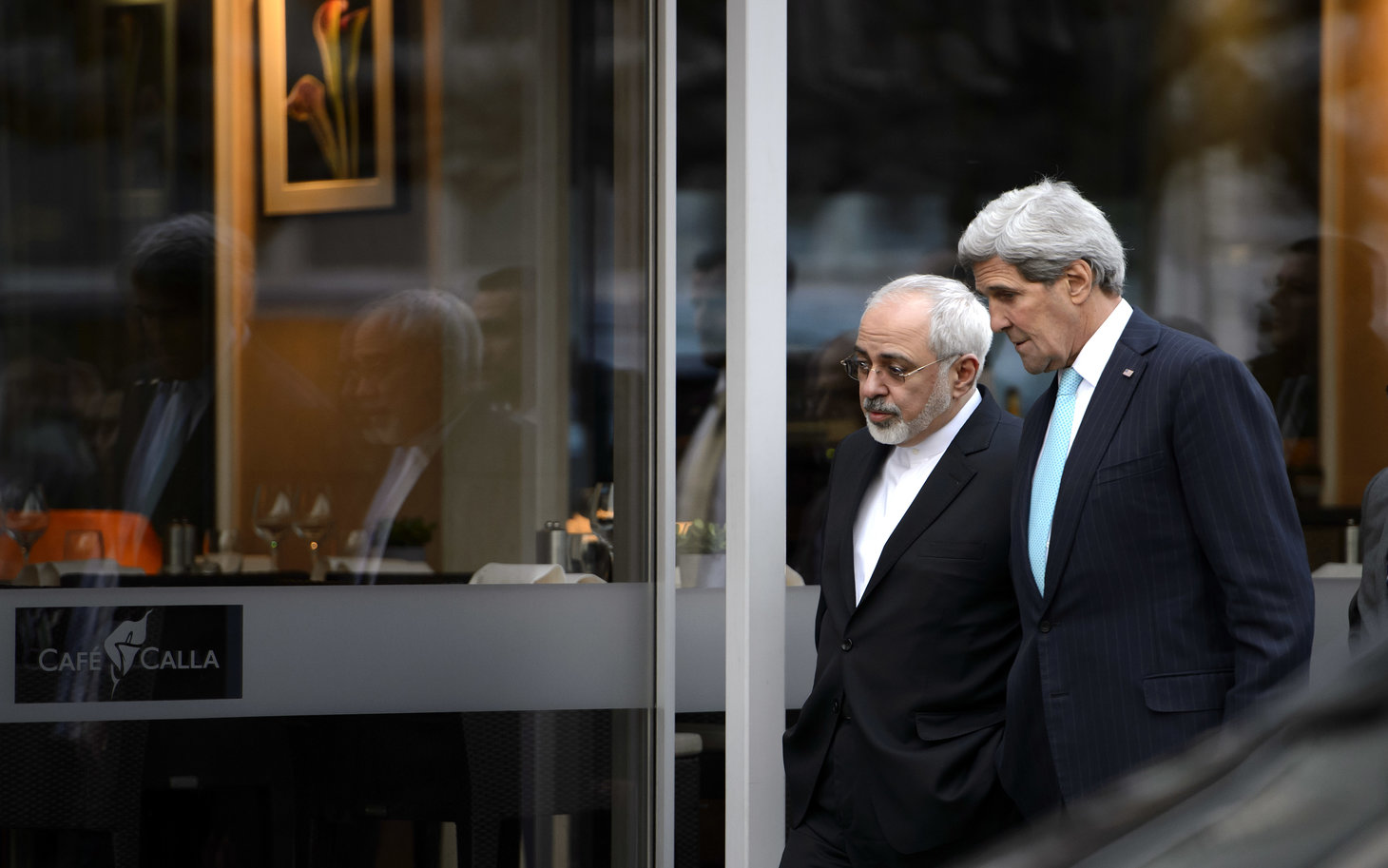
FILE - In this file photo taken Wednesday, Jan. 14, 2015, U.S. Secretary of State John Kerry, right, speaks with Iranian Foreign Minister Mohammad Javad Zarif as they walk in Geneva, Switzerland, ahead of the next round of nuclear discussion. Zarif has borne the brunt of the hard-liners' most recent criticism, particularly over a walk he took with Kerry during negotiations in Geneva in January 2015. © Keystone, Martial Trezzini |AP

January 14, 2015: U.S. Secretary of State John Kerry (right) speaks with Iranian Foreign Minister Mohammad Javad Zarif as they walk in Geneva, Switzerland, before the historical nuclear deal
© Keystone, Martial Trezzini | AP

“After Barack Obama, it would be a different era”, acknowledges the former prisoner. “We have to see who will be the next president, a Republican or a Democrat. However, I believe the Iranian government intends to keep the course of events in a way that it continues the path of diplomacy with anyone who will be elected to the White House.”

“Iran’s stance in the region and the world highly depends on its relationship with the US, and the current government in Tehran fully realizes this reality. With all the rivalries with Saudis and other Arab countries in the Persian Gulf region, coupled with Iran’s struggles in Iraq and Syria, better relations with the US would be very helpful and would be great for Iran’s national interests.”

“Relationships are a matter of necessity,” according to Omid Memarian. “Iran needs to change the course. Both economically and politically, and more importantly, because of issues related to international security. So it’s for the good of the regime in Iran.”

“It’s the realisation that by continuing animosity with the US, Iran loses more and more in the region and the world as a whole. The new course of diplomatic efforts by the government will surely make investors confident about Iran’s stability. It will make Iran a much more active and impactful regional and global player and that would enhance Tehran’s influence in resolving regional conflicts and disputes.”

“Iran is serious to become a more influential power in the region and leaders in Tehran have realised that they can’t do much if they exclude the US, or the US excludes them. So yes, Iran will not jump into more disputes with Saudis, and will try its best to neutralize tensions – unless something unexpected happens. We will see that Iranians will tone down, however they might keep their tough rhetoric.”

[*Omid Memarian  born and raised in Tehran, is a journalist, analyst and Deputy Director at the Center for Human Rights in Iran. He has worked with civil society and media organizations in Iran for the past 18 years. Prior to emigrating to the US in 2005, he was the editor in chief of the Volunteer Across Quarterly, a pioneering Iranian magazine dedicated to civil society issues.

A World Peace Fellow at the UC Berkeley Graduate School of Journalism (2007-2009), he is the recipient of the 2005 Human Rights Defender Award, the highest honor given by Human Rights Watch. His writings have appeared in the New York Times, Los Angeles Times, Wall Street Journal and Time.com. He lives in Brooklyn, New York.]

Omid Memarian, journalist and Deputy Director at Center for Human Rights in Iran, based in Brooklyn, New York
© National Public Radio

This article, now updated, was originally published in the Portuguese newspaper EXPRESSO, on January 22, 2016

Irão e América descongelam a sua história

A República Islâmica cumpre o acordo nuclear e as sanções começam a ser levantadas – excepto as que visam os seus mísseis. Foi simbólica a data para pôr fim a uma “guerra fria”: 16 de Janeiro. No mesmo dia, em 1979, o último Xá partia para o exílio. Omid Memarian, um ex-prisioneiro, diz que, depois de Obama, Teerão continuará alinhado com Washington, para ser potência regional. (Ler mais | Read more…)

© tennessean.com/picture-gallery

© tennessean.com/picture-gallery

O portão de ferro que dá acesso à pomposa Madrasah-ye Madar-e Shah, ou Escola da Mãe do Rei, em Isfahan, está semiaberto.

Quem entra no seminário construído no Irão safávida de Sultan Hossein (séc. XVII-XVIII) ainda pisa as faixas vermelhas e brancas da bandeira norte-americana pintada no chão. Mas o que lê é como um prenúncio de uma nova era: With U.S.A (“Com os EUA”). O Down (“Abaixo”) quase passa despercebido a quem sai do edifício.

Este centro teológico é um dos raros espaços onde ainda se encontram slogans contra o grande e pequeno “satã” – América e Israel – cunhados por Khomeini, o fundador da República Islâmica. Há poucos meses, ainda era proibida, aqui, a entrada a mulheres. A necessidade de receitas (o actual governo tem vindo a reduzir o financiamento a estas instituições), afrouxou a severidade religiosa.

Sinais de “abertura” não são aparentes nem exclusivos da cidade que os iranianos chamam Nesf-e jahan ou “Metade do Mundo”.

Em Teerão, a Estátua da Liberdade ainda tem o rosto da morte nos murais da antiga embaixada dos EUA. No entanto, quase desapareceram as palavras de ordem dos estudantes revolucionários que, em 1979-1980, ocuparam o “Ninho dos Espiões”, mantendo 52 diplomatas reféns durante 444 dias.

Nas ruas, seja em Shiraz, cidade dos poetas Hafez e Sa’adi, ou em Yazd, santuário de zoroastras e judeus, os visitantes, “Convidados de Deus”, são acolhidos com alegria sincera: Welcome to my country! (Bem-vindo ao meu país!”

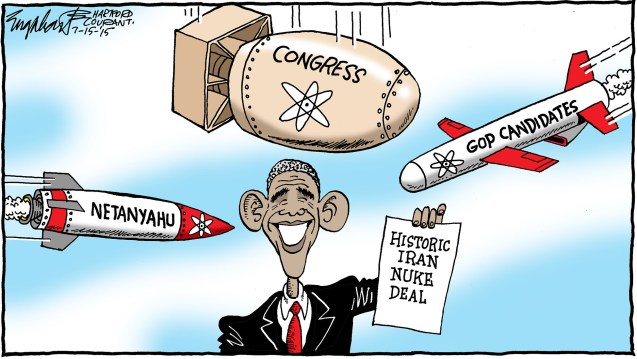
© Hartford Courant

Asfixiada por uma grave crise económica, resultado de um longo embargo internacional e de uma gestão corrupta e danosa, a sociedade iraniana desafia o abertamente regime. E o regime, para sobreviver, teve de ceder.

“Ao tentar normalizar laços com a comunidade internacional e, em particular, com os EUA, o Governo iraniano está apenas a ser porta-voz das exigências populares”, diz-me, numa entrevista, Omid Memarian, jornalista iraniano-americano, activista social e antigo prisioneiro.

“Os iranianos têm demonstrado, repetidamente, que estão cansados do seu isolamento, de uma política mesquinha e da crescente repressão por parte da linha dura.”

Venceu, portanto, a diplomacia e foi histórico o que se viveu a 16 de Janeiro último – o mesmo dia em que, em 1979, o Xá Mohammad Reza Pahlavi partia para o exílio. Chegara ao fim 2500 anos de monarquia.

A Agência Internacional de Energia Atómica (AIEA) confirmou que o Irão está a cumprir um acordo nuclear assinado, em Julho de 2015, com os cinco membros efectivos do Conselho de Segurança da ONU e com a Alemanha (P5+1). Seguiu-se o anúncio do fim e/ou suspensão de sanções internacionais.

Num processo paralelo (negociado em segredo durante 14 meses), Teerão e Washington anunciaram uma troca de prisioneiros. Antes haviam sido libertados – com uma rapidez espantosa – marinheiros norte-americanos capturados por pasdaran (guardas da revolução), após entrarem em águas iranianas. O mérito foi atribuído aos responsáveis pelos Negócios Estrangeiros dos dois países, John Kerry e Javad Zarif, que nos últimos meses estabeleceram laços de amizade.

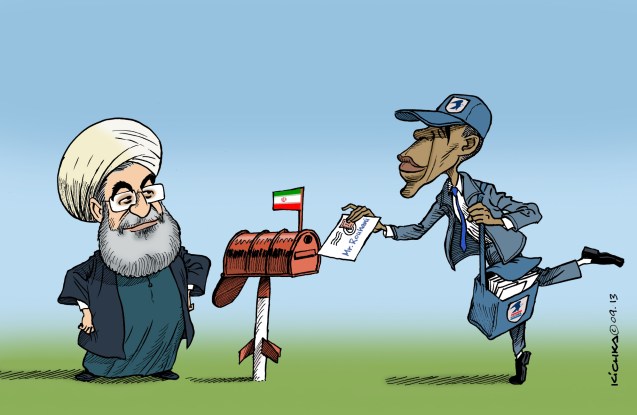
© Michel Kichka

Ao ver em liberdade o seu colega Jason Rezaian, chefe da delegação do jornal The Washington Post em Teerão, e mais quatro iranianos-americanos detidos por “espionagem” e outras acusações, Omid Memarian lembrou-se do seu próprio cativeiro.

“A prisão muda a vida das pessoas para sempre”, lamentou. “Eu fui raptado em 2003. Estive preso durante dois meses, um deles na prisão de Evin [em Teerão, tal como Rezaian]. Os captores tinham objectivos políticos e prendiam pessoas só para lhes servirem de trunfos. Durante o meu interrogatório sofri muitos abusos físicos e mentais.”

Acusado de “difundir uma má imagem do país” quando colaborava com jornais e blogues pró-reforma, de nada lhe valeu que o Presidente fosse o “moderado” Mohammad Khatami. Memarian foi mantido em isolamento e espancado.

Ameaçaram-no de morte se denunciasse os maus-tratos a que foi sujeito. Numa confissão transmitida pela televisão estatal, foi obrigado a dizer que aceitou subornos de estrangeiros e a pedir desculpas ao Supremo Líder, Ayatollah Ali Khamenei.

Os pais de Memarian tentavam visitá-lo todos os dias. Num desses dias, quando ele era escoltado para uma audiência em tribunal, a mãe pediu aos guardas que o deixassem abraçar o filho. Ele aproveitou o gesto para revelar o que se passava e pediu-lhe que contactasse organizações de direitos humanos.

“Importa salientar que a prisão de jornalistas e activistas no Irão é política”, frisou repórter que, em 2005, foi galardoado com o Human Rights Defender Award, o mais importante prémio desta ONG. “Os que foram agora libertados nada fizeram de errado.

“Foram detidos para servirem de peões aos Guardas da Revolução que, desde o início, estavam de olho numa troca de presos. Com base em experiências passadas, sabiam que, mais cedo ou mais tarde, os EUA iriam sentar-se à mesa das negociações, e isso aconteceu. É muito desumano!”

“Fico feliz por eles terem sido libertados, mas acho que jamais deveria ter havido uma troca. Pressões internacionais, por parte dos media e da sociedade civil, são a melhor maneira de embaraçar o Governo e o sistema judiciário, e não alinhar com um processo que só reforça os serviços de espionagem.”

Ao contrário de Khatami, renegado por Khamenei que o considerava uma ameaça, o actual Presidente iraniano, Hassan Rouhani, conta com a bênção do sucessor de Khomeini. O fim das sanções, proclamou, “é o início de uma nova era”. Nos EUA, o homólogo, Barack Obama, saudou “uma oportunidade rara de seguir um novo caminho – um futuro diferente e melhor”.

Iranianos festejam a assinatura do acordo nuclear em 2015
© Ebrahim Noroozi | AP

Ao enumerar as vantagens do fim das sanções, que restringiam comércio e investimento, exportações de petróleo e gás, Rouhani prometeu que o seu país não usará “para fins hostis” os mais de 50 mil milhões de dólares de fundos que estavam retidos em instituições estrangeiras e agora foram recuperados.

Da parte dos EUA, o embargo não foi, todavia, levantado integralmente. Companhias norte-americanas não poderão, por exemplo, investir na prospecção de petróleo iraniano – um negocio lucrativo que está a ser aproveitado por empresas europeias.

A América impôs, também, novas sanções ao programa de mísseis balísticos do Irão, por violar resoluções da ONU. Em Outubro, os iranianos testaram um desses mísseis, mas negaram capacidade para transportar ogivas nucleares.

“O Irão está cercado por países poderosos armados até aos dentes por potências mundiais”, explicou Memarian. “No Irão, e no mundo árabe, há muita gente convencida de que o programa nuclear iraniano não visava Israel mas a Arábia Saudita.”

“O objectivo seria um equilíbrio de poderes. Com todas as armas vendidas aos sauditas e paquistaneses, e também à Turquia, o Irão quer mostrar a sua força. Os mísseis são também um sinal do ‘duros’ a Rouhani de que pretendem continuar os seus programas [militares]. Não se conformam com um acordo nuclear que consideram ter oferecido muito em troca de pouco.”

O jornalista da Inter Press Service (IPS) e do Daily Beast, colunista do New York Times, Los Angeles Times ou Wall Street Journal está convencido de que, mesmo após o fim do mandato de Obama, “o Irão manterá aberta a via da diplomacia seja um republicano ou um democrata a ocupar a Casa Branca”.

“Tendo em conta as rivalidade com os sauditas e outros países árabes no Golfo Pérsico, além do envolvimento do Irão nos conflitos do Iraque e da Síria, uma melhoria dos laços com os EUA será muito útil para os interesses iranianos”, concluiu Omid Memarian.

“Manter o antagonismo representaria mais perdas para o seu estatuto a nível regional e mundial. Os líderes em Teerão sabem que pouco podem fazer se excluírem os EUA ou se os EUA os excluírem a eles. Por isso, o Irão vai evitar mais conflitos com os sauditas e tentará tudo para neutralizar tensões. A não ser que algo de inesperado aconteça.”

Omid Memarian © Direitos Reservados | All Rights Reserved

Omid Memarian

Este artigo foi publicado originalmente no jornal EXPRESSO em 22 de Janeiro de 2016 | This article was originally published in the Portuguese newspaper EXPRESSO, on January 22, 2016

Xiitas: A “segunda classe” da Casa de Saud

Entrevistas com o dissidente Ali al-Ahmed e Toby Matthiesen, autor da obra de referência The Other Saudis: Shiism, Dissent and Sectarianism.  (Ler mais| Read more…)

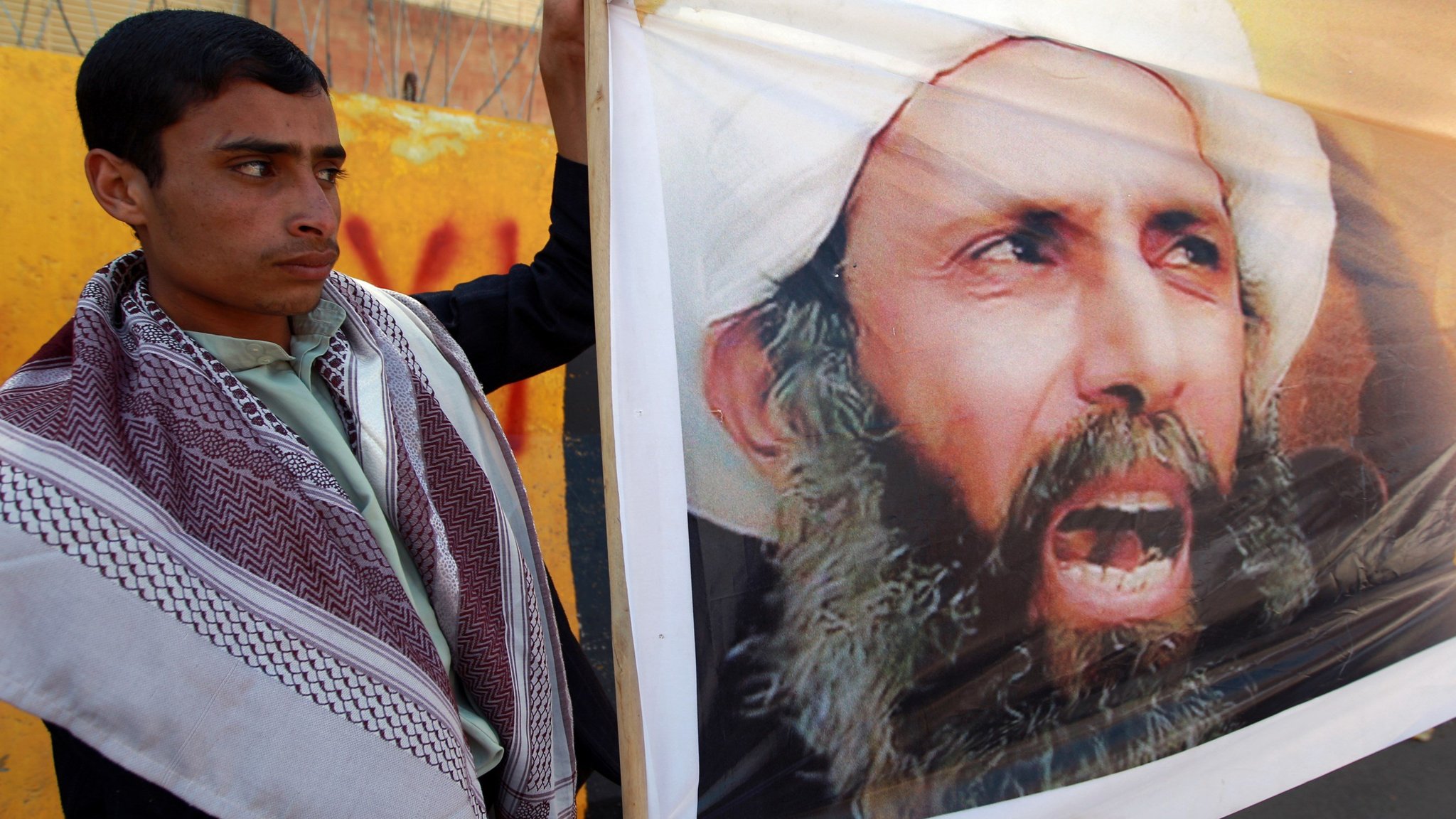
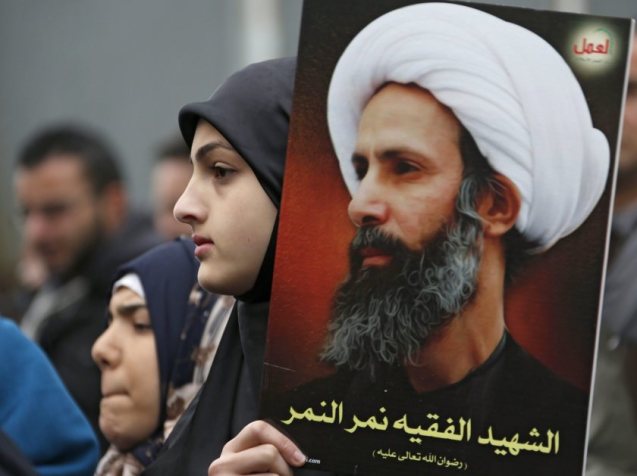
Manifestação de protesto em Sanaa, a capital do Iémen, contra a execução de Nimr al-Nimr
© Mohammed Huwai | AFP | Getty Images

Ali al-Ahmed não ficou surpreendido com a execução do xeque Nimr al-Nimr, líder espiritual da maior minoria xiita árabe do Médio Oriente. “Os sauditas estão em apuros”, diz-me o director do Institute for Gulf Affairs, em Washington, numa entrevista por telefone.

“O regime precisa de atemorizar e silenciar o povo. A guerra no Iémen é um fiasco. Os planos para a Síria são um fracasso. A intervenção militar no Bahrain revelou-se desastrosa. O Iraque progride contra o Daesh [o autoproclamado “estado islâmico”]. E a economia está em crise devido à descida dos preços do petróleo.”

Ao dar luz verde à pena capital de Nimr e de outras dezenas de opositores, adianta Ahmed, “o governo quis enviar uma mensagem clara, a xiitas e sunitas: ‘Nós é que mandamos, e este será o vosso destino se ousarem sublevar-se’.”

Tal como o xeque Nimr, o jornalista Ali al-Ahmed vivia em Qatif, “conquistada em 1520 pelos portugueses que aqui deixaram um forte”, na Província Oriental da Arábia Saudita.

Aos 14 anos, “apenas por ser xiita”, tornou-se o prisioneiro político mais jovem do país. Hoje, aos 50, continua a sua luta pela “igualdade de direitos, separação de Estado e religião, uma república”.

Numa conversa telefónica, deixa um aviso: “Não esperem reformas enquanto a família que deu o nome ao reino se mantiver no poder.”

Nimr al-Nimr não pedia calma, mas incentivava os jovens a ir para as ruas em protestos, quer na Província Oriental da Arábia Saudita como no Bahrain, onde a maioria da população é xiita
© The Guardian

A dissidência de Ahmed é herança paterna e materna. “A nossa luta não é comunal, mas contra a Casa de Saud. Muitos dos meus antepassados pertenciam a tribos sunitas que se converteram ao xiismo.”

“Um dos meus tios foi preso por pertencer a um partido com militantes sunitas e xiitas. Tenho amigos sunitas e até wahhabitas [a doutrina islâmica ultraconservadora imposta por Muhammad ibn Abd al-Wahhab (1703-1792) na sequência de uma aliança com o rei fundador, Ibn Saud]. ”

Na cadeia ainda está o irmão mais novo, de 42 anos, a cumprir uma sentença de 17. Será o castigo por Ahmed ter procurado refúgio nos EUA de onde denuncia os crimes da monarquia. “Um dia convidaram-me a regressar.”

“Ofereceram-me até dinheiro. E perguntei: ‘Por que nos perseguem? Nós [xiitas] somos uma minoria. Poderíamos, como todas as minorias, ser até mais leais do que a maioria sunita’. Responderam-me que a culpa era do Irão.”

“Eu retorqui: ‘Mas somos discriminados muito antes de o Irão ser um espinho. O vosso problema é ideológico. O Irão é apenas um pretexto. O que está em causa é a vossa sobrevivência. A vontade de se manterem no poder a qualquer preço’.”

Cerca de 10 a 15 por cento dos quase 29 milhões de habitantes da Arábia Saudita, os xiitas constituem a maioria na Província Oriental.

“Temos tudo para ser um Estado: água, agricultura, a maior parte dos campos de petróleo e uma população culta”, sublinha Ahmed.

“A secessão chegou a ser um plano, discutido há uns quinze anos. O xeque Nimr era um dos que advogava esta opção – muito perigosa. A verdade é que não podemos continuar marginalizados. Não há um único presidente de câmara xiita, um diplomata, um agente da Polícia. As nossas crianças aprendem nas escolas que pertencem a uma seita herege.”

“Acusam-nos de cuspir na comida dos sunitas e de mijar no que eles bebem. Mas fomos nós que desenvolvemos a indústria petrolífera, com a chegada da Aramco [consórcio criado pelos americanos mas hoje nas mãos dos sauditas]. O que seria a Arábia Saudita sem os xiitas?”

Nimr al-Nimr estava mais próximo dos activistas das “primaveras árabes” do que dos mullahs em Teerão, embora se tivesse exilado no Irão (antes de Damasco)
© Adnan Abidi | Reuters

Ao contrário de Ali al-Ahmed, o académico suíço Toby Matthiesen ficou espantado com a execução de Nimr al-Nimr.

“O xeque estava preso há dois anos, e há dois anos que a Província Oriental estava relativamente pacificada”, observa o autor de duas obras de referência – The Other Saudis: Shiism, Dissent and Sectarianism and Sectarian Gulf: Bahrain, Saudi Arabia, and the Arab Spring That Wasn’t, em entrevista por telefone.

Ao rejeitarem os apelos internacionais a um perdão, as autoridades sauditas “vincaram que não toleram rebeliões internas, de qualquer campo. E não esqueçamos que Irmandade Muçulmana, al-Qaeda e ‘estado islâmico’ são oposição sunita.”

Nimr, como referiu Ali al-Ahmed, exortara a que Qatif, onde nasceu em 1959 (na aldeia pobre de Awamiya), e Al-Ahsa, os dois distritos da Província Oriental, se separassem da Arábia Saudita e se unissem ao Bahrain, de maioria xiita.

De certo modo, adiantou Matthiesen, ele estava mais próximo dos activistas das “primaveras árabes” do que dos mullahs em Teerão, embora se tivesse exilado no Irão (antes de Damasco).

Estava ligado a um movimento transnacional xiita, fundado nos anos 1970, e que deve o nome ao grande ayatollah iraquiano Muhammad Mahdi al-Shirazi (1928-2001). Natural de Najaf, Shirazi era rival de Khomeini, o artífice da revolução islâmica iraniana. Não lhe reconhecia o título de marja al-taqlid, ou fonte de emulação.

Era também crítico do conceito de velayat-e faqih, que concentra o poder num Supremo Líder, tendo concebido uma outra doutrina, Hukumat al-Fuqaha, uma teocracia colectiva e não assente num só indivíduo. Também contestou a subida ao poder do actual de Ali Khamenei, o sucessor de Khomeini.

Após a morte do fundador, na cidade-santuário iraniana de Qom, o movimento Shirazi dividiu-se em dois ramos, os que seguem o seu irmão Sadiq al-Shirazi e os que se aliaram ao sobrinho Muhammad Taqi al-Mudarrisi. Nimr juntou-se à facção de Mudarrisi, menos conciliatória do que da de Sadiq.

“Ao contrário de outros dirigentes xiitas sauditas, que aceitaram uma amnistia nos anos 1900 e estavam receptivos a negociações para terem mais direitos, ele não estava interessado em reformar o sistema político mas em derrubá-lo”, salientou Matthiesen.

An Iranian woman holds an anti-Saudi placard at a protest outside the Saudi embassy in Tehran. Behind her is a photo of Shia cleric Nimr al-Nimr, whom Saudi Arabia executed ©Atta Kenare | AFP | Getty Images

Cartaz anti-saudita numa manifestação junto à embaixada do reino em Teerão. O edifício seria atacado e incendiado por vigilantes fanáticos, criticados posteriormente pelo Presidente Rouhani como “ameaça à segurança nacional” da República Islâmica
© Atta Kenare | AFP | Getty Images

Nos seus sermões, Nimr não pedia calma, mas incentivava os jovens a ir para as ruas em protestos, quer na Província Oriental como no Bahrain. Foi preso e ferido numa perna, em 2012, durante uma rusga a Awamiya, onde já havia participado numa sublevação em 1979. Nunca capitulou.

Terá havido ainda outra razão, mais pessoal, para matar (terá sido crucificado e enterrado numa campa sem nome) o xeque que era também um ayatollah.

A realeza saudita “sentiu-se insultada quando ele celebrou a morte do príncipe Nayef”, ministro do Interior e herdeiro do trono, em 2012, salientou Matthiesen, um dos maiores especialistas na Arábia Saudita e no Golfo Pérsico. “Que os vermes o devorem”, disse Nimr, num vídeo posto a circular nas redes sociais.

O investigador na Universidade de Oxford concorda com o dissidente Ali al-Ahmed. O objectivo de Riade, “que sempre fomentou o sectarismo”, é concentrar as atenções no Irão e desviá-las dos problemas económicos internos e dos desaires militares externos.

Estará o reino isolado? Matthiesen acha que não. “Enfrenta dificuldades, sim, mas sabe que pode contar com os aliados norte-americanos – apesar de terem criticado a execução de Nimr – enquanto estes mantiverem bases importantes no Golfo – na Arábia Saudita, no Kuwait, no Qatar e no Bahrain.”

“Não se pode excluir o risco de uma guerra”, conclui. “Será uma guerra sem vencedores. E entre as principais vítimas continuarão a estar os iemenitas e os sírios.”

Os artigos de Toby Matthiesen na revista “Foreign Policy” podem ser lidos aqui. Obras de referência sobre o Golfo são também as de F. Gregory Gause, e “Desert Kingdom, How Oil and Water Forged Modern Day Saudi Arabia, de Toby Craig Jones.

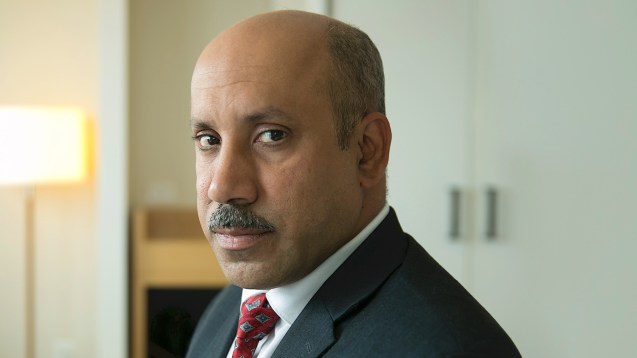
Ali al-Ahmed, director do Institute for Gulf Affairs
© amazonaws.co

Toby Matthiesen, autor do livro The Other Saudis: Shiism, Dissent and Sectarianism
© vimeocdn.com

Este artigo, agora actualizado, foi publicado originalmente no jornal EXPRESSO em 7 de Janeiro de 2016 | This article, now updated, was originally published in the Portuguese newspaper EXPRESSO, on January 7, 2016

Shia: The “second class” in the House of Saud

Interviews with dissident Ali al-Ahmed, director of the Institute for Gulf Affairs, and Toby Matthiesen, author of the acclaimed book The Other Saudis: Shiism, Dissent and Sectarianism (Read more…)

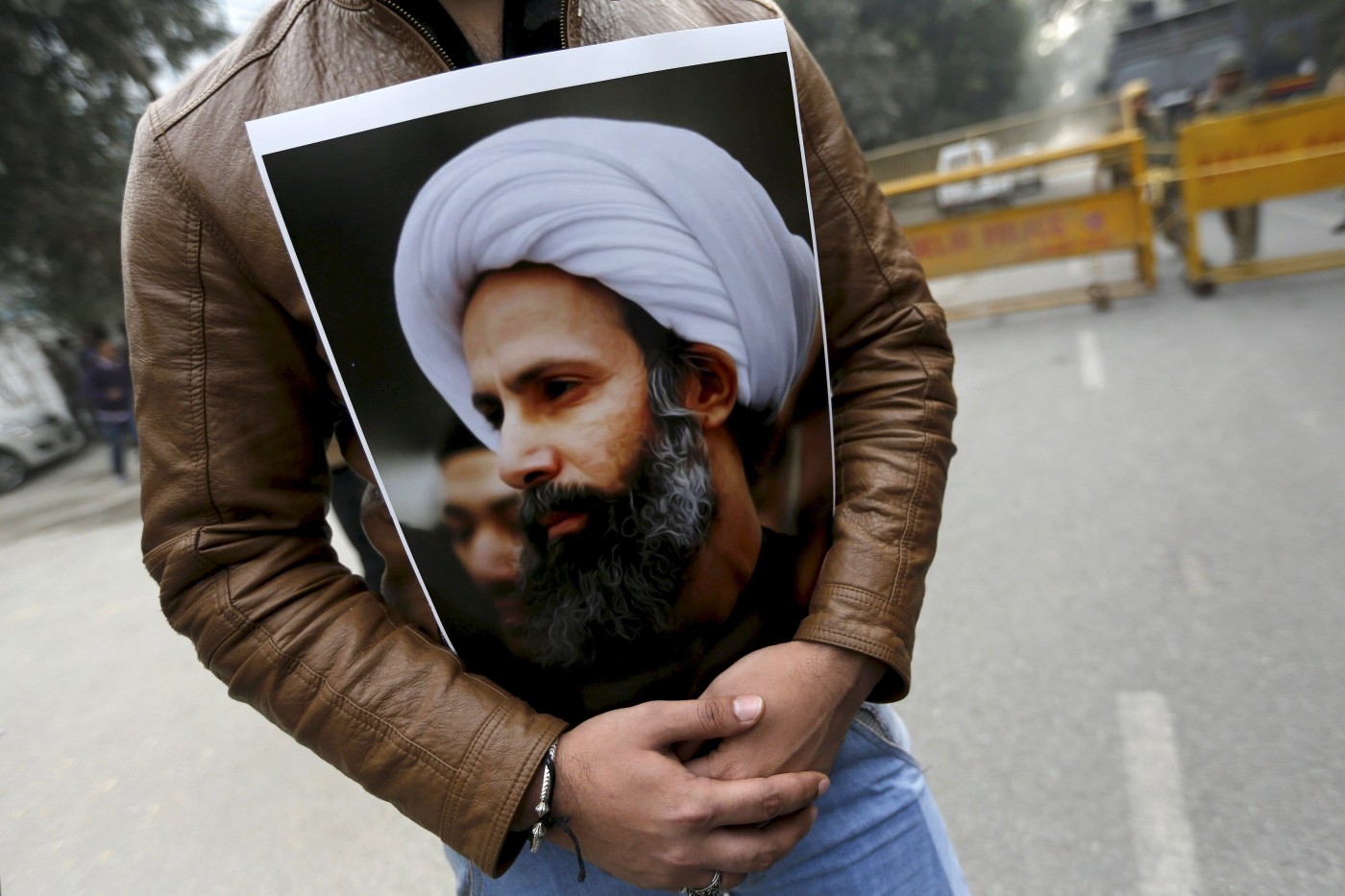
Supporters of Hezbollah and the Amal movement carry pictures of executed Saudi Shiite Muslim cleric Sheik Nimr al-Nimr during a protest in Beirut on Jan. 3, 2016
© Nabil Mounzer | European Pressphoto Agency

Ali al-Ahmed was not surprised with the execution of Sheikh Nimr al-Nimr, a spiritual leader of the largest Arab Shia minority in the Middle East. “The Saudis are in trouble”, says the director of the Institute for Gulf Affairs in Washington, in a telephone interview.

“Their regime needs to intimidate and silence the people. The war in Yemen is a fiasco. Their plans for Syria are a failure. Their military intervention in Bahrain is a proved disaster. Iraq is progressing against the ‘islamic state’ [Daesh]. And their economy is in crisis due to the fall in oil prices.

According to Ahmed, by giving the green light to the capital punishment of Nimr and dozens of other opponents, “the Saudi government wanted to send a clear message, to both Shia and Sunnis: ‘We are the only rulers, and death will be your fate if you dare to rise up’ against us.”

As Sheikh Nimr, journalist Ali al-Ahmed lived in Qatif,  in the Eastern Province of Saudi Arabia. At 14, “just for being a Shia,” he became the youngest political prisoner in the country.

Now, at 50, he is still fighting for “equal rights; separation of state and religion; a republic.” In a telephone conversation, he cautions: “Do not expect reforms while this royal family remains in power.”

People protest in front of Saudi Arabia's embassy during a demonstration in Tehran © Reuters

People protest in front of Saudi Arabia’s embassy during a demonstration in Tehran, after the execution of Sheikh Nimr al-Nimr
© Reuters

Ahmed’s dissent is a paternal and maternal inheritance. “Our struggle is not sectarian, but against the House of Saud. Many of my ancestors belonged to Sunni tribes who converted to Shiism, one hundred years ago. One of my uncles was arrested for belonging to a party, with Sunni and Shia militants.”

“I have friends who are Sunni and even Wahhabi [the ultraconservative Islamic doctrine imposed by Muhammad ibn Abd al-Wahhab (1703-1792) following an alliance with the founding king, Ibn Saud].”

His younger brother, 42, remains in jail, serving a 17-year sentence, apparently a punishment for Ahmed’s decision of seeking refuge in the US from where he condemns the crimes of the monarchy.  “One day I was invited to return”, Ahmed tells me.

“I was even offered money. I asked them, ‘Why do you harass us? We [Shia] are a minority. Like all minorities, we would be more loyal than the Sunni majority’. They put the blame on Iran, and I replied, ‘We were being discriminated long before Iran became a thorn. Your problem is ideological. Iran is only an excuse. What’s at stake is your survival. Your determination to remain in power at any cost’.”

About 10 to 15 percent of the nearly 29 million inhabitants of Saudi Arabia, the Shia make up the majority in the Eastern Province. “We have everything to be a separate state: water, agriculture, most of the oil fields and an educated population”, stated Ahmed.

“The secession was a real plan discussed some fifteen years ago. Sheikh Nimr advocated this option – which was very dangerous. The truth is that we can no longer be marginalised. There is not only one Shia mayor, not only one diplomat, not only one Police officer.”

“At school, our children learn that they belong to a heretical sect. We are accused of spitting in the food of the Sunni and piss on what they drink. But we are the ones who have developed the oil industry, when ARAMCO [consortium created by the Americans but now in the hands of the Saudis] was established. What would Saudi Arabia be without the Shia?”

A Saudi Shia Muslim takes part in commemorations on the tenth day of the mourning period of Muharram, which marks the day of Ashura, on 12 October 2016
© AFP

Unlike Ali al-Ahmed, the Swiss academic Toby Matthiesen was not expecting the execution of Nimr al-Nimr, “who was very prominent” in Saudi Arabia and Shia-majority Bahrain, “but not as famous as he is now”, especially in Iran.

“The sheikh was sentenced to death two years ago and since two years the Eastern Province has been relatively quiet,” said the author of two master works – The Other Saudis: Shiism, Dissent and Sectarianism and Sectarian Gulf: Bahrain, Saudi Arabia, and the Arab Spring That Wasn’t.

“By rejecting international calls for a pardon, the Saudi authorities “made perfectly clear that all internal rebellion, either Shia or Sunni, would not be tolerated. The Sunni opposition being the Muslim Brotherhood, al-Qaeda and the ‘Islamic state’.”

Nimr, as Ali al-Ahmed reminded, was an advocate of secession from Saudi Arabia of the Qatif, where he was born in 1959 (in the poor village of Awamiya), and Al-Hasa governorates of Eastern Province, to be united with Shia-majority Bahrain.

In a way, Matthiesen stated, he was closer to the activists of the “Arab Spring” than to the mullahs in Tehran, although he was an exile in Iran (before Damascus).

He was linked to a Shia transnational movement founded, in the 1970s, by the Grand Ayatollah Muhammad Mahdi al-Shirazi (1928-2001). Born in Najaf (Iraq), Shirazi was a rival of Khomeini, the architect of the Islamic Revolution.

He did not recognise his title of marja al-taqlid, or source of emulation. He was also critical of the Velayat-e Faqih concept, which concentrates all power in a supreme leader, and thereby conceived another doctrine, Hukumat al-Fuqaha, a collective theocracy not based in one single individual. Neither did he accept the choice of Ali Khamenei to be the successor of Khomeini.

Shi'ite Muslims place copies of the Koran on their heads during a ceremony marking the death anniversary of Imam Ali at his shrine in the holy city of Najaf, about 160 km (100 miles) south of Baghdad © Ahmad Mousa | Reuters

Shia Muslims place copies of the Koran on their heads during a ceremony marking the death anniversary of Imam Ali at his shrine in the holy city of Najaf, about 160 km south of Baghdad
© Ahmad Mousa | Reuters

After the founder’s death, in the Iranian city of Qom, the Shirazi movement split in two branches: those who follow his brother Sadiq al-Shirazi and those who sided with the nephew Muhammad Taqi al-Mudarrisi. Nimr joined Mudarrisi’s faction, less conciliatory than the one of Sadiq.

“Unlike other Saudi Shia leaders who accepted an amnesty in the 1990s and were open to negotiations to have more rights, he was not interested in reforming the political system but rather in bring it down”, Matthiesen said.

In his sermons, Nimr did not ask for calm but encouraged young people to take to the streets in protest, whether in the Eastern Province or in Bahrain. He was arrested and wounded in a leg in 2012, during a raid in Awamiya, where he had already participated in an uprising in 1979. He never capitulated.

There was yet another, more personal, reason to kill (probably crucified, and buried in an unnamed tomb) the sheikh who was also an ayatollah.

The Saudi royals “felt insulted when he celebrated the death of Prince Nayef”, interior minister and heir to the throne, in 2012, said Matthiesen, one of the greatest experts on Saudi Arabia and the Gulf. “Let the worms eat him”, Nimr proclaimed in a video posted on social media.

The actual aim of Riyadh, “always interested in fomenting sectarianism”, is to focus the attention on Iran and divert it from domestic economic problems and external military setbacks, added the Senior Research Fellow in the International Relations of the Middle East at St. Antony’s College, University of Oxford, echoing the opinion of Ali al-Ahmed.

Is the House of Saud an isolated kingdom? Toby Matthiesen thinks not. “In trouble, yes, but confident that it can count on their American allies – despite Washington’s criticism of Nimr’s execution. Because the US has major military bases in the Gulf: in Saudi Arabia, Kuwait, Qatar and Bahrain.”

“We can not exclude the risk of a war”, Matthiesen admitted. “But it will be a proxy war without winners. And the main victims will keep on being the Yemenis and the Syrians.”

Read more here (Toby Matthiesen), here (F. Gregory Gause) and here (Toby Craig Jones, author of “Desert Kingdom: How Oil and Water Forged Modern Saudi Arabia”)

Ali al-Ahmed, director of the Institute for Gulf Affairs
© youtube.com

Toby Matthiesen, author of The Other Saudis: Shiism, Dissent and Sectarianism 
© youtube.com

This article, now updated, was originally published in the Portuguese newspaper EXPRESSO, on January 7, 2015

“Saudi women are unstoppable”

Interviews with Hatoon al-Fassi, the activist who played a central role in organizing the first ever participation of women in municipal elections, Rasha Hefzi, one of the winning candidates, in the city of Jeddah, and Reem Asaad, who did not hide the joy of voting for the first time in her life. (Read more…)

Dr. Hatoon al-Fassi speaks at a political meeting for women in Riyadh. © NPR

Hatoon al-Fassi speaks at a political meeting for women in Riyadh capital of Saudi Arabia and one of the most conservative cities
© NPR

Historian, academic and writer Hatoon al-Fassi had been expecting this day for at least a decade: to see women as candidates and voters in elections. The result exceeded her expectations: 21 elected to municipal councils, with King Salman’s “blessing” and the wrath of some religious leaders.

“I celebrated by having breakfast with my husband remembering all the past ten years efforts, mainly the beginning of it when I was working effortlessly in 2004 to convince the state and society with our right, while I was having an endangered pregnancy with my first child,” said Dr. Hatoon al-Fassi, in an email interview. “Through which time I was hospitalised because of the much stress I put myself at risk.”

If anyone can claim credit for the women’s vote is this university professor in Riyadh – the capital and one of the most conservative cities. Author of a study on women’s rights in the Arabic Nabataean kingdom (9th century BC), she inherited in 2004 the leadership of the Baladi Initiative, founded by Fawzia Al Hani. As general coordinator, she offered training and support to many candidates in what has been defined as a “historical process”.

A total of 1,486,477 men and 124,544 women registered as voters in these elections, which were approved by the late monarch, Abdullah bin Abdulaziz, and got the green light by his successor. The number of male candidates reached 5938, more than the 979 female runners. All of them were competing for 2106 seats all over the country.

Among the women, at least 450 gave up the race. They had just 12 days to campaign and faced almost insurmountable obstacles. More than 100 were excluded by decision of the authorities under different reasons.

Neither men nor women could use their photos on posters. Women could not address men directly, only through a male “representative”, and any direct contact would be punished with heavy fines.

Dr. Hatoon al-Fassi explains why she was surprised – not only with the high number of elected female candidates but also with the high turnout (in some areas, women’s participation surpassed 80%, against 50% of men’s).

“The results exceeded my expectations, which were very minimal. That was because of the very short awareness efforts that the ministry in charge has made, and the limited room we had as a civil society organisation, and the constant obstacles women found in each part of the elections process. Which shows a determination on the Saudi woman’s part. She’s unstoppable. It is simply the readiness and eagerness of women and society to give it a chance and participate in the affairs of the country.”

A member of a traditional Sufi family from Mecca, descendent of the Sharifi house of Muhammad, Prophet of Islam, and not a follower of the backward Wahhabi doctrine dominant in her country, Hatoon al-Fassi regrets that male candidates “were using some religious phrases out of context to discourage voters from voting for women“. Although “that didn’t succeed everywhere, the constrains remain immense”.

She remains confident: “Women are not letting go of these obstacles. We have seen it at the Shura council [advisors of the King] with the slandering that some members received for raising serious issues of discrimination including the driving ban.”

“[Now] these women are taking the slanders to court and increasingly are receiving more and more support and these women are learning more and more. Similarly, I believe will be the case with councilour women.” Many people, men and women, ignored him and other hardliners.

What are now the immediate challenges after the elections? “We have many issues, but first of all is the guardianship system [or Muhrim – father, husband, brother or son have to accompany women in public, allow them to travel and attest their legal contracts], the codification of family law, driving ban and reaching the decision making positions, ministerial in particular,” clarified Dr. Hatoon al-Fassi.

On the interest of pursuing a political career, this Saudi lady to whom other women look up to for inspiration says: “I won’t mind, though there are no much option. All the above are priorities, but we are dividing the task among women groups in Saudi, of which I make part. Although we are enjoying the moment, we are not ceasing to carry on for our full rights.”

[Hatton al-Fassi was arrested in late June 2018 as part of a crackdown on women’s activists, and was released in early May 2019. In November 2018, while still in jail, she was awarded the MESA Academic Freedom Award for 2018.]

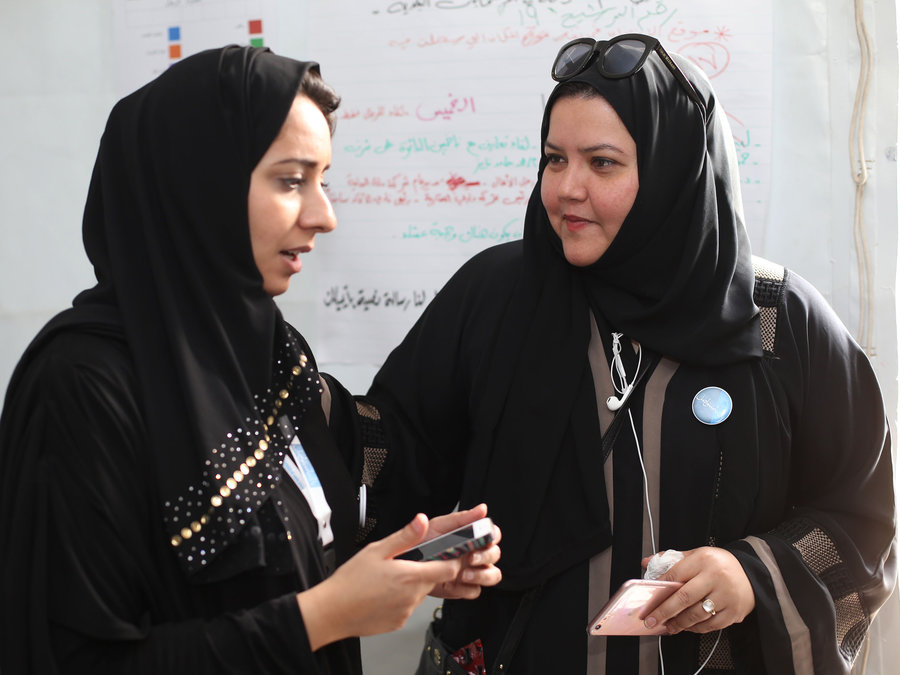
Rasha Fefzi addredsing her supporters in a tent used for the campaign, in Jeddah, considered "the most cosmopolitan of the Saudi cities"- ©Tasneem AlsultanA|NATIONAL GEOGRAPHIC

Rasha Hefzi addressing her supporters in a tent used for the electoral campaign, in Jeddah, considered “the most cosmopolitan of the Saudi cities”
©Tasneem Alsultan | National Geographic

One of the winning candidates was Rasha Hefzi, director of Think Link N Cooperation, 38 year-old, single and childless. She lives in Jeddah, a modern commercial hub and “the most liberal city” of the kingdom.

Her company provides various services, including surveys and campaigns to promote socio-economic development. Therefore, it is not surprising when she says, in a telephone conversation: “We used every means at our disposal: social networks, outdoors, call centres, e-marketing, knocking door to door…”

Rasha Hefzi is actively campaigning for causes like feminism, inter-religious dialogue and democracy since she was 15. A member of several non-governmental organisations such as the World Assembly for Muslim Youth, she also helped to create several community groups and associations. “My priority was and continues to be encouraging greater civic contribution”, she said.

“It interests me that people understand the importance of participating in public life. Women are already active in many spheres, particularly in the private sector. [The number of those who reached the labor market increased by 40% between 2010 and 2015, but women still account for only 16% of the total labor force, according to Fortune magazine.] In Jeddah Chamber of Commerce, they are remarkable figures, although discrete, not looking to attract attention.”

Sex segregation remains a reality, but Rasha Hefzi prefers to value the increasing number of women in the labour market.

“I was elected thanks to the votes of many men, some of them entrepreneurs,” she notes. “There are good indicators, and I want to help empowering women through knowledge, know-how and experience. Saudi Arabia is not a monolithic state. Each region has its specificities.”

Reem Asaad: "My country is heading toward more universal ‘norms’. Also I'm more attached to the future of my country. I believe that when things go through bleak moments then the sun will rise brighter. This is how history is made.” © All Rights Reserved

Reem Asaad: “My country is heading toward more universal ‘norms’. Also I’m more attached to the future of my country. I believe that when things go through bleak moments then the sun will rise brighter. This is how history is made”
© Courtesy of Reem Asaad

To implement a master plan to control the urban planning was one of the electoral promises of Rasha Hefzi, an outspoken critic of the sanitation system after heavy rains ruptured sewage in Jeddah, last November, killing more than 10 people.

Among those who gave her a vote of confidence is Reem Asaad a financial adviser at Saudi Fransi Capital Corporation, acclaimed by the Arabian Business Magazine as one of the “100 most influential Arab women” (3rd place).

With a master’s degree in Business administration and 14 years of experience in Finance, Reem Asaad was among the first women appointed to positions formerly occupied only by men in the powerful National Commerce Bank.

These are her thoughts on the election’ day: “It was a very quiet Saturday morning. In my district, the traffic was almost zero and the poll center was no exception. I was the only visitor at that hour. The process was clear and organised. Took 2 minutes.”

“I had my daughter (5 year-old) slip the vote in the box for me. My feelings: my country is heading toward more universal ‘norms’. Also I’m more attached to the future of my country. I believe that when things go through bleak moments then the sun will rise brighter. This is how history is made.”

“It’s a process. The Saudi public has been absent from politics and public participation for decades. We cannot expect this to change their attitudes over a few weeks. Anything that involves women stirs opinion and debate.”

“Some claimed that previous municipal elections did very little to help change local municipalities, and attain objectives. There is a lack of faith in effecting change.”

Were these elections solely the follow-up of the Saudi women’s struggle for more rights or are they part of a wider social-political process in the kingdom? “Both, of course”, replied the financial adviser. And what will be the next “battle(s)” for Saudi women? “You will know as they come up.”

Would she consider running for a political post in the future? “Yes, but not just yet. I am too busy with my professional life.” For now, she celebrates a personal victory. In a tweet that went viral, she wrote: “Voted! For the 1st time in my adult public life in #SaudiArabia. You may find this laughable but hey, it’s a start. #saudiwomenvote

The queens of Nabataea

Hatoon al-Fassi, author of Women in Pre-Islamic Arabia: Nabataea, stands with her book at her residence, in Riyadh
© baaz.com

Hatoon al-Fassi is the author of Women in Pre-Islamic Arabia: Nabataea. In this book, centred on the Bedouin and urbanized state with its capital in Petra (present Jordan), annexed by the Roman Empire in AD 106, she proves that women had rights that were later withdrawn due to a masculine interpretation of sacred texts.

The Nabataean queens, says the Saudi historian, were free, powerful (especially economically) and visible – their faces almost without veil, were engraved in coins, for example. “There were Muslim theologians who misinterpreted the origins of Islamic law”,” Hatoon al-Fassi told Reuters news agency.

“Many of the practices relating to the [submission] status of women are based on local traditions. They are not necessarily Islamic. Nor are Arab, in essence. The Greek women were the ones who needed tutors to sign any contract. The Saudi male guardianship law is not at all Islamic but an adaptation of Greek and Roman laws.”

The main rules of the Shariah (Islamic law) began to be set in the 9th century AD in the territories conquered by the sword where a ruling Arab elite dominated non-Muslim and non-Arab populations. The main basis of this legislation stems from oral traditions (Sunnah) attributed to Muhammad, Islam’s prophet, and imposed on believers by Muslim jurists as “divine” and “unquestionable”.

The Nabataean kingdom, whose Arab identity has been questioned by some conservatives, only started receiving attention after 1812, when Petra was “discovered” by the Swiss geographer Johann Ludwig (or Jean Louis) Burckhardt (1784-1917). Today, it is one of the world’s leading tourist destinations, a UNESCO World Heritage Site.

This article, now updated, was originally published in the Portuguese newspaper EXPRESSO, on December 19, 2015

“Já ninguém pára as mulheres sauditas”

Entrevistas com Hatton al-Fassi, a activista que abriu caminho às eleições municipais; Rasha Hefzi, uma das candidatas vencedoras, em Jidá; e Reem Asaad, que não escondeu a alegria de votar pela primeira vez. (Ler mais | Read more…)

Hatton al-Fassi: Entre os próximos desafios das sauditas estão o fim da proibição de conduzir e a revisão do código de família. © YouTube

Hatton al-Fassi, coordenadora geral da Iniciativa Baladi: Entre os próximos desafios das sauditas, diz, estão o fim da proibição de conduzir, a abolição do sistema do guardião masculino e a revisão docódigo de família
© YouTube

Há pelo menos uma década que a historiadora, académica e escritora Hatoon al-Fassi esperava um dia assim. Ver as mulheres concorrerem e votarem em eleições. O resultado superou as expectativas: 21 eleitas para conselhos municipais, com a “bênção” do rei Salman e a ira dos líderes religiosos.

“Eu e o meu marido celebrámos, no domingo, ao pequeno-almoço, os esforços dos últimos anos, sobretudo o início, em 2004, quando eu tentava, incansavelmente, convencer o Estado e a sociedade a respeitar os nossos direitos”, conta-me Hatoon al-Fassi, numa entrevista por e-mail.

“Nessa altura, coloquei em risco a gravidez do meu primeiro filho. Tive de ser hospitalizada devido ao stress intenso. Estou, agora, naturalmente, muito entusiasmada.”

Se há alguém que pode reivindicar crédito pelo escrutínio do dia 12 de Dezembro é esta professora universitária em Riade (a capital e uma das cidades mais conservadoras), Em 2014, herdou de Fowziyah al Hani (ou Fawzia al-Hani) a liderança da Iniciativa Baladi, que formou e apoiou muitas candidatas no que muitos definiram como “processo histórico”.

Para estas eleições, aprovadas pelo defunto monarca Abdullah Abdulaziz e que mereceram luz verde do seu sucessor, registaram-se como votantes, 1.486.477 de homens e 124.544 mulheres. O número de candidatos totalizou 5938 e o de candidatas 979, todos competindo por 2106 lugares em todo o país.

Entre as mulheres, desistiram 450. Tinham apenas 12 dias para fazer campanha e enfrentaram vários obstáculos para concorrer. Mais de 100 foram eliminadas por decisão das autoridades que invocaram razões diversas.

Nem homens nem mulheres podiam usas as suas fotos em cartazes. As mulheres só podiam dirigir-se aos homens através de um “representante” masculino; qualquer contacto directo era punido com multas pesadas.

Hatoon al-Fassi explica por que ficou surpreendida – com o número de eleitos e a afluência (a das mulheres superou, em algumas regiões, os 80%, contra 50% dos homens). “Esperava o mínimo porque o ministério responsável fez o mínimo dos esforços e, como sociedade civil, a nossa capacidade de organização é limitada. As mulheres enfrentaram obstáculos permanentes a cada etapa eleitoral. Os resultados mostraram como as sauditas são determinadas. Já ninguém as pode parar.”

De uma família descendente de Maomé, profeta do Islão, mas seguindo uma escola sufi progressista e não retrógrada como a corrente wahhabita em vigor no país, Hatoon al-Fassi lamenta que alguns candidatos tenham recorrido a “termos religiosos fora de contexto para desencorajar os eleitores a votarem em mulheres”.

Um deles foi o mufti, a autoridade suprema em termos de interpretação dos textos sagrados, que emitiu um édito (fatwa), em directo na televisão, apelando a que o voto nas mulheres fosse boicotado.

Nem todos lhes deram ouvidos e os sinais parecem encorajadores: “Mulheres que são membros do Shura [conselho consultivo] foram insultadas por condenarem leis discriminatórias, mas os caluniadores foram processados judicialmente”, disse a historiadora saudita. “As queixosas recebem cada vez mais apoio de outras mulheres que vão ganhando maior consciência.”

Os próximos desafios, adianta Hatoon al-Fassi, serão “abolir o sistema do guardião masculino (ou muhrim – pai, marido, irmão ou filho(s) que “devem” acompanhar as mulheres em público, permitir que elas viajem, ser fiadores, etc..)., mudar o código de família, pôr fim à interdição de conduzir e nomeações para cargos de decisão, a nível ministerial, em particular”.

A saudita para quem outras olham como fonte de inspiração diz que não se importaria de seguir uma carreira política, mas admite que não tem muitas opções. “Decidimos dividir as tarefas entres grupos de mulheres. Por enquanto, estamos a festejar, mas não abdicamos de reclamar todos os nossos direito.”

 Rasha Hefzi (à direita, com a sua directora de campanha, Hanaa Amer) venceu em Jidá, onde é empresária e uma activista influente. © Jordan Pix| Getty Images | NPR

Rasha Hefzi (à direita, com a sua directora de campanha, Hanaa Amer) venceu em Jidá, onde é empresária e uma activista influente
© Jordan Pix| Getty | NPR

Uma das candidatas vencedoras foi Rasha Hefzi, directora da Think N Link Cooperation, 38 anos, solteira e sem filhos. Vive em Jidá, principal entreposto comercial e “a cidade mais liberal”. A sua empresa fornece vários serviços, designadamente sondagens e campanhas para a promoção do desenvolvimento socio-económico. Não se estranha, pois, quando ela diz, em conversa telefónica: “Usámos todos os meios ao nosso dispor: redes sociais, cartazes nas ruas, call-centers, e-marketing, porta a porta…”

Desde os 15 anos que Rasha Hefzi milita activamente por causas como o feminismo, o diálogo inter-religioso e a democracia. Membro de várias organizações não governamentais, como a Assembleia Mundial para a Juventude Muçulmana, ajudou também a fundar diversas associações comunitárias. “A minha prioridade foi e continua a ser encorajar maior civismo”, declara.

“Interessa-me que as pessoas compreendam a importância de participar na vida pública. As mulheres já são activas em muitas esferas, em particular no sector privado [o número das que chegaram ao mercado de trabalho aumentou 40%, entre 2010 e 2015 mas ainda representam apenas 16% da força activa total, segundo a revista Fortune]. Na Câmara de Comércio de Jidá, são figuras notáveis, embora discretas, que não atraem atenções.”

A segregação de sexos permanece uma realidade, mas Rasha Hefzi, prefere valorizar o número crescente de mulheres no mercado de trabalho. “Fui eleita graças aos votos de muitos homens, muitos deles empresários”, garante. “Há indicadores de mudança, e quero contribuir para dar mais poder às mulheres, através do conhecimento, do know-how e da experiência. Os direitos vão-se conquistando. A Arábia Saudita não é um Estado monolítico. Cada região tem as suas especificidades.”

Reem Asaad, uma das mulheres árabes mais poderosas, não excluir concorrer no futuro a um cargo político. © Cortesia de Reem Asaad | Courtesy of Reem Asaad

Reem Asaad, uma das mulheres árabes mais poderosas, segundo a Arabian Business Magazine, não exclui concorrer no futuro a um cargo político
© Cortesia de Reem Asaad | Courtesy of Reem Asaad

Aplicar um plano director que controle o ordenamento urbano foi uma das promessas eleitorais de Rasha Hefzi, das maiores críticas do sistema de saneamento quando, em Novembro, chuvas intensas romperam esgotos em Jidá causando mais de dez mortes.

Entre os que lhe deram o voto está Reem Asaad, conselheira financeira na Saudi Fransi Capital Corporation, aclamada pela Arabian Business Magazine como uma das “100 mulheres árabes mais influentes” (no 3º lugar).

Com um mestrado em Administração de Empresas e mais de 14 anos de experiência na área financeira, Reem Asaad foi uma das primeiras mulheres designadas para cargos outrora ocupados só por homens no poderoso National Commerce Bank.

Na manhã das eleições, fez-se acompanhar de uma das suas filhas, de 5 anos, para que fosse a menina a fazer “deslizar o boletim de voto” na urna. “Acredito que o meu país avança no sentido de ‘normas’ mais universais”, exulta, por e-mail.

“Ainda enfrentaremos momentos sombrios mas o sol brilhará. É assim que a história se faz. Isto é um processo. Desde há décadas que os sauditas têm estado ausentes da política e da participação pública. Não se pode esperar que mudem as suas atitudes em algumas semanas.”

O entusiasmo que as eleições geraram foi assim explicado por Reem Asaad, filha de um cirurgião e de uma gestora: “Tudo o que envolve mulheres gera opinião e debate. Alguns alegaram que as anteriores eleições pouco contribuíram para mudar os municípios e atingir os objectivos [prometidos durante as campanhas]. Há falta de fé numa mudança efectiva.”

Sobre se este acto eleitoral é tão só a continuação da luta das mulheres pelos seus direitos ou é também parte de um processo de transformação, social e político, mais vasto no reino, respondeu sem hesitar: “As duas coisas, claro!” E os desafios futuros? “Saberemos quando eles surgirem.”

Reem Asaad não exclui vir a concorrer a cargos políticos. “Mas ainda não; estou demasiado ocupada com a minha vida profissional.” Por enquanto, contenta-se em festejar uma vitória pessoal. Num tweet que se tornou viral, escreveu: “Votei! Pela primeira vez na minha vida adulta na #Arábia Saudita. Podem rir-se, mas é um começo. #saudiwomenvote.”

[As mulheres sauditas conquistaram o direito de conduzir em Junho de 2018, mas o príncipe herdeiro, Mohamed Bin Salman, proibiu que as activistas que lutaram por este direito reclamassem o mérito desta “revolução social”. Várias delas foram presas, uma delas Hatoon al-Fassi.]

© Wall Street Journal

As rainhas de Nabateia

Hatoon al-Fassi é autora do livro Mulheres na Arábia Pré-Islâmica. Neste seu estudo, ela prova que as mulheres no Estado beduíno e urbanizado de Nabateia, com capital em Petra, actual Jordânia, anexado pelo Império Romano em 106 d.C., tinham direitos que, posteriormente, foram retirados devido a uma interpretação masculina dos textos sagrados.

As rainhas nabateias, revela a historiadora saudita, eram livres, poderosas (sobretudo economicamente) e visíveis – os seus rostos, quase sem véu, eram gravados em moedas, por exemplo. “Foram teólogos muçulmanos que interpretaram erradamente as origens da lei islâmica”, explicou Hatoon al-Fassi, à agência Reuters.

“Muitas das práticas relacionadas com o estatuto [de submissão] da mulher baseiam-se em tradições locais. Não são necessariamente islâmicas. Nem são árabes, na essência. As mulheres gregas é que precisavam de tutores para firmar qualquer contrato. A lei saudita do guardião masculino nada tem de islâmico, é uma adaptação de leis greco-romanas.”

As principais regras da Shariah (lei islâmica) começaram a ser definidas no século IX d.C., em territórios conquistados pela espada onde uma elite árabe governava populações não muçulmanas e não árabes.

A base principal desta legislação deriva de tradições orais (Sunnah) atribuídas a Maomé, profeta do Islão, e impostas aos crentes, por juristas muçulmanos, como “divinas” e “inquestionáveis”.

Nabateia, cuja identidade árabe tem sido questionada por alguns conservadores, só começou a merecer atenção depois de, em 1812, ter sido “descoberta” pelo geógrafo suíço Johann Ludwig (ou Jean Louis) Burckhardt (1784-1917). Hoje, é um dos principais destinos turísticos do mundo, classificado pela UNESCO como património da Humanidade.

© Los Angeles Times

Este artigo, agora actualizado, foi publicado originalmente no jornal EXPRESSO em 19 de Dezembro de 2015 | This article, now updated, was originally published in the Portuguese newspaper EXPRESSO, on December 19, 2015

Adonis: “I’m not afraid. Everyone dies. The problem is how to defend life”

The most famous Syrian refugee lives between Lebanon and France since 1956. The poet who modernised the Arabic literature, a perennial candidate for the Nobel Prize in Literature, describes as “an absolute horror” the terrorist attacks that rocked Paris last November [2015]. The neighbourhood where he lives was one of the potential targets. “I hope that, from now on, there will be more people accepting the need to separate state and religion”, he said. (Read more…)

Adonis (or Adunis), pen name of Ali Ahmad Said Esber
© British Library

It is in a concrete and glass tower, 104 meters high with 308 apartments, La Tour Gambetta, in La Defense, that the renowned Arab poet Adonis lives and works. And it was here, in the largest financial centre of Paris – and of Europe – that a 27-year-old terrorist responsible for the worst attacks in the French capital since World War II (130 dead and 350 wounded) was planning to blow himself up.

The suicide bombing in La Defense was scheduled for the November 18 or 19. It was going to be committed by Abdelhamid Abaaoud, the “brain” and financier of the Friday the 13th massacres, French prosecutor François Molins said. Of Belgian and Moroccan origin, this member of the self-proclaimed “islamic state” (Daesh) had returned from Syria and was killed, precisely on the 18th, during a police siege in an apartment in the Saint Denis area.

On the 13th, Adonis was at home when he learned, on television and in calls from friends, about the co-ordinated attacks, with bombs and machine guns, in six sites of Paris, from the France Football Stadium to the Bataclan Club, where 1,500 people were attending a rock concert.

Most of the victims were killed here, some executed in cold blood. “I was horrified – it was an absolute horror”, said the Syrian writer in a telephone conversation, which completed an interview that he had given me, in Paris, last September.

“Perhaps, these criminals are not believers, and I agree that a vast majority of Muslims are disowning them, but the criminals have been claiming the right to “call on the name of the Lord”, and we can’t ignore this reality.”

“Perhaps I will now be taken more seriously when I insist on separating state and religion, as soon as possible. Otherwise, we will not advance into the future. I’m more convinced than ever that organised religion is the internal colonisation of the human being.”

“I did not give up my fight against fundamentalism, Islam and other religious laws that oppress all of us, and women in particular. We will advance towards progress only after women gain their freedom.”

President François Hollande promised a “ruthless response”, and Adonis was “very happy” when France started to shell positions of  the Daesh.

“We have to be realistic: the policy of the West for Syria has been a complete failure. A military intervention is long overdue, like the one unleashed by Russia which has my full support. Europe reacted too late [to the Islamist danger].”

“I do not support Bashar al-Assad’s regime, which is largely responsible for the country’s destruction, but their opponents are not innocent either. Breaking with the structures of the past has to be our priority, and not only to bring down a single man.”

“I’m convinced that the Paris attacks were the beginning of the end of Daesh – we can all be confident about that,” the poet said. “No, I’m not afraid to leave the house and go out to the streets. Fear is banal. Death is banal. Everyone dies. The problem is how to live, and how to defend life. Death is not the problem.”
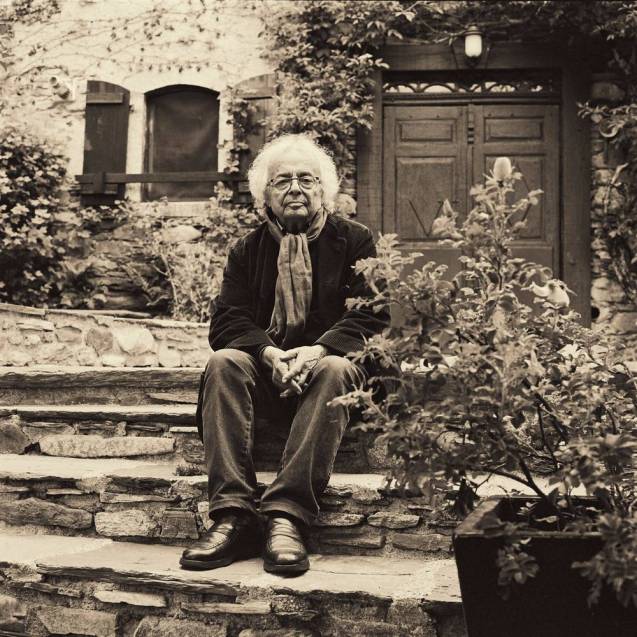
Adonis was born in 1930 in Qassabin, a village nestled between the city of Latakia and the Assad family stronghold in Qardaha, Syria
© artphotolimited.com

Adonis’ home and his office, which he calls “the best organised disorder”, are located on two different floors of La Gambetta, with a permanent security centre at a wide entrance hall. While we wait for one of several elevators, there are many Muslim women who go up and down, their hair covered by hijabs.

It’s kind of ironic that a place rented or owned by “wealthy Arabs” of the Persian Gulf had become the second exile (after Beirut) of the poet who wants to secularize the Arab world.

On September 18, Saturday, 9:30 am, I ring the doorbell. At the entrance a smiling man appears, his grey hair more upright than usual, elegantly dressed in blue jeans, a black corduroy jacket to match a striped shirt and a scarf in various shades of pink.

I am invited to sit down in one of the sofas of a living room packed with hundreds of books. The walls are covered with paintings, his own and of personal friends. Magazines, letters, papers, pens and pencils, and a box of baklava, traditional Turkish sweets, are randomly displayed on a table in front of host and guest.

Adonis has just returned from Ankara and Izmir, and he has his bags already packed for a conference in the United States.

His wife, literary critic Khalida Esber, had been hospitalised the day before. He has a serene expression on his face, as serene as the music we hear on a small radio. The sun enters with its radiant energy through one of two windows.

“You know my story, I do not need to repeat it, right?,” says the son of peasants to whom his parents gave the name of Ahmed Said Esber when he was born in 1930 in Qassabin, a village nestled between the city of Latakia and the Assad family stronghold in Qardaha, Syria.

He does not believe in deities but “Adonis” was the name he gave himself at the age of 17, inspired by the Greek myth of the Greek-Phoenician god of fertility.

He was frustrated that no publication was accepting his poetry and articles. How could they ignore the youngster who, at 13, made such a good impression on the first post-independence President of the Republic when he declaimed his first poem in front of him? His reward was a scholarship at the Lycée Français of Tartous.

A perennial contender for the Nobel literature prize, Adonis was already familiar with the classical Arabic and pre-Islamic poetry, and the works of Baudelaire, Rilke, Char and Michaux when he graduated in Philosophy at the University of Damascus in 1954.

In 2011, he was awarded the no less prestigious Goethe Prize (one of many in a seven decades career), recognised as “the most important Arab poet of our time.”

Adonis has a delicate and indomitable personality. Here he is, the Syrian Socialist who first fled to Lebanon in 1956, after eleven months in jail on charges of subversion for opposing “the totalitarian ideology” of the Ba’ath Party, and who, in 1985, during a civil war, looked for shelter in France.

Here he is, a good friend of the late Palestinian national poet Mahmoud Darwish (1942-2008). Both introduced new Arab talents in literary magazines that Adonis directed – Chiir and Mawáqif.

Here he is, the writer who blessed the 2011 “Tunisian Spring”, but refused to support “a revolution coming out of mosques” in Syria. Because, he says, all Arab dictatorships and not only the one in Damascus have to be toppled – peacefully and not by force.

Invited to his Parisian home, I came in with one of Adonis’ most important books, Chants of Mihyar le Damascene (Gallimard). After a five-hour interview, I was offered one of his “indecipherable” paintings, and an anthology of his poems in Portuguese (selection and Arabic translation of Michel Sleiman, introduction by Milton Haitoum; Companhia da Letras, Brazil).
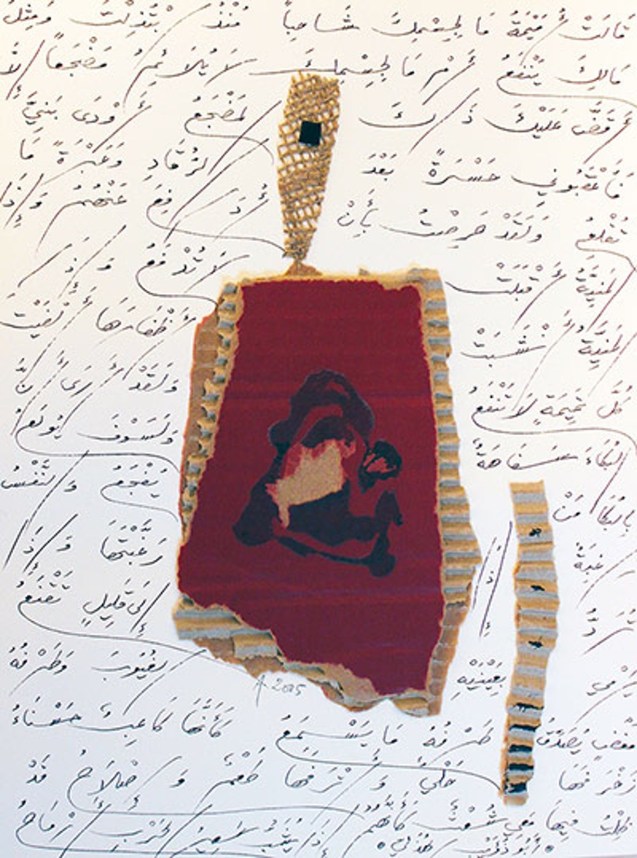
Untitled 2005 'The text here is from a pre-Islamic poet, Abu Zu'aib Al-Huzali which speaks of his life and loves. The cardboard comes from a torn-up box of books' © Adonis | The Guardian

Untitled 2005:  “The text is from a pre-Islamic poet, Abu Zu’aib Al-Huzali which speaks of his life and loves. The cardboard comes from a torn-up box of books”
© Adonis | The Guardian

You are 85-year old and your energy seems inexhaustible. You’ve just arrived from Turkey and you’re already preparing for another trip. How is your daily routine?

I have this energy because I feel that I have something to say. I live to work. I have no rules. I am totally free. There are days when I work in the morning; in other days I don’t.

I do not follow any discipline, like other writers. I wonder how writers have an organised life: an hour to write, another to eat, another to read… I am against any planning. From time to time I like to do nothing. I’m just quiet, listening to music…

You were listening to music when the door opened…

Yes, I was listening to classical music, my favourite. When I’m a little lost, I love listening to Beethoven. Mozart… for when I’m sad or joyful. I also love Bach.

Music and words, what defines you better?

I do not fit in any category. Definitions distort things. Things are open; to outline them is to close them. Only two words are meant to be definitive, “religion” and “ideology”. And I oppose them because a word is a search for infinity.

Aren’t you defining yourself as a poet?

Oh, yes, I am a poet! And I speak as a poet. But poetry is not just about writing poetry. Poetry speaks of problems – does not offer any solution. Poetry is a thought.

All great poets have been or are great thinkers. One of them was the Portuguese poet Fernando Pessoa. Pessoa’s poetry is one of a free thinker.

“We die if we do not believe in gods/ we die if we do not kill them.” What did you mean when you said that?

The free thinker’s duty is to create gods and to kill them immediately, in order to get a perpetual renewal.

You also said, “Military dictatorships control the spirit and religious dictatorships control the mind and the body”…

Yes, religious dictatorships kill the whole human being.

It’s not possible to reconcile religion and poetry – why? In Portugal, there is a great poet, José Tolentino Mendonça, a priest and free thinker who is admired by believers and non-believers…

…In his poetry, he is certainly an open person. He has personal beliefs. I respect the faiths of individuals. But I can’t stand when people  force their religion on me.

Religion is a personal issue, like love. I am against organised religion. Do all people think the same way? No, and I refuse that. If we want a “social religion”, it has to be the one of human rights, of freedom, of brotherhood.
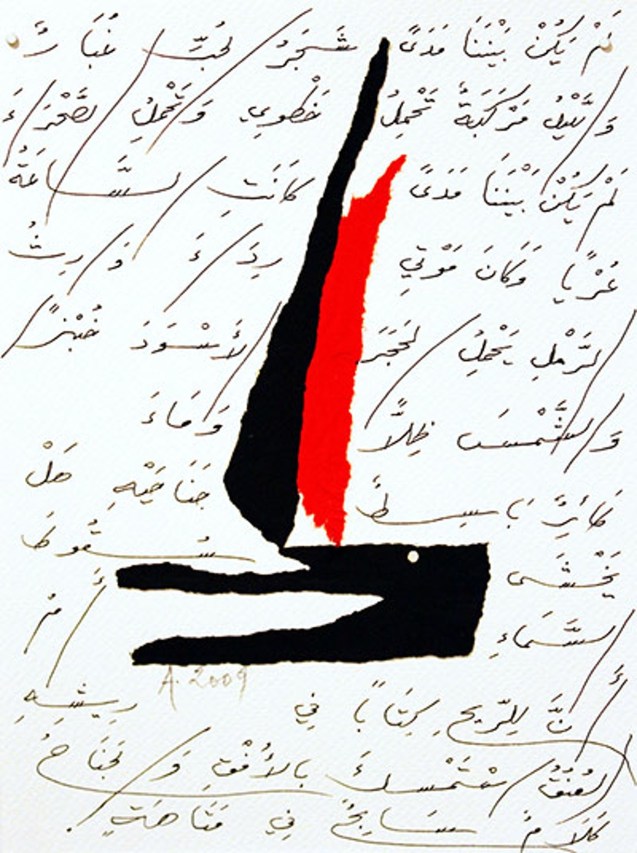
Untitled 2009 'This text is part of a love poem. It’s one of a series of rakaim using my own poems for a book which I’m putting together at the moment' © Adonis | The Guardian

Untitled 2009: “This text is part of a love poem. It’s one of a series of rakaim [images of calligraphy and figurative gestures”] using my own poems”
© Adonis | The Guardian

Religion has been used as an instrument of war, and your country is a battlefield where religion serves as a source of political conflict. What are your memories of Syria?

I have many memories: the one of my village, my childhood, and the childhood of Syria – the birthplace of Europe. There is a legend, in which I believe, that this continent owes its name to the Phoenician goddess “Europe”.

Zeus turned into a bull and carried her off. And while looking for her, Cadmus, Europe’s brother, brought with him the alphabet. He did not bring war.

Syria is the cradle of great civilisations and of the three monotheistic religions. I respect these religions, even if I’m not a monotheist. What I condemn are the totalitarian aspects of religions.

But in your childhood you have studied at a Koranic school…

Yes, I was born in a religious environment [the Adonis family is Alawite, a ramification of Shia Islam], but over time I gave it up. I was then 14-15 years old. My father was friendly and compassionate. He never impose his ideas on me. He gave me some useful advice: “First think, my child, and then act.”

I have three brothers and two sisters (one passed away). We’ve always respected each other’s freedom. My mother, who died at the age of 107, was a free woman. I still have family in Syria but, unfortunately, it has been five since the last time I saw them.

You have never returned…

No. I wrote a book about what’s happening there, Arab Springs: Religion and Revolution. I keep repeating the same over and over, that we cannot create a revolution based on religion. Humanity needs a revolution that totally separates religion and state, the politics, the culture and the society. Religion should be left to the conscience of the individual. We have to take back our creative freedom.

Everyone has the right to change their mind, but Muslims are not even allowed to change their religion. Doing that would be tantamount to a death sentence. I refuse to march in a political demonstration that begins in a mosque. This is my manifesto. At the beginning, I was strongly criticised for expressing this position, but I’m getting lots of support lately.

The initial protests against Bashar al-Assad in 2011 were not religious. Syrians were demanding reforms, not regime change. However, the security forces cracked down on peaceful vigils…

…There has always been opposition in Syria. I’m a dissident since 1956! I’ve always condemned the policies of the Baath party [which had the monopoly on power in Damascus, and in Baghdad under Saddam Hussein].

The Arab Left, including the Communists, was never radical in its essence. Their main aim has been to attain power, not bringing about change in society.

Take the case of Egypt for instance: Gamal Abdel Nasser was a great leader, but we can’t find modern institutions in his legacy.

One notable exception is Habib Bourguiba [1903-2000], in Tunisia. He changed the law and gave more rights to women. Tunisia is perhaps the only country where the social fabric is not religious, where the fundamentalists know that they can be removed at any time.

We cannot make a revolution just to overthrow one single dictator. The imperative of a revolution – a peaceful, not violent one (I am more Gandhi than Che Guevara) – is to change the whole society. For two centuries the Arabs have done no more than changing regimes – but they do not change anything.

Isn’t regime change the first step?

We have changed many regimes but we are not building universities…

… Well, in Saudi Arabia, home to a strict version of Islam, the former king founded a university with no gender segregation, Qatar is hosting branches of leading English, and American universities…

…I mean universities in the modern sense, not academic institutions where religion remains the dominant force. Let us go back to what is happening in Syria.

What we see out there is not the Syrian people trying to topple the regime, but mercenaries destroying the country. This is not an independent revolution. On the contrary, it is totally under the control of foreign forces.

What we are witnessing is an invasion. Where are the true revolutionaries defending new principles for our future? The so-called “revolutionaries” al-Nusra Front, an ally of al-Qaeda, and “Islamic state” [Daesh] never speak of women, for example. It’s like if women do not exist, but it is crucial to liberate women from religious oppression.

Those “revolutionaries” also never speak of secularism. So, how can we make a revolution without questioning religion? The purpose of the foreign forces [in Syria] is to change a regime whose political color displeases them, and to replace it with a more favourable to their interests. This is a coup, and I am not interested in it!
Untitled 2008 'This is the only collage in the exhibition where I've used black ink. It's a text from the 8th century – another beautiful love poem – this time by Bashar ibn Burd, one of the founders of Arab modernity at that time. He was killed by the Caliph after he was accused of being irreligious' © Adonis | The Guardian

Untitled 2008 : “This is the only collage where I’ve used black ink. It’s a text from the 8th century – another beautiful love poem – this time by Bashar ibn Burd, one of the founders of Arab modernity at that time. He was killed by the Caliph after he was accused of being irreligious”
© Adonis | The Guardian

Past Arab revolutions were more ideological than religious…

Yes it’s true. There were times of hope when I was young. Religion had no ideology, or it was practically invisible. I was never asked, “What is your religion?” Today is the opposite.

Is this a challenge for the “Arab Spring” generation?

The “Arab Spring” failed because of reactionary forces (Saudi Arabia, Qatar, etc…), and foreign interests. But I still have faith in a generation who has not given up [on reform]. Being democratic is to recognise and accept that “the other” is different. This is not to be confused with tolerance. There are racist feelings behind the notion of “tolerance”.

Democracy demands freedom, not tolerance. Christians must have the same rights as Muslims, and this can only happen when religion becomes an individual choice. Democracy should not be reduced to a slogan.

“The free thinker must always support what is revolutionary but never be like the revolutionaries.” Why did you say that?

An operative revolutionary is only focused on tactics, strategies… Not me. I’m a genuine revolutionary. A free thinker is committed to change the society, not just the regime. I express myself in the language of real revolutionaries.

I never repeat what the operative revolutionaries say, because a writer has to be a truly free person. I support the real revolutionaries, but I am alone in this revolution. Ideology is against art. I am a militant, not a partisan.

You need inner strength since your positions are somehow controversial…

Yes. When we are not partisans, we run the risk of having a lot of people against us. Some people criticise me because I don’t use their words. I refuse to repeat their slogans.

I remained a militant. In our culture, unfortunately, everything is based on the unity – of God, of politics, of the people. But you cannot have democracy with this mentality. Who owns the truth? Nobody.

Untitled 2011: “This is the only rakima [singular of rakaima] where I’ve used a photograph. It’s a young woman protesting against the wall in Palestine. The text is an assemblage of pre-Islamic writings which speak of peace and against oppression” © Adonis | The Guardian

Untitled 2011: “This is the only rakima [singular of rakaima] where I’ve used a photograph. It’s a young woman protesting against the wall in Palestine. The text is an assemblage of pre-Islamic writings which speak of peace and against oppression.” Adonis says that he supports “the real revolutionaries”
© Adonis | The Guardian

At the presentation of the Goethe Prize in 2011, you made an appeal to the Arab regimes: hear “the cries of the people” or face a “catastrophe”. In Syria, the President refuses a compromise. Syrian civilians are being bombed and massacred. Syria’s UNESCO heritage sites have been damaged or destroyed…

…It is an unprecedented situation. I have never imagined that this would be possible in my whole life. Everybody is responsible – not only the regime, although it’s the main culprit.

I wrote an open letter to Bashar al-Assad [published in the Lebanese newspaper ‘As-Safir, in 2011], asking him to give back voice to the people and not use violence, and to create the conditions to impose a secular system. He ignored me.

However, I also do not understand those who fight a despotic regime only to benefit another, as the Islamists are doing.

Would a peaceful transition have been possible had Assad accepted the initial calls for political and social reforms?

When judging the Arab regimes, the Syrian – at least in what concerns the development of society – was almost the best of them all. If we want to liberate the Arabs, we must rise up against all the dictatorships without exception! Hypocrisy reigns in the West, more interested in colonisation than in  human rights.

There are still monarchies in Europe – some constitutional and others merely symbolic. But they are not absolute and hereditary as the Arabs dynasties. It is too early to judge the current events in Syria. Many people have already realised this is not the revolution of their dreams. And, sadly, the regime is stronger than ever.

Why?

People are making comparisons. The regime was dictatorial – no doubt about that – but one thing is to fight the dictatorship and another is to destroy a country. The opposition needs to be strengthened.
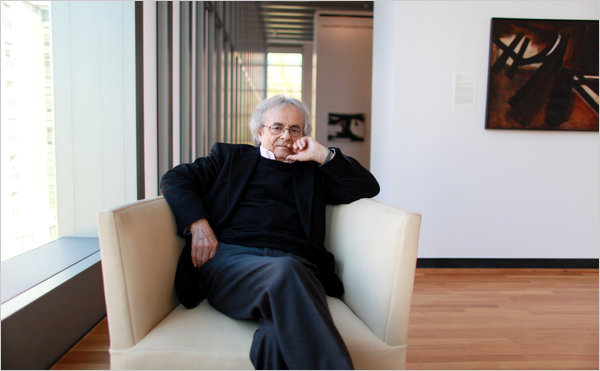
Adonis refuses to be a

“I am a militant, not a partisan,” Adonis says
©Fabrizio Costantini | The New York Times

For a long time the Muslim Brothers were the only opposition willing to become martyrs for a cause. Secular activists, like Adonis, chose exile over death in fighting the regime…

No. No! I was in prison and I was not alone. The dictatorship oppressed above all the secular and civic movements. The regime favored the religious groups. Damascus is now a forest of mosques. And it was the regime that created it, the regime that oppressed all those who advocated secularism and freedom. The regime knew how to use the believers, because the secular were a greater threat.

So, was the religious opposition strengthened with the exile of secular dissidents?

Perhaps, perhaps, it favored. I can only talk about myself: I am not, I repeat, a partisan. I’m not a politician. I am a man of culture. I am a poet. [The conversation is interrupted to answer a phone call from a friend.]

Sorry, but we are preparing the publication of Islam and Violence, which should come out in November this year, and the III volume of Al-Kitab [“The Book” – considered a masterpiece] as well. It’s a comedy like that of Dante, but his is focused on heaven and mine is on earth. It is about the hell of Arab history.

Do you still remember your first poem?

That part of my story is almost legendary. I keep on asking myself how everything was possible. What prompted me to write that poem, the certainty that the President would like it and would ask me, “What do you want in return?”, my answer, “I want to go to school”, and he accepting my request. This imaginary dialogue took place exactly as I had envisioned. So I can say I was born in poetry. I was born in classical poetry.

What does inspire you?

There is no inspiration. There is work and there is life. There is a relationship with people and with things. It is as if I had got a revelation… I am a pagan prophet.

Some subjects are always present: friendship, love, eroticism or nature…

… I write about the universe. Men are extraordinarily complicated creatures. They are wild and divine. There’s the man who beheads another man. There’s the man who opens to humanity. I love all my poetry. If I did not love it I could not write it.

I write about the demons of the Arabs, from an internal, not  external perspective. We are living in a culture that leaves no room for questions. Not even God has the “right of answers”. (Laughs)
A father speaks with his children in an underground Roman tomb which he uses with his family as shelter from Syrian government forces, at Jabal al-Zaweya, in Idlib province, on February 28, 2013. The ancient sites are built of thick stone that has already withstood centuries, and are often located in strategic locations overlooking towns and roads. © Hussein Malla | AP

A father speaks with his children in an underground Roman tomb which he uses with his family as shelter from Syrian government forces, at Jabal al-Zaweya, in Idlib province, on February 28, 2013. The ancient sites are built of thick stone that has already withstood centuries, and are often located in strategic locations overlooking towns and roads
© Hussein Malla | AP

Where was your poetry born?

At home, and on the street, at day and night… There is no specific time for poetry or for love. All my time is for poetry and for love. It does not matter when, where, how.

Have you been influenced by other poets?

It is essential to have a personal and particular light. We can add this or that , but poetry is vertical. It is not linear. It must come from within. Only then every word is built. Each poet has his own space.

Only bad poets imitate phrases or images. For example, if I like Goethe or Dante, I will not do exactly like them. Their influence compels me to create a totally different world from them, a world of my own. That’s my only poetic influence. To mimic a culture is a commonplace.

That’s why you’ve decided to “rewrite” the entire Arab literature and poetry…

…A poet could not have done otherwise. I broke with the past. I revolutionized the order of things. That’s what matters to me. The Arabs are not equal in their language, and they are aware of this. I often say that Islam became a religion without language and without culture.

Those who listen to the Koran are now more than those who read it. But Arabic is not just music. It has body, voice, dreams, and imagination… One more problem: there is no philosophy or philosophers in the Arab world. There are no psychoanalysts, and we are more in need of Freud than of Marx. Arabs are consumers of Western modernity, but they still refuse its rational principle.

Who are your favourite poets ?

My first poet was a philosopher, Heraclitus [535-475 BC, approximately]. It was he who said that we can’t dive twice in the same river. I love very much those who are not poets in the classical terms. Nietzsche was a great poet.

I love the ancient texts of the Latin poets, the Romans and the Greeks. Of modern poets, I love Rimbaud, Baudelaire [that Adonis translated into Arabic], because they were both critical of the established order, especially religion. I don’t like to speak of those who are still alive, but I really love the classical Arab poets like Ibn-Arabi, Abu Nuwas and al-Niffari, who were much more revolutionary in their time than Baudelaire was for Europeans.

However, I rediscovered Abu Nuwas by reading Baudelaire. It was by reading the Surrealists that I have understood the greatness of al-Niffari, a rebel against religious institutions.

Nawas and Niffari changed the aesthetics and beauty of the Arabic language. They expanded the concept of poetry. They revolutionised the Arabic language, the Arabic poetic language.
A Syrian street vendor who sells cigarette boxes, sits in front of destroyed shops which were damaged by the shelling of the Syrian forces, at Maarat al-Nuaman town, in Idlib province, on February 26, 2013. Syrian rebels battled government troops near a landmark 12th century mosque in the northern city of Aleppo on Tuesday, while fierce clashes raged around a police academy west of the city, activists said. © Hussein Malla | AP

A Syrian street vendor who sells cigarette boxes, sits in front of destroyed shops which were damaged by the shelling of the Syrian forces, at Maarat al-Nuaman town, in Idlib province, on February 26, 2013. “Many people have already realised this is not the revolution of their dreams,”Adonis says
© Hussein Malla | AP

Do you always write in Arabic?

Yes. It is my mother tongue. Arabic is more than my skin. It’s the body. You cannot translate an Arabic classic poem – because to translate is to destroy it. Translation is like a new creation. And yet, even if it is “a betrayal”, we need to translate.

Do you write your poetry on the computer?

Never! My wife uses the computer to type my handwritings. I cannot imagine a machine separating the poem from the body. I have so many notes that it is impossible to quantify them.

When feeling tired, I prefer to write prose instead of poetry. For the last ten years, I have also been dedicating myself to design and to collages.

How did you start?

It was by chance. Sometimes I find it hard to read or write. So, many friends and a few painters asked me, “Why don’t you try something [different] in your spare time in the spirit of poetry?” And I tried to do something rather than do nothing because there was a time when I stopped doing everything.

Then, I had to start over. Michael Camus [1929-2003], a friend who has already passed away, saw my collages and asked: “Who did this?” I replied, “It was another friend.” And he added: “I have to know that friend.” I had to concede: “I did it.” He was always by my side, and organised some exhibitions.

What does “exile” mean to Adonis?

We are all exiled, because living in this world is not our choice. We do not choose our parents or the place where we are born. A free thinker is always establishing a distance between himself and the others. When we move away from home, we understand our country much better.

We are exiled in our own language. For a free thinker, exile is a natural state. I could not write and live without this distancing. The same happens with love: only two lonely bodies can make love.

There is no motherland/fatherland…

…Our country is where we write – it’s not geography. Human life is the greatest asset. That is why poets see themselves as brothers, regardless of their language, nationality or country.

Between my exile in Beirut and Paris, there is only a difference of degree. In France, it is a more restful and open environment. In Lebanon, it is more intimate and natural. Perhaps, in a sense, Fernando Pessoa is closer to me than an Arab poet.

A Syrian refugee boy poses with his newborn brother as their mother lies near them in a house in the Basaksehir district of Istanbul, on March 4, 2014. Syrian government forces are waging a campaign of siege warfare and starvation against civilians as part of its military strategy, a UN-mandated probe said on March 5. Syria’s war has since March 2011 killed more than 140,000 people and forced millions more to flee.
© Gurcan Ozturk | AFP

What do you know of Portuguese poetry?

I know Miguel Torga and Nuno Júdice, but not very well. As for Fernando Pessoa, I read him as an incomplete man in search of himself. I feel that he also repeats himself. He says in two pages what he could have said in two lines.

The Arabs are like that. I’ve just changed that a little bit. I believe that by living and loving we do not need to use many words.

I’m not criticising. I do not like to judge or to insult. On the other hand, I love having enemies, provided that they are not ignorant. A great enemy is like a good friend. A great enemy respects us. Only petty people who have nothing to say are disrespectful to others. Bad poets condemn, the great ones forget.

You were the first Arab writer to win the prestigious Goethe prize, and you have been a “perennial contender” for the Nobel prize in literature. In 1988 you were a betting favourite but the winner was the Egyptian Naguib Mahfouz. Since then you have been in every list…

…Mahfouz was a great writer and I liked him a lot. I do not care about the Nobel. To be honest, I do not seek this glory. The prize money, though, could help me to have a less difficult life – because I have to write and travel a lot.

[We are now in the studio, two rooms – one for his paintings and collages, and another that serves as storage. More books, photographs, newspapers, frames, records, relics… are everywhere. We have to be careful. One misstep and some treasures might be lost.]

On this wall there are two photographs of Portuguese José Saramago, recipient of the 1998 Nobel Prize in Literature. Have you read some of his books?

None! To be honest, one of my daughters appreciates Lobo Antunes more than Saramago, but I’ve never read him either. These pictures of Saramago embracing his wife [in Lanzarote, Spain], I put them on the wall because they are beautiful, and they express a love relationship.

[Pointing to a postcard] They are like this image of The Origin of the World by [Gustave] Courbet. Many people where in shock when it was painted [in 1865] because it shows the genitalia of a woman.

I like to write about the body – marginalised, oppressed, hidden by religions. If you do not know your own body, how do we get to the “other”?

Are you afraid of death?

It is often necessary to die in order to live. I don’t fear death. I’m only scared of dying if I leave behind an incomplete poem.

How do you expect to be remembered by the Arabs?

I do not care how I will be remembered. My only interest is to create what the Arabs do not know or they have never met.

A great poet does not write for others. He writes to better understand himself and to better understand the world. I do not write to leave a message. I write in order to be a place of encounter with others.
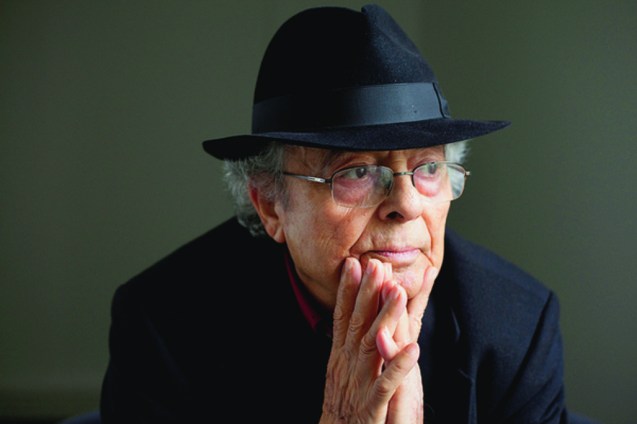
Adonis, one of the greatest Arab writers © Magali Delporte | Picturetank

Adonis, always a top contender for the Nobel literature prize
© Magali Delporte | Picturetank

This article, edited for clarification and updated, was originally published in the Portuguese news magazine VISÃO, on December 3, 2015