Netanyahu has to deal with Palestine, Iran is no longer a distraction

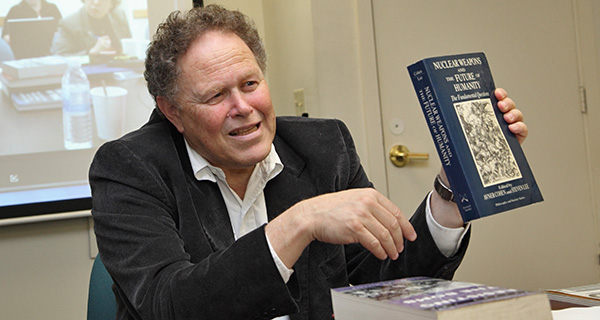
Historian Avner Cohen is professor of Nonproliferation Studies and Senior Fellow with the Center for Nonproliferation Studies at the Middlebury Institute of International Studies, in Monterey (California). His internationally recognized areas of expertise include the Israeli nuclear program; nonproliferation issues in the Middle East; nuclear disarmament and nuclear weapons free zones”. His most acclaimed book, Israel and the Bomb, was published in 1998 and the latest work, The Worst Kept Secret: Israel’s Bargain with the Bomb, was published in 2010. Dr. Cohen gave me this interview for an article published in the Portuguese newspaper EXPRESSO following the historic deal reached between Iran and six world powers over its nuclear programme. (Read more…)

© All Rights Reserved

Was this framework deal a surprise to you?

A little bit. I think the accord is stronger and better than I thought it would be. So, if anything, I think it was a good surprise. It is stronger than I thought.

Can you explain why?

Yes. It put very tough restrictions on Iran, and some of them are only for ten years but others, in terms of the amount that Iran can accumulate, in terms of percentage of [uranium] enrichment that Iran will be allowed to do. Some [restrictions] go from 15 to 25 years. Specially, it is a complex scheme to put quite tangible limitations on Iran. It is not perfect, but is seems to me very much the right compromise.

Is it a compromise that Israel will accept?

Israel will have to live with. They will not accept but it is not up to them to accept it, but will have to live with. There are some constituencies, both in Iran and in the United States, that are also no fully happy with it. And it has to pass, in some fashion, which is not clear yet how, through the Congress.

It is not a treaty, so the Congress does not have to approve the text. But Congress will be involved in some fashion. It is not clearly politically in America, and I think Israel is going to try to mobilize the Congress to be against [the deal].

It is not clear to me and it is not obvious that Congress will be able to jeopardize this agreement. If the United States will be loyal to that [the framework] and the Iranians as well, I think that in this case Israel will live with it.

Remember that this only the general parameters, a framework of principles. The details, the entire thing, will be known only in three months [June 30]. This is a general outlook not the full blueprint for implementation. So, it is good but again the devil is in the details. Let’s wait to see how it will work out in the next three months.

And three months in the Middle East is a long time…

That’s right!

© gadocartoons.com

© gadocartoons.com

The negotiations were a very long and difficult process, but why was it possible now to reach this compromise, with the apparent blessing of hardline Iranian Supreme Leader (Ayatollah Ali Khamenei) and not earlier, under reformist President Mohammad Khatami?

I think that it needed time, in part to make it clear to the Iranians that only a deal would permit to lift the sanctions. The Iranians can tell a nice story but the limitations imposed on them are really tough.

When the agreement will be implemented the sanctions will also be put aside, as long as Iran keeps their agreement. There were great incentives for Iran to go ahead with this agreement.

I think the young generation and various segments of Iranian society wanted Iran to be back into the community of nations, to have trade, to have commerce and to remove the sanctions. If you noticed, [the Foreign Minister Mohammad Jafar] Zarif and [President Hassan] Rouhani were received very, very warmly, in their arrival to Teheran.

It was a great reception, including by the Green Movement suppressed when [Mahmoud] Ahmadinejad was elected for the second time [in 2009]. This expresses the desire of many, many people within Iran, and I think that some hardliners realize that there is a large segment of the Iranian population that want to move forward and have a fresh start.

This deal is very much limited to the nuclear program. It does not mention human rights, the hostility towards Israel… Is it possible to approach these other subjects later on?

Maybe. I think that it very much depends first on how are we going to conclude the whole process, because this is only an outline and not the entire thing, yet. But it is an eyes opening and it could open the door for some kind of a better dialogue.

But we have to take in consideration that there are elements in the Middle East, and not only in Israel, who are not happy with it, and don’t want to see current Iran receiving legitimacy.

Saudi Arabia, other states in the Gulf and Egypt are not happy, specially now with the issue of Yemen [a war against the Zaidi Shia rebels known as Houthis]. So, Iran will have to show that it has a new face and that’s go beyond the nuclear issue, but the tension is still in the nuclear issue.

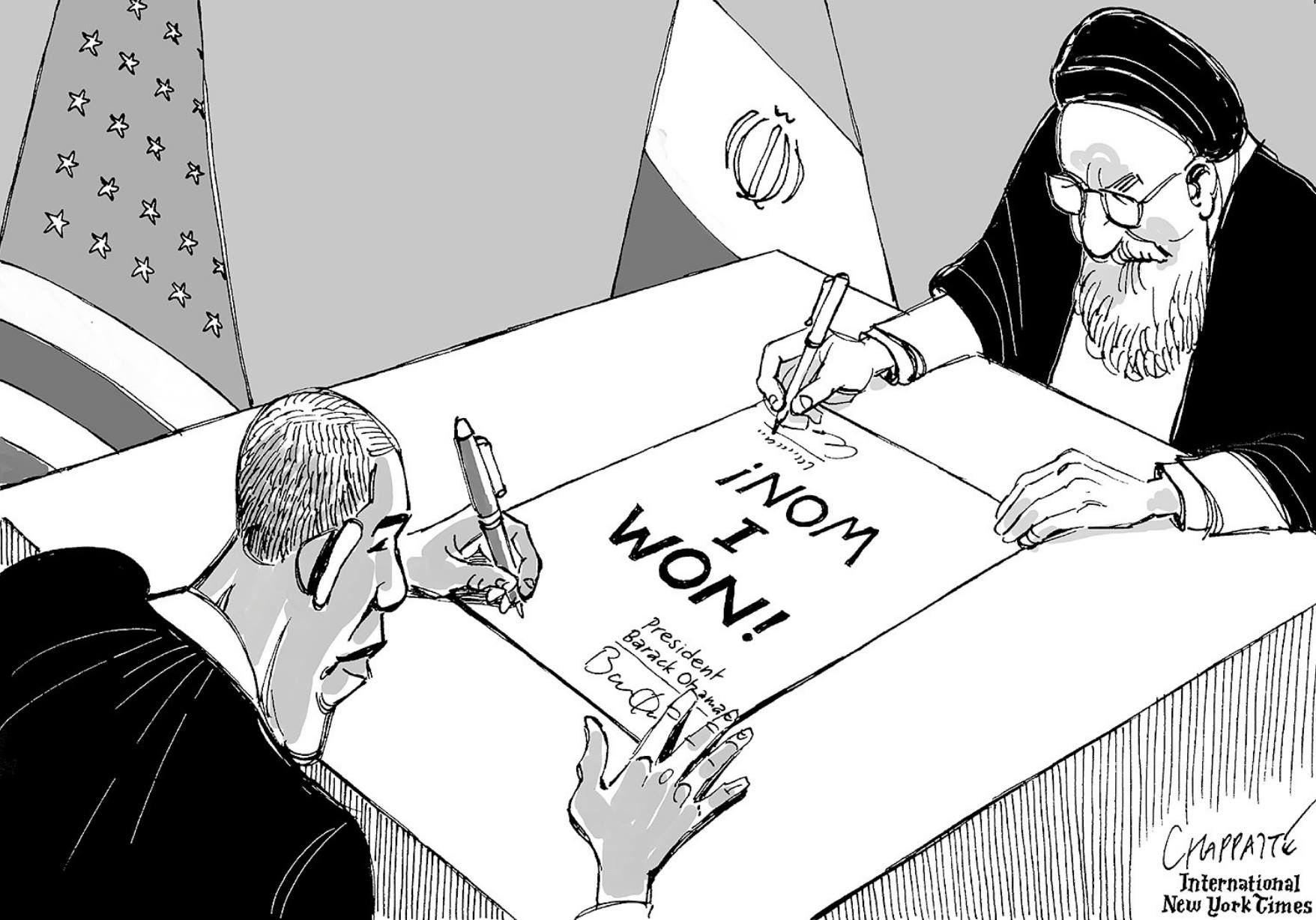
© Chappatte | International New York Times

© Chappatte | International New York Times

In your opinion, did the sanctions have real impact, and did they force Iran to accept this compromise?

I think so, yes! The sanctions were critical to change attitudes in Iran.

Some analysts say that the immediate effect will be felt after Europe lift their sanctions, because European companies are eager to be back to Iranian markets – the United States being the last one to do it…

… That’s right.

As you said, there are several forces in the region that will never accept to offer legitimacy to Iran, in part due to the sectarian conflict Sunni versus Shia, but why is Iran so demonized by the international community and not Saudi Arabia, the country that has been exporting an extremist brand of Islam used by jihadists to propagate terror? Why is so difficult to give Iran a place at the table of nations while offering everything to Saudi Arabia, the source of inspiration of Al-Qaeda and of the so-called “Islamic State”? Sorry for being so naïve… but I really would like to understand.

Well, I think it is a little bit naïve. We have to think about at what extent Iran will have hegemony, influence in the Middle East much beyond its territory, because it has a great deal of interests in Lebanon, in Syria – even if this country is in civil war today –, in Iraq, where it influences a Shia-led government…

In the eyes of Saudi Arabia, the vanguard of Sunni Muslims, Iran is a threat. And Iran is seen often as using tactics of interventions, sometimes being a proxy, sometimes through terrorism, to make other countries very nervous, in particular in the Gulf. I am not surprise that Gulf countries such as Saudi Arabia and the United Arab Emirates are nervous.

Several analysts (Stephen Kinzer, being one of them, in his book called Reset) argue that it would be much better for America to have Iran as an ally than Saudi Arabia. What is your assessment?

I don’t think that the United States would easily abandon Saudi Arabia towards Iran. I don’t see that happen – anytime, in any possible future.

Why – because of the current Iranian regime?

In the eyes of the Saudis, Iran poses an existential threat to them. Moreover: they need to be reassured that they can rely on America as an ally. So, the credibility of the United States as an old friend, in what concerns Saudi Arabia, is very much on the line here.
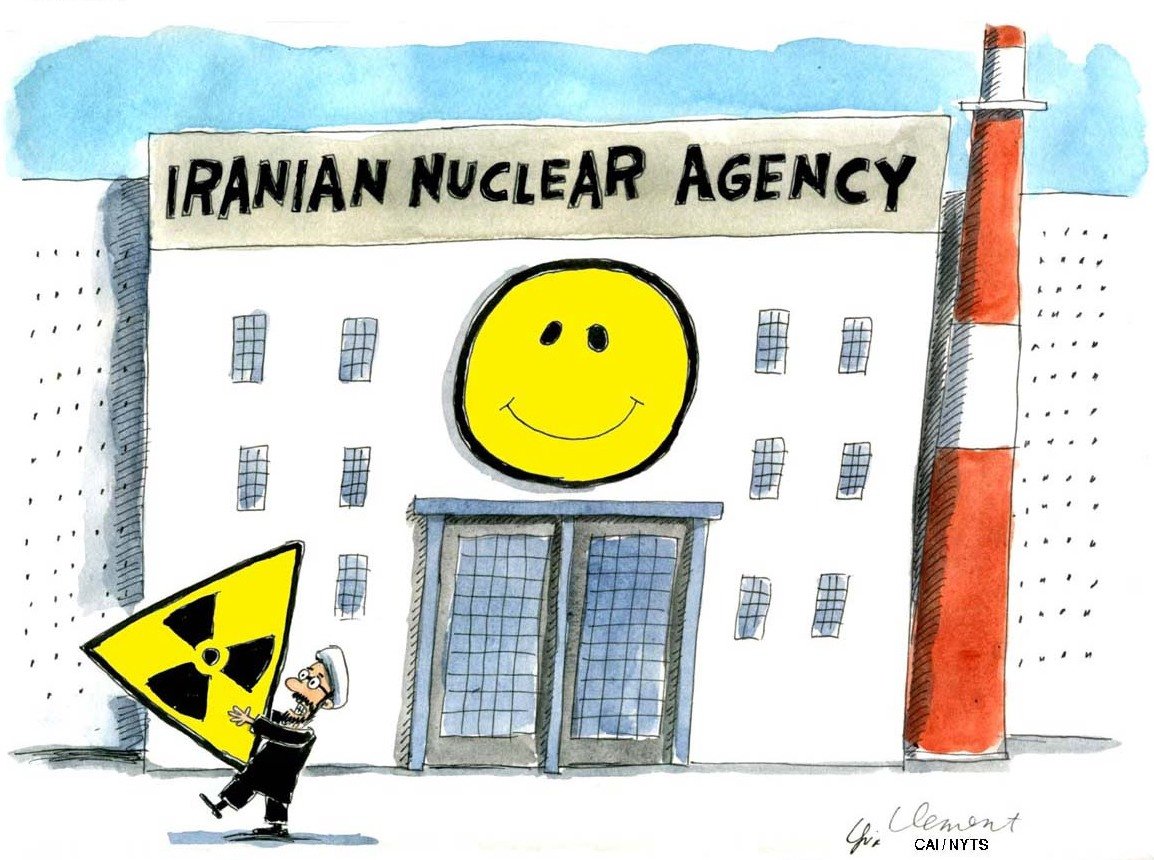
Canadian cartoonist © Gary Clement on the new happy face of Iran's nuclear program. ©CartoonArts International | The New York Times

Canadian cartoonist Gary Clement on the new happy face of Iran’s nuclear program.
© CartoonArts International | The New York Times

For the Saudis, as you said, it’s a kind of existential challenge. What about Israel? Prime Minister Benjamin Netanyahu says ‘yes it is’, but other officials, some of them former Mossad chiefs [Meir Dagan and Efraim Halevy being the most vocal critics] have been underlining that the real threat to Israel is the Israeli occupation of Palestine not Iran. What is your opinion?

Iran without nuclear weapons is not an existential threat to Israel. It’s a problem and it’s a challenge, but in my view it is not an existential threat.

Benjamin Netanyahu is very much alone [when, for instance, he compares Iran to Germany’s Hitler or says that his “biggest fear is that Iran will honor the nuclear deal], in part, because in the views of many people he is not very much resolved into reach reconciliation in what concern the Israeli-Palestinian issue.

Many Israelis, including many with very good security credentials, don’t buy what Netanyahu says. If this agreement works, if Iran will prove that it will not be a problem for a generation, it could be a good time for doing other things.

Obviously, Netanyahu is very much interested in put aside the Palestinian issue because of the Iranian issue. Many Israelis with solid security credentials are not buying Netanyahu’s argument that Iran is an existencial threat.

If this agreement [in Lausanne] will work, at least if it is going to buy us time, that at least in a generation Iran is not a problem, that could be a good time to do other things. Obviously, Netanyahu wanted very much to put aside the Palestinian issue to focus on Iran.

This deal changed the agenda for him and made his job much more difficult in what regards the control of the Palestinian territories. He is not willing to give up on Iran because it will force him to change the entire agenda.
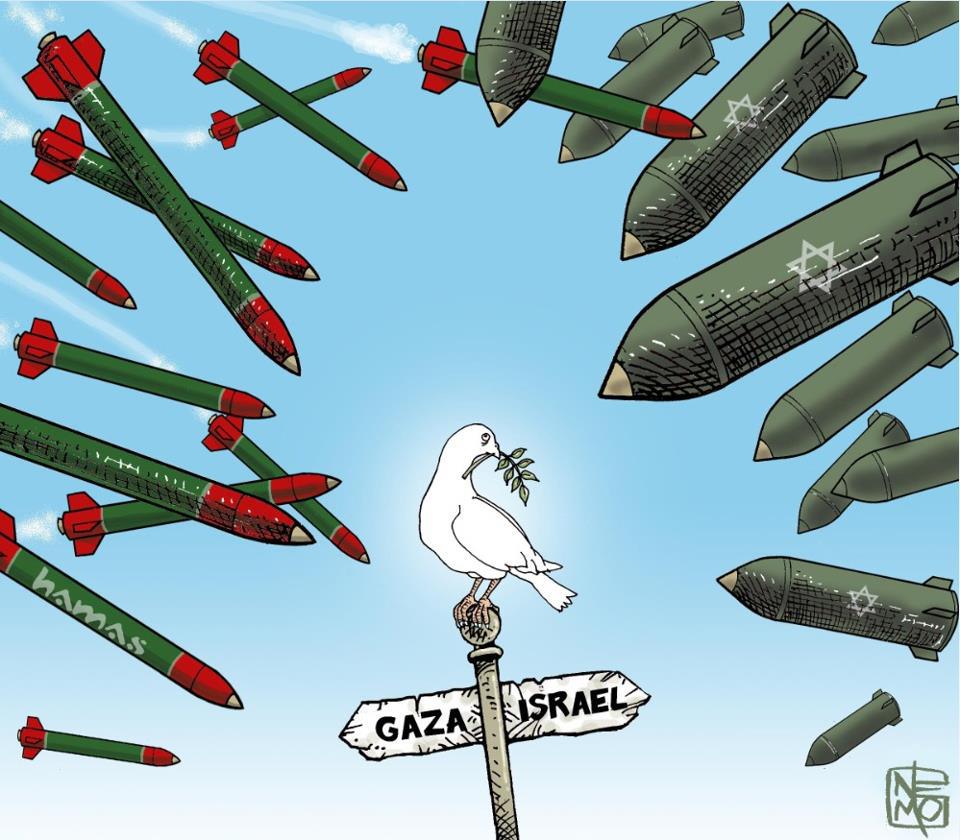
© NEMØ

© NEMØ

In your books and articles you say Israel had an existencial need of a nuclear program because of the Holocaust. Nonetheless, more recently you have been defending that it is time for Israel to abandon its long opaque nuclear policy and end the tabu…

… When I say it is the time, I do not mean: “Right now!” First, the Iranian nuclear problem must to be settled. Sometimes in the future, yes. When I wrote this, a few years ago, I said “in general”, and I agree with you.

For now, let’s settle the Iran issue first and not confuse both. It wouldn’t be wise. It would add confusion bringing this into the picture. At this point, it would not be useful or healthy to connect them.

Why?

Well, because it would complicate things. For the time being, Israel still has to internalize psychologically that they are not under any security and existential threat.

To bring now the [Israeli] nuclear issue into the openness, into the center, would invoke anxiety in Israel, and I don’t think it is wise to do it at this time, even if in principle. I think [that the end of the opacity policy] should be done sometime and that we cannot ignore it indefinitely.

First let the Iranian deal to be settled, to push for Israeli-Palestinian issue, and then put the nuclear Israel program as part of a overall deal, but not at this time.

Are you speaking of a generation’s timeframe?

Probably, it will be less than a generation. It will depends on what is going to happen, but in a few years from now.

Are you optimistic?

I am moderately optimistic. After Netanyahu’s reelection [in March 2015], I predicted that the Israel-US relations would be much more stormy, but on the question of Iran, I am moderately optimistic.

If indeed we have a deal in June, it would force Israel and the world to deal primarily with the Palestinian issue. The Iranian issue will not be there anymore as a distraction. In that respect, it is good.

So, was it a defeat for Mr. Netanyahu in spite of his election victory and after he tried to embarrass the Obama Administration with his speech to the American Congress?

That’s right!
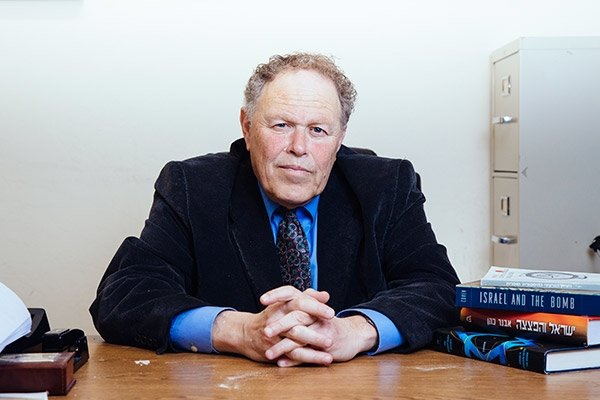
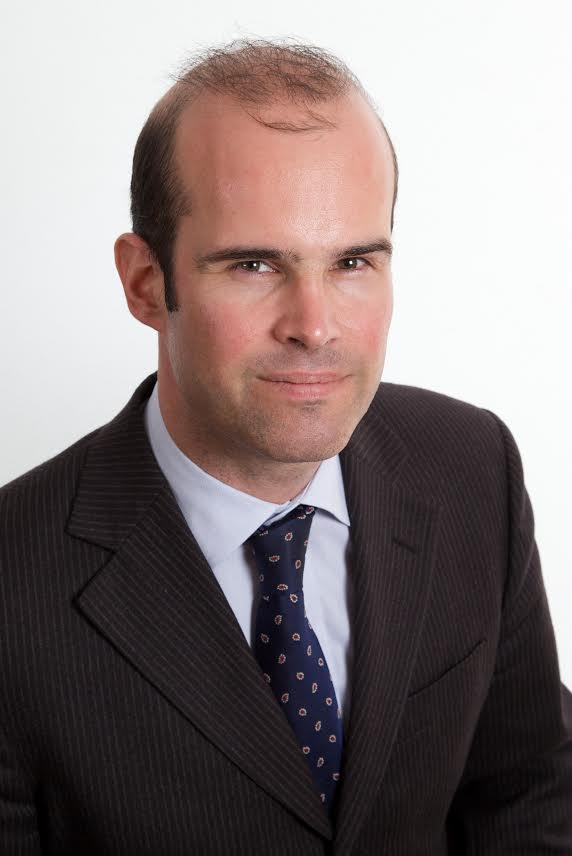
Avner Cohen is professor of Nonproliferation Studies and Senior Fellow with the Center for Nonproliferation Studies at the Middlebury Institute of International Studies, in Monterey, California, US
© middlebury.edu.institute

Part of this interview was included in an article published by the Portuguese weekly EXPRESSO, on April 11, 2015
Iran accepted a compromise to save a regime under siege

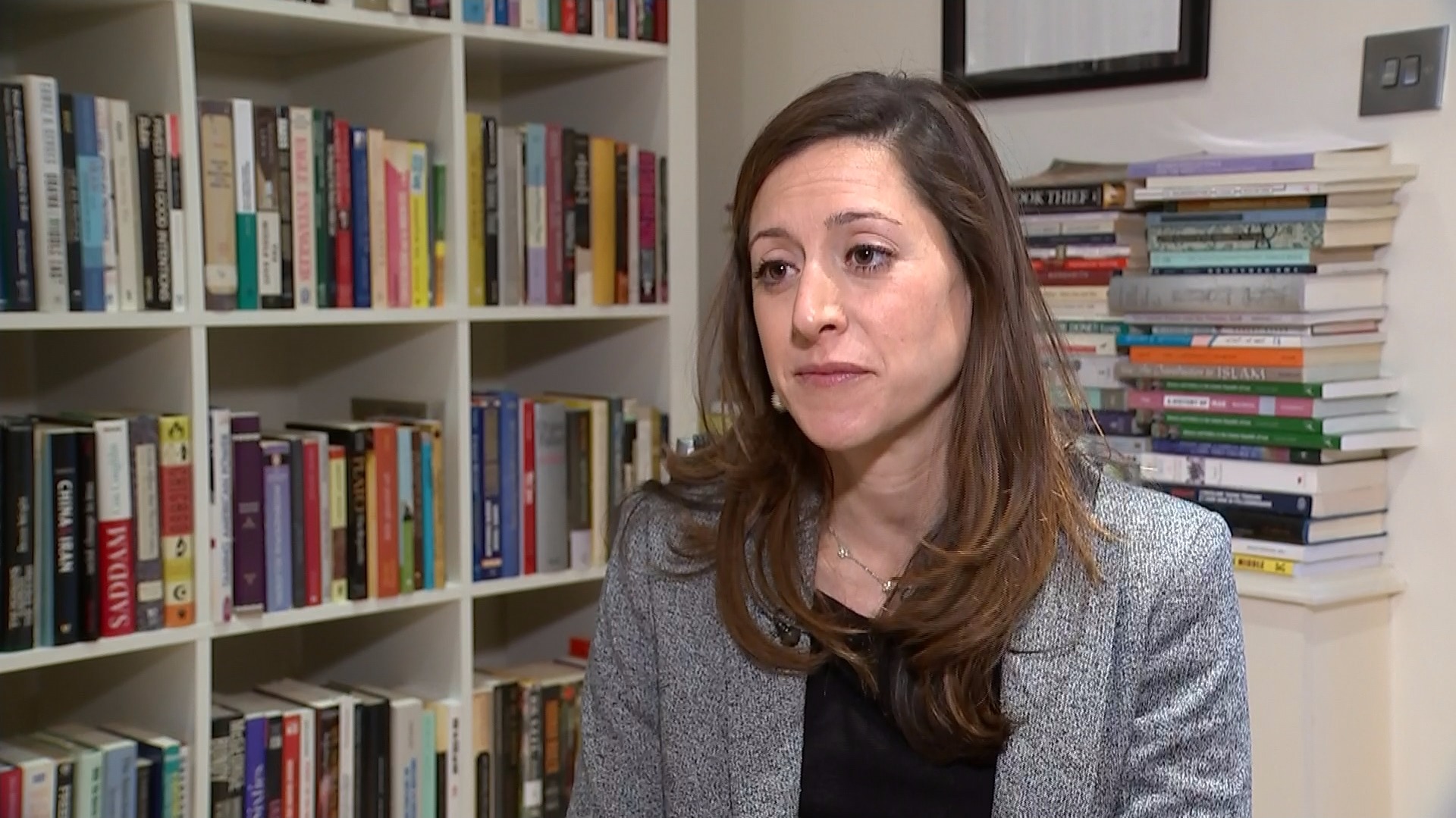
Born in Teheran, Sanam Vakil is a Middle East specialist and academic, providing political risk analysis on regional and geopolitical developments especially in Iran, Iraq, the Persian Gulf States, Syria and Egypt. Her areas of expertise include Iranian domestic and foreign policy, U.S and E.U relations in the Middle East, the challenge of Middle Eastern leadership, civil society development and the empowerment of women. She gave me this interview for an article published in the Portuguese newspaper EXPRESSO following the historic deal reached between Iran and six world powers over its nuclear programme(Read more…)

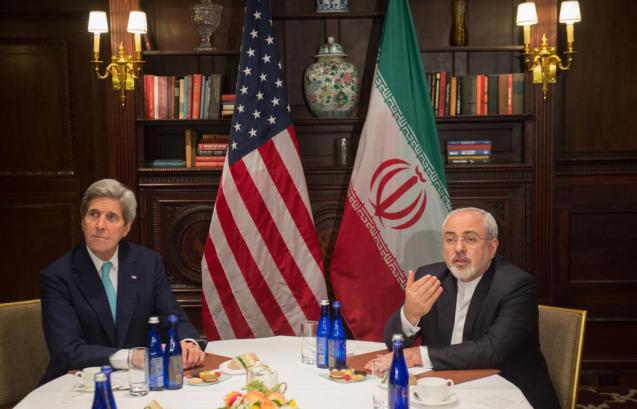
US Secretary of State John Kerry and Iranian Foreign Minister Javad Zarif, the “architects” of the 2015 Iran nuclear deal that Donald Trump scrapped in 2018
© AFP

As an Iranian who still has family in Iran, how did you and they react to the news of this agreement? In several videos posted on the Internet we can see hundreds, if not thousands, of people genuinely celebrating in the streets of Teheran and other cities…

For Iranians it was like a breath of fresh air, after almost a decade of living in frustration, in a cloud of despair. Now, people feel that they have something to hope for. This does not translate into an immediate result but it gives people optimism, and this is very important.

We have been told since a long time that a majority of Iranians are very proud of their nuclear program and that they would never accept humiliating conditions in any negotiation. Is your opinion that this “framework agreement” pleases not only the people but also the regime’s hardliners?

I definitely think that we are gonna see different reactions from the various factions in the Iranian society, but the people are happy.

They have been suffering economically and the majority of the Iranian population is moderate and anxious for a better future, and a better future depends on a better interaction with the West.

Other segments of the society will remain in the opposition to this deal despite the fact that the Supreme Leader [Ayatollah Ali Khamenei] gave it his blessing. We are going to see some opposition in the coming days, without a doubt.

It should be noted though that the Friday [Muslim] prayer leader [hand-picked to deliver the most important weekly sermon] endorsed the deal. [Ayatollah Emami Kashani said the nuclear agreement was a ‘victory’ for the Islamic Republic. ‘To be fair, the negotiating team is modest and wise and have followed the supreme leader’s advice on heroic flexibility. We much congratulate the president and Mr. (Foreign Minister) Mohammad Javad] Zarif.’]

There will be a kind of balanced act, but because one of the items that we have not yet enough information about is the sanctions relief and how this relief will take place. From the Iranian perspective, hardliners are going to criticise the agreement if there are no consequential concessions in terms of lifting the sanctions.

I think that it will be a gradual process. The first sanctions to be removed are the ones from the European Union. Iran is expecting that the EU-oil-related sanctions imposed two years ago will be lifted, along with the banking sanctions.

The [end of the] American sanctions will come towards the end, but the EU sanctions are easier to remove, and now that the European companies are eager to return to the Iranian markets, and this deal will facilitate that. And I suspect that Iranians are confident that the sanctions will be removed incrementally from June [30, 2015] to 2020.

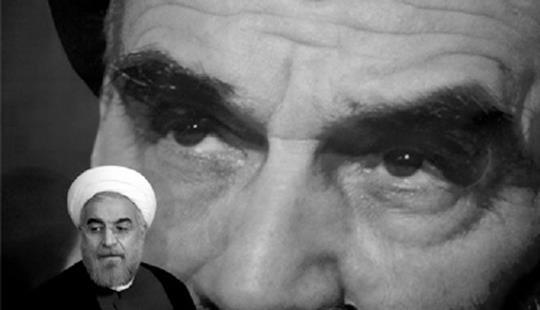
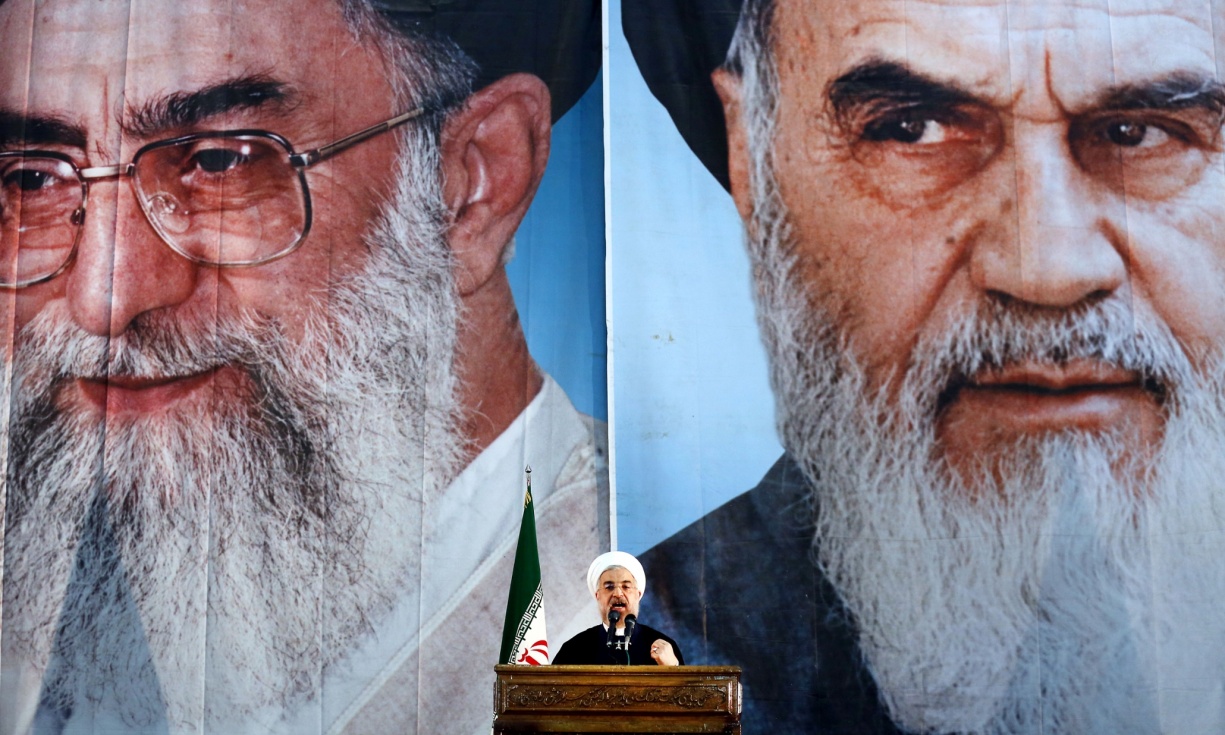
The shadows of the current Supreme Leader, Ali Khamenei (L), and of the founder of the Islamic Republica, Ayatollah KHomeini (R) still haunt the new President, Hassan Rouhani (C). © All Rights Reserved

Images of the current Supreme Leader, Ali Khamenei (L), and of the founder of the Islamic Republic, Ayatollah Khomeini (R) behind the new President, Hassan Rouhani (C)
© All Rights Reserved

As you said, there are several Iranian factions not pleased with this deal. Many elements of the regime keep on benefiting from isolation. Mr. Karim Sadjadpour used a metaphor, comparing this deal to a “marriage engagement” warning that until and after the “wedding” ceremony, on 30th of June, many people (from Arab states to Israel) will never accept the advice of “forever hold your peace”, and will withstand criticism and hostility, making everything possible to derail this agreement… 

… Yes. Ayatollah Khamenei, the Supreme Leader, has an important decision to make: Is he going to be with the population or is going to be with the hardliners? It is a difficult choice that he is facing.

Would this deal be possible without President Hassan Rouhani’s tireless efforts?

Probably not, because all historic agreements are dependent on timing but also on presidential individuals. So, definitely, the will and the motivation of Rouhani and [US President Barack] Obama were very important to reach this deal.

This time, there were too camps open to dialogue. In 2003 Mohammad Khatami in Iran was, allegedly, eager to accept a compromise, but in the U.S., George W. Bush was inebriated by an illusory military victory in Iraq and did not invest in an agreement…

… Absolutely yes! The role of presidential individual matters, but the circumstances are equally important. Iran is now suffocated by sanctions and under increased pressure to make a compromise. From the American perspective, obviously Barak Obama has invested an immense amount of capital in this negotiations, and it was a priority of his Administration to resolve the obstructions with Iran.

Did sanctions have a real impact to force the Iranian leadership into accepting this compromise?

Yes, the sanctions played an important part, while we cannot be quite certain about it. The Iranian revenues were decreasing significantly over the past two years and the oil income has dropped.

[Bloomberg reported that “revenues in 2012 to fifth from second in production among the 12 members of the Organization of Petroleum Exporting Countries/OPEC. Iran pumped 2.78 million barrels a day in September 2014. (…) The nation holds oil reserves of 157 billion barrels and the world’s biggest deposits of natural gas, estimated at 1,192 trillion cubic feet. (…) Because of the recent decline in global prices – more than 20% since peaking in June at about $115 a barrel as supply -, according to President Hassan Rouhani, the country’s main source of income has been cut by some 30%”].

With oil prices falling Iran could not afford to sustain a very large population [78.5 million in 2014; the age group of 0-14 years claims 26.1% of the population, 69% is between 15 and 64, and only 4.9% is 65 or older], dependent on subsidies, government salaries and other things.

If the Iranian regime would want to survive it needs oil  [more specificallya break-even sales price of $143 a barrel this year/2015 to maintain its fiscal balance, according to data compiled by Bloomberg], otherwise it will be a regime under siege. There are a very young populations, education and with great aspirations. This deal was a pragmatic decision. But we still need to wait for the final deal.

Why is Ayatollah Khamenei apparently supporting Mr. Rouhani, and why did he do everything to torpedo the policies of Mr. Khatami?

Khatami’s election [first term 1997] was a big surprise and a real shock to the Iranian establishment. They [the conservative hardliners] didn’t expect him to win and saw the reformists as a national threat. Khatami was a President in the wrong time, but after the Green Movement that opposed and protested Mahmoud Ahmadinejad’s reelection, in 2009, Khatami emerged as the consensus candidate, to repair the damages between the elite, the regime and the society.

The election of Rouhani was above all a form of repairing what went wrong. Khatami would never be able to do this, because he and his supporters at the time were considered as too radical and too unpredictable. The hardliners were not prepared for that.

Iranian revenues were obstructed in the past two years, oil income has declined, particularly since the prices have been falling
© Ali Mohammadi | Bloomberg via Getty Images

Besides the sanctions, there is also a new regional reality: a new US-Iran “alliance” fighting the so-called “Islamic State” (Daesh) in Iraq and, at the same time, the old US-Saudi alliance fighting a war in Yemen. Did these circumstances which allegedly forced enemies to be allies have any influence on the Lausanne deal?

No, I don’t think so – not at all! We cannot expect that, suddenly, Iran is going to change its regional dynamics or that it will seek better relations with the United States in the Middle East. Iran is going to continue pursuing his own national interests in the region and try to advance those interests, separate from the [nuclear] deal.

That’s the problem and that is why the Gulf Arab states and also Egypt have contentious relations with Iran. Because they realize that Iran is not going to change its policies or regional ambitions towards some of its neighbours.

Is this one of the crucial problems of the deal?

Yes, absolutely! If we are looking into the future, Iran could play a larger role. It could have moderate the situation, particularly in Syria. But in order for Iran to do that, in order for Iran to participate, it seeks ultimately regional acceptance and regional relevance, something that some Arab states are not willing to provide.

They do not want to legitimize but marginalize Iran. And while Iran continues to be marginalized there will always be a sectarian conflict in the Middle East.

Benjamin Netanyahu is also another regional actor not accepting the Iranian deal; he describes it as “a threat to Israel survival“…

…Yes, of course, without a doubt. It is not of Netanyahu’s interest to minimize the ‘Iranian threat’, right now. It is also not in the Saudis interest. Everybody is pursuing its national interests.

Was it a personal defeat for Netanyahu?

I think that he probably expected this deal.

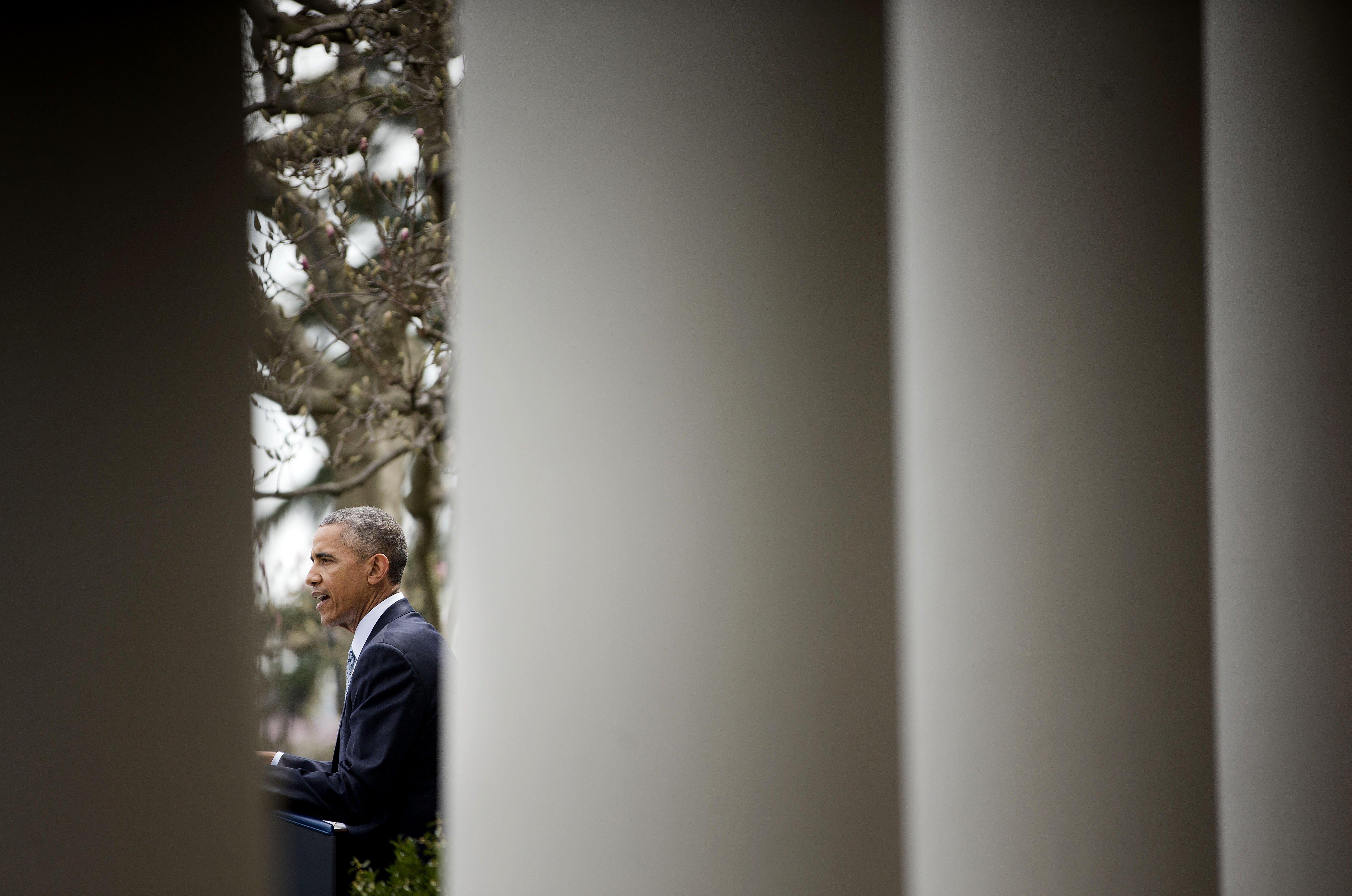
President Barack Obama speaks in the Rose Garden of the White House in Washington, Abril 2, 2015. For him, the framework agreement with Iran was "historic" and could pave the way for a final deal, on June 30, that "would leave the world safer". © Pablo Martinez Monsivais | AP

President Barack Obama speaks in the Rose Garden of the White House in Washington, on Abril 2, 2015. For him, the framework agreement reached with Iran in Lausanne was “historic” and could pave the way for a final deal, on June 30, that “would leave the world safer”
© Pablo Martinez Monsivais | AP

Is there any possibility that Washington (which initiated the Iranian nuclear program under Shah’s Mohammad Reza Pahlavi) and Teheran will restore the good old links? Some analysts, such as Mr. Stephen Kinzer, in his book Reset Middle East, say that Iran would be a better ally than Saudi Arabia, a country that has been contributing to “terror in the name of God” by exporting its extremist and backward Wahhabi doctrine.

I think, maybe, that we are getting into a point that acceptance is possible. Obviously, Iranian history have been marked by a lot of mistakes, misjudgments and hostility, actually, towards the West. If we wonder why there are no diplomatic relations with the United States it is because Iran doesn’t want them.

That would damage the ideological credibility of the Iranian regime. It would be too fractious for the country. When you have two countries, two peoples, without a relationship for 36 years, it is a problem. It is not the same as six months. We need time to restore trust.

The lack of trust is mutual. The United States does not trust Iran and Iran does not trust the United States. This deal is important, but we cannot be overoptimistic and deluded with the prospect that America will have soon an embassy in Teheran.

Many conservatives in Iran and Republicans in the US are not ready for that either. Let us see if the deal will be concluded in June and if it can be fulfilled.

Iran and the West have first to prove their good will, two or three years, and then we can see what can be done towards the ‘Islamic State’ in Syria, for instance; what can be done to reduce sectarianism in the region; what can be done to put an end to the hostility towards Israel. We need time.

Did this “framework deal” surprise you, or were you expecting it?

I was very surprised by the level of compromise on the Iranian side. The substance of the agreement is really surprising! I think this is very positive. There is a big concession in what concerns the Natanz reactor, the closing of all nuclear facilities and in terms of inspections.

Why was this process so long and difficult?

Because this was not a negotiation only between Iran and the US: all the participants needed to accept all the specific proposals. There were bilateral and group meetings.

It required a lot of bilateral diplomacy even within the P5+1. France and the U.S. had to resolve their own differences. Russia had to come on board regarding the UN Security Council sanctions… It was not a negotiation involving only Iran but also the Western countries as well.

There were goodwill gestures as well. Mr. Obama tried to reach the Iranians with his Nowruz message. Mr. Rouhani and Mr. Zarif used Twitter to improve the image of Iran. Both parties acted as if the negotiations were between business partners, not enemies…

… Yes. This all has to do with the dynamics of the negotiations since three years ago, first secretly and then behind the scenes.

It was important the empathy created by negotiators for the success of the deal, but also the commitment demonstrated by Mr. [John] Kerry and Mr. Zarif, who has spent more time together than any other foreign ministers.

According to some reports, Ayatollah Khamenei is very sick. Is there any risk that a change of leadership in Iran might derail what was achieved in Lausanne?

I don’t think so. I don’t have a crystal ball to tell me the future. If I have to bet, I think Ayatollah Khamenei is going to live at least until next year [2016], and I hope so, because he is very important to this deal. His support is instrumental.

Next year there will be elections to the Assembly of Experts, the clerical body responsible for selecting the Supreme Leader. Hopefully, he will survive until then.

Iranians celebrate in northern Tehran on July 14, 2015, after Iran’s nuclear negotiating team struck a deal with world powers
© Atta Kenare | AFP | Getty Images

Who are the potential successors?

I have no idea. Of course, I can give you some names of potencial candidates: it can be the head of the Judiciary, Sadeq Larijani; it could be Ayatollah Mahmoud Hashemi Shahroudi… But, of course, Rafsanjani has his own ideas.

He has been defending to change this position [of Supreme Leader] to the one of a council of clerics. We do not know what will happen in the future.

Are you optimistic?

Yes, I am optimistic!

Sanam Vakil © Direitos Reservados | All Rights Reserved

Sanam Vakil, Chatham House Associate Fellow, Middle East and North Africa Programme

Parts of this interview, now updated, were included in an article published in the Portuguese newspaper EXPRESSO, on April 11, 2015
Acordo histórico com o “grande Satã”

Os EUA, a Europa e o Irão firmaram um compromisso histórico. O analista Karim Sadjadpour comparou-o a um “contrato de noivado”. Até ao “casamento”, em 30 de Junho, há forças que não se calarão para sempre. (Ler mais | Read more…)

Diplomacia é fazer acordos imperfeitos com pessoas de quem não gostamos nem confiamos.

(John Limbert, refém americano durante 444 dias quando a Embaixada dos EUA em Teerão foi ocupada em 1979, autor de obras sobre a cultura persa, casado com uma iraniana e hoje membro do National Iranian American Council/NIAC)

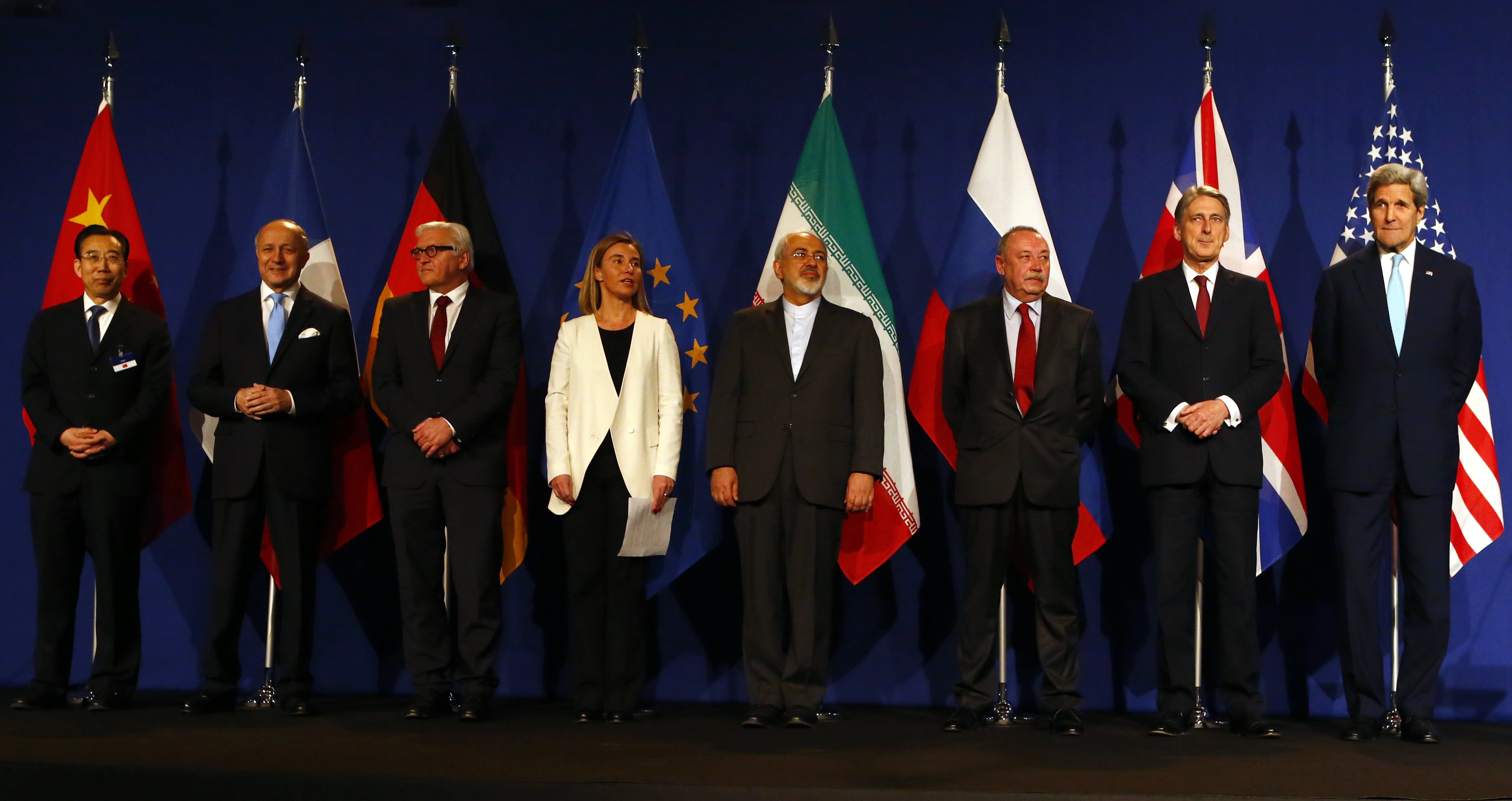
Chinese ambassador Wu Hailong, French Foreign Secretary Laurent Fabius, German Foreign Minister Frank-Walter Steinmeier, EU foreign policy chief Federica Mogherini, Iran's Foreign Minister Javad Zarif, Alexey Karpov, the deputy director of the department for nonproliferation and arms control of the Ministry of Foreign Affairs of Russia, British Foreign Secretary Philip Hammond and U.S. Secretary of State John Kerry (R-L) pose in Lausanne April 2, 2015. Iran and world powers reached a framework on curbing Iran's nuclear programme at marathon talks in Switzerland on Thursday that will allow further negotiations towards a final agreement. © Ruben Sprich |RTR4VXAH | Reuters

Os protagonistas de um “acordo histórico”, da esquerda para a direita: o embaixador chinês na ONU, Wu Hailong; os ministros dos Negócios Estrangeiros da França, Laurent Fabius, e da Alemanha, Frank-Walter Steinmeier; a chefe da diplomacia da União Europeia, Federica Mogherini, e o seu homólogo iraniano, Javad Zarif; o vice-director do Departamento de Controlo de Armamento e Não Proliferação do MNE da Rússia, Alexei Karpov; e os responsáveis pela política externa do Reino Unido, Philip Hammond, e dos EUA, John Kerry, em Lausanne (Suíça), 2 de Abril de 2015
© Ruben Sprich |Reuters

Nascida em Teerão, onde ainda tem família, Sanam Vakil não ficou espantada quando viu o Presidente, Hassan Rouhani, e o ministro dos Negócios Estrangeiros, Mohammad Javad Zarif, serem acolhidos como salvadores no regresso à pátria, após um “acordo histórico” com os EUA e a Europa, firmado a 2 de Abril em Lausanne, na Suíça.

“Foi como um sopro de ar fresco, depois de anos a viver frustrados, numa nuvem de desespero”, disse-me a autora de Action and Reaction: Women and Politics in the Islamic Republic of Iran. “Agora, as pessoas têm alguma esperança, e isso é tão bom.”

O que, para ela, constituiu “grande surpresa” foi o próprio acordo entre dois países de relações cortadas desde há mais de três décadas.

“Fiquei realmente admirada com o nível de compromisso assumido pela parte iraniana”, acrescentou, numa entrevista por telefone, a partir de Itália, a professora de Estudos do Médio Oriente na Paul H. Nitze School of Advanced International Studies (SAIS), de Washington, divisão da prestigiada universidade John Hopkins. “Creio que tudo é muito positivo. Uma das maiores concessões diz respeito ao reactor de Natanz, e também às inspecções”, mais rígidas.

Igualmente surpreendido ficou Avner Cohen, autor de duas obras fundamentais para entender o programa nuclear israelita – Israel and the Bomb e The Worst-Kept Secret –, professor (e dos maiores peritos) em não proliferação no Middlebury Institute of International Studies em Monterey, na California.

“Creio que a fraseologia usada é muito mais forte e melhor do que eu pensava que iria ser”, diz-nos, também por telefone. “São impostas severas restrições e, embora algumas delas sejam apenas para um período de dez anos, outras vão de 15 a 25. Por exemplo, no que respeita à quantidade de urânio que o Irão pode acumular e percentagem que pode enriquecer. É um esquema complexo. Não é perfeito mas parece o compromisso certo.”

Em Israel, o primeiro-ministro, Benjamin Netanyahu, que parecia ansioso por uma guerra, não ficou feliz. Denunciou uma capitulação perante um regime que ele compara ao de Hitler, evocando frequentemente o perigo de se repetir o Holocausto. Avner Cohen comentou: “Israel pode não gostar mas terá de viver com este acordo.”

Não é, porém, só em Israel que há forças a tentar sabotar o compromisso que foi longo e difícil de obter. “Há elementos no Irão e nos Estados Unidos que não estão também muito contentes. Ainda é preciso passar pelo Congresso, embora não sendo um tratado, os congressistas não tenham de aprovar o texto. Até de 30 de Junho, data da assinatura, ainda faltam quase três meses – e no Médio Oriente isso é muito tempo.”

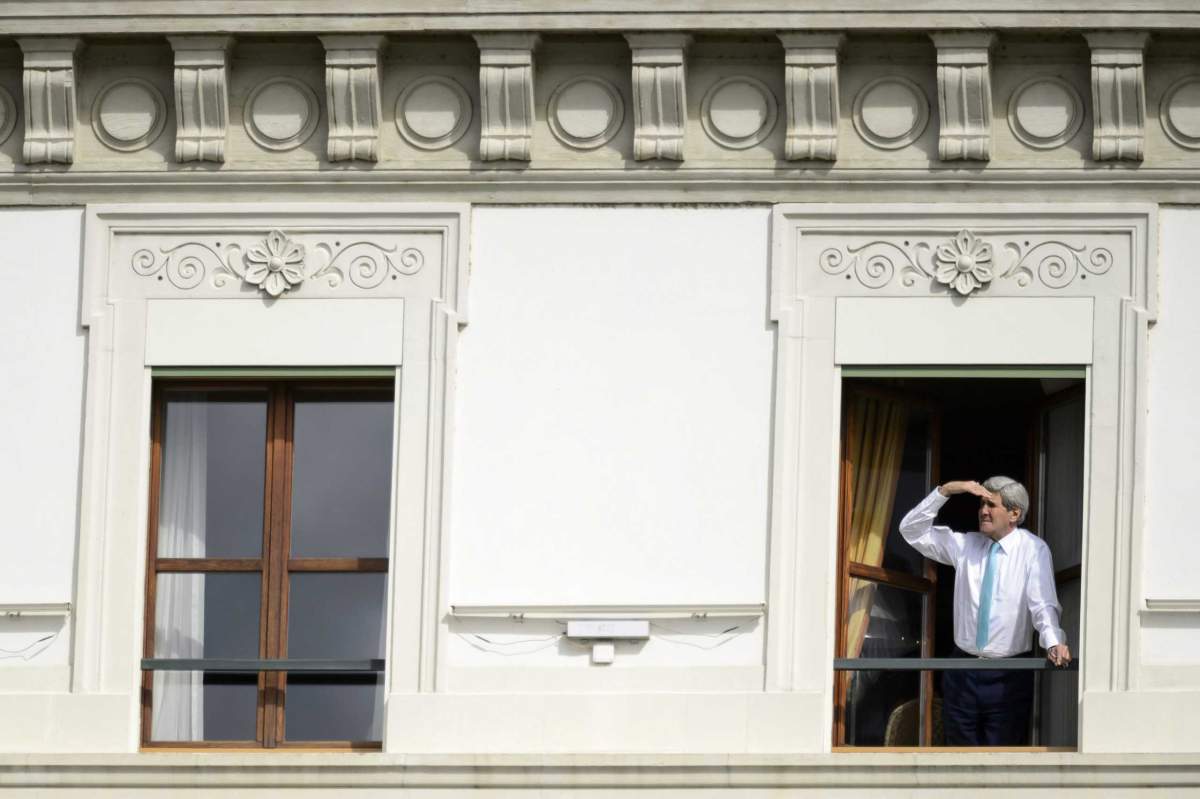
O secretário de Estado norte-americano, John Kerry, na janela do seu quarto de hotel com vista para o Lago de Genebra, numa pausa das negociações com o Irão em Lausanne, Switzerland, em 1 de Abril de 2015. Um acordo parecia longínquo mas acabou por ser conseguido no dia 2. © Laurent Gillieron | EPA

O secretário de Estado norte-americano, John Kerry, na janela do seu quarto de hotel com vista para o Lago de Genebra, numa pausa das negociações com o Irão em Lausanne (Suíça), em 1 de Abril de 2015. Um acordo parecia longínquo mas ficou concluído no dia 2
© Laurent Gillieron | EPA

A iraniana Sanam Vakil, que foi investigadora no Projecto Irão do Council on Foreign Relations e consultora para a Divisão do Médio Oriente e Norte de África do Banco Mundial, partilha da opinião de Avner Cohen, de que as sanções internacionais forçaram a República Islâmica a fazer mais cedências do que no passado.

“Foi preciso tempo para deixar claro que só um acordo poderia levantar as sanções, e havia grandes incentivos para aceitar este pacto. Muitos segmentos da sociedade iraniana, que têm sofrido economicamente, até entre os de ‘linha dura’, querem seguir em frente. Há uma nova geração ansiosa por ver o Irão na comunidade das nações.”

“A maioria da população iraniana é moderada e está entusiasmada com a perspectiva de maior apoio do Ocidente”, acrescentou Sanam Vakil. “Naturalmente que haverá sectores que continuarão a opor-se ao acordo, mas é relevante o apoio inequívoco do Ayatollah Ali Khamenei.”

Quando o reformador Mohammad Khatami estava na presidência, o Supremo Líder nunca o abençoou. “Porque ele era considerado demasiado radical para o regime, enquanto Rouhani é visto como a ponte para sarar as feridas, unir as elites e o povo”

Apesar de tudo, Sanam Vakil é cautelosa: “Ainda não temos informação suficiente sobre o levantamento das sanções, mesmo não havendo dúvidas de que será a UE a levantá-las primeiro, em particular as relacionadas com o petróleo e o sistema bancário. Muitas empresas europeias querem já regressar ao mercado iraniano [80 milhões de habitantes carentes de tudo]. As sanções americanas serão as últimas a ser anuladas.”

“Não esperemos para breve a reabertura da Embaixada dos EUA em Teerão”, adverte Sanam Vakil. “O Irão mantém intactos os seus interesses ambições. Aspira a desempenhar um papel fundamental na região, em particular na Síria, apesar da guerra civil.”

No entanto “para isso acontecer é preciso que o Irão seja aceite, e muitos Estados árabes preferem marginalizá-lo do que o legitimar. Enquanto essa marginalização continuar, os conflitos confessionais [sunitas-xiitas] no Médio Oriente não serão eliminados.”

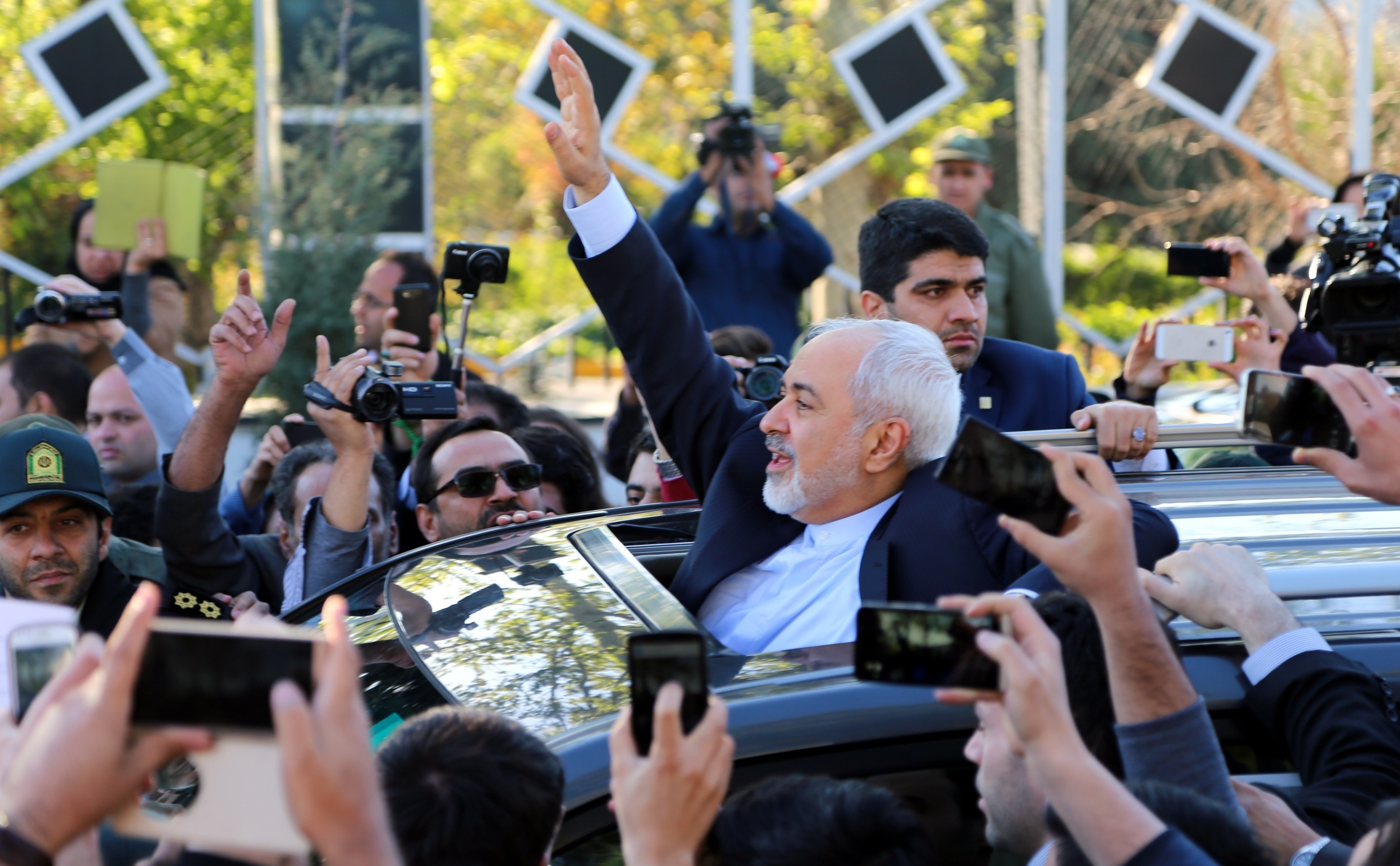
TEHRAN, IRAN - APRIL 3: Iranian Foreign Minister Mohammad Javad Zarif (C) greets people as nuclear negotiating committee arrive at Mehrabat Airport in Tehran on April 3, 2015, after the announcement of an agreement on Iran nuclear talks. Iran and six world powers have agreed on April 2 in Lausanne on the key points of a deal over Iran's controversial nuclear programme. © Fatemeh Bahrami/Anadolu Agency/Getty Images)

3 de Abril de  2015: O chefe da diplomacia iraniana, Mohammad Javad Zarif, é recebido como herói, à chegada a Teerão, após a assinatura de um acordo nuclear preliminar com o grupo P5+1. Alguns compatriotas compararam-no ao primeiro-ministro Mohammad Mossadegh que a CIA derrubou num golpe, em 1953, por ter ousado nacionalizar o petróleo
© Fatemeh Bahrami | Anadolu Agency | Getty Images

Avner Cohen admite que os árabes, e os sauditas em especial, se sentem “atemorizados com a vontade de hegemonia do Irão”, que já influencia países como o Líbano, o Iraque, a Síria, o Iémen e o Bahrain.

Não crê que os EUA abandonem a Casa de Saud, porque é a “credibilidade de um velho aliado” que estará em jogo, mesmo que Obama tenha mudado a doutrina de política externa, retirando o petróleo dos interesses estratégicos.

O que anima Cohen é a possibilidade de o acordo de Lausanne ter retirado a Netanyahu o argumento de que o Irão, mesmo não nuclear, é uma “ameaça existencial” para Israel.

“Estou moderadamente optimista. Se este acordo for para valer, Israel e Netanyahu vão ter de enfrentar a questão da ocupação dos territórios palestinianos, e o Irão deixará de ser tema para desviar atenções.”

Nota final, frisa Cohen: “Embora há muito defenda que Israel tem de pôr fim à opacidade do seu programa nuclear, não creio que esta seja a melhor altura. Primeiro temos de garantir que o Irão cumpre as suas promessas.”

[Para conhecer melhor os bastidores do acordo, recomenda-se a leitura deste artigo do diário britânico The Guardian, da autoria de Julian Borger.]

Os pontos da concórdia

© Chapatte | The New York Times

© Chapatte | International  New York Times

* O número de centrifugadoras– onde é enriquecido o urânio para o fabrico de combustível ou de bombas nucleares – diminuirá das actuais 20.000 para 6.000. Neste processo, o Irão só poderá usar 5.000. Um total de 14.000 instaladas nos últimos dez anos serão desactivadas e colocadas sob apertada vigilância;

* A quantidade de urânio de baixo grau de enriquecimento (3,67%) – o gás que alimenta as centrifugadoras – será reduzida de cerca de 10.000 quilos para 300. Esta cedência, combinada com a do ponto anterior, significa que, mesmo havendo a tentação de “violar” o acordo, o Irão precisará de menos um ano para enriquecer até 20% o urânio suficiente para uma bomba;

* O “núcleo” do reactor de água pesada de Arak, uma estrutura altamente fortificada, será desmantelado, ficando com capacidade de produzir só uma pequena fracção de plutónio – os cerca de oito quilos baixarão para menos de um kg;

* O Irão não construirá mais centrais de reprocessamento que permitam obter plutónio a partir de barras de combustível usadas, que sairão do seu território assim que forem removidas dos reactores;

* As inspecções serão as mais intrusivas de sempre: será possível seguir o rasto do urânio desde que é extraído das minas até ser armazenado em cilindros de gás. Os inspectores internacionais terão acesso a lugares onde nunca antes foram autorizados a entrar;

* Várias restrições ficarão em vigor durante 10 anos, algumas 15 e outras 25, designadamente as inspecções e a proibição de fabricar quaisquer armas nucleares;

* O Irão resistiu à insistência dos EUA de desactivar outros reactores, como o de Fordow, subterrâneo e protegido contra bombas de perfuração de bunkers, mas não poderá aqui produzir material físsil;

* A República Islâmica continuará o enriquecimento de urânio de baixo nível em Natanz, e manterá todas as infra-estruturas para retomar a produção de emergia nuclear civil terminada a década de inspecções;

* A UE levantará de imediato todas as sanções económicas e financeiras relacionadas com um suspeito programa militar e os Estados Unidos farão o mesmo com as sanções financeiras após receber garantias da Agência Internacional de Energia Atómica (AEIA) de que acordo está a ser cumprido pelo Irão;

* Uma nova Resolução do Conselho de Segurança será aprovada para anular as anteriores que penalizavam o Irão, mantendo contudo algumas medidas restritivas durante um período de tempo a definir.

Sem a bênção do Ayatollah Ali Khamenei, o Supremo Líder do Irão, Rouhani e Zafari não poderiam ter negociado o acordo nuclear
© The New Yorker

Irão-América: Uma cronologia

Início do programa nuclear

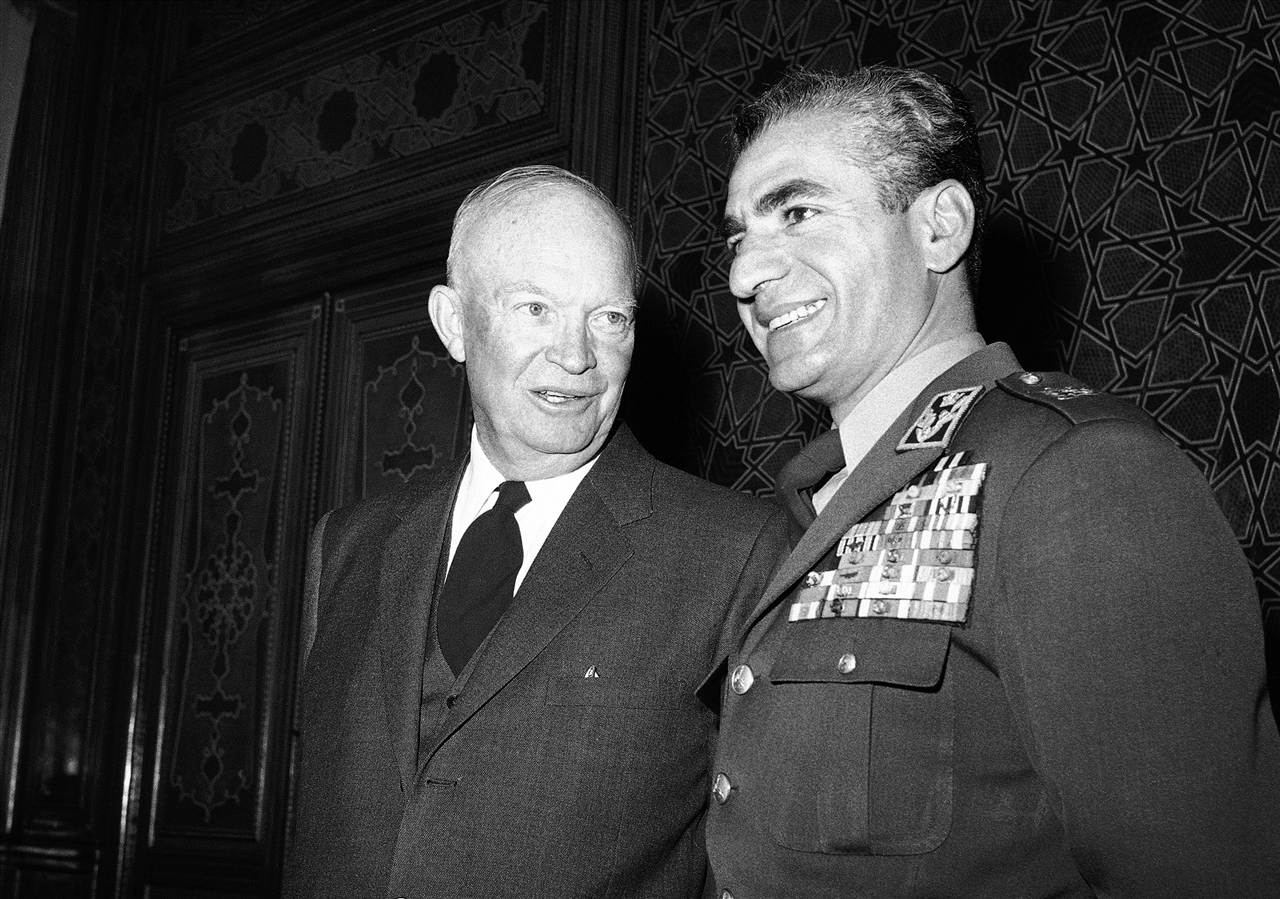
O Irão inicia um programa nuclear civil, em Março de 1957, sob o reinado do Xá Mohammad Reza Pahlavi e no âmbito do Programa Atoms for Peace, da Administração Eisenhower. Os EUA aceitaram ajudar a construir um “reactor de investigação” em Teerão (que entrou em funcionamento em 1967) e centrais de energia.

March 5, 1957: Iran signs the Iran-United States Agreement for Cooperation Concerning Civil Uses of Atomic Energy, which was part of President Eisenhower’s Atoms for Peace program. Above: President Dwight D. Eisenhower and Shah Mohammed Reza Pahlevi of Iran pose on Dec. 14, 1959 at Marble Palace in Tehran, Iran following Eisenhower's arrival from India on his 11-nation goodwill tour. ©

O Presidente dos EUA  Dwight D. Eisenhower e o Xá Mohammad Reza Pahlavi, em  14 de Dezembro de, 1959, durante um encontro no Palácio de Mármore, em Teerão
© NBC News

Assinatura do TNP

Em 1 de Julho de 1968, o Irão torna-se o 51º Estado signatário do Tratado de Não Proliferação (TNP), comprometendo-se a nunca produzir armas nucleares

A fuga do imperador

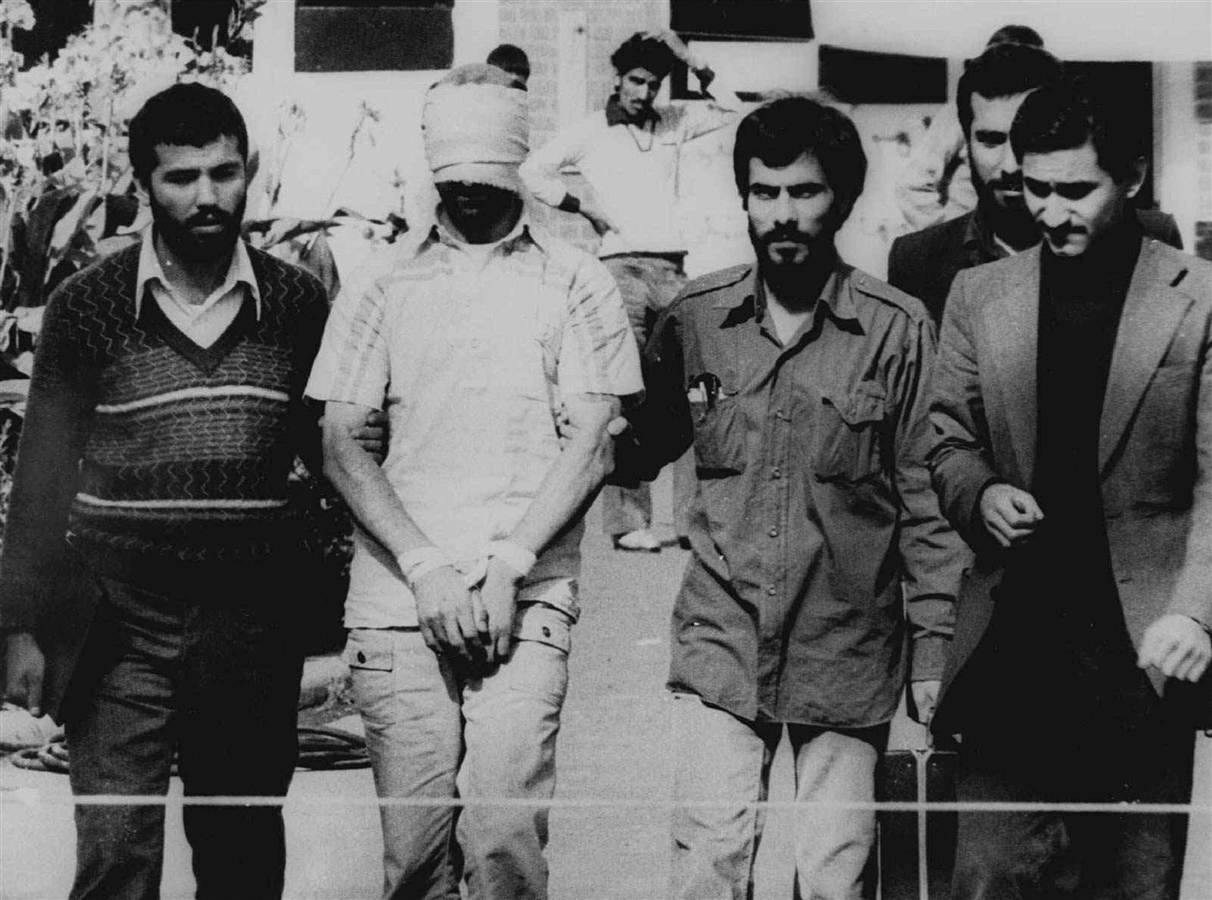
O segundo e último “rei dos reis” (Shahanshah) da dinastia Pahlavi foge do Irão em 16 de Janeiro de 1979, depois de o Ayatollah Khomeini pôr fim a 2500 anos de monarquia. Na nova República Islâmica, Shahpour Bakhtiar (que seria assassinado em Paris em 1991) assume a chefia do Governo e, desde logo, cancela um contrato com a América, avaliado em 6200 milhões de dólares, para a construção de duas centrais nucleares no complexo de Bushehr. Os EUA revogam um acordo estabelecido em 1978 e deixam de fornecer urânio enriquecido para o “reactor de investigação” em Teerão. Em 4 de Novembro, estudantes iranianos fazem reféns 63 funcionários da Embaixada dos EUA em Teerão, mantendo 52 deles cativos durante 444 dias, logo após a saída do democrata Jimmy Carter da Casa Branca, derrotado pelo republicano Ronald Reagan

Above: One of the hostages seized when Islamic radicals stormed the U.S. Embassy in Tehran, blindfolded and with his hands bound, is displayed to the crowd outside the U.S. Embassy in Tehran by the Iranian hostage-takers on Nov. 9, 1979. @

Um dos reféns americanos, algemado e vendado, é exibido a uma multidão na capital iraniana por estudantes que, a 9 de Novembro de 1979,  ocuparam a Embaixada dos EUA, classificada pelo novo regime islâmico como “um ninho de espiões”
@ NBC News

Recomeço do programa nuclear

A guerra iniciada pelo Iraque de Saddam Hussein em 1980 e o facto de o ditador de Bagdad (executado em 2006) estar a desenvolver um programa nuclear, com assistência da França, levou o inimigo Khomeini a seguir o exemplo, com ajuda da Alemanha. Em 1984, retomou secretamente as obras para completar a central de Bushehr, destruída durante os bombardeamentos que se prolongaram até ao cessar-fogo em 1988

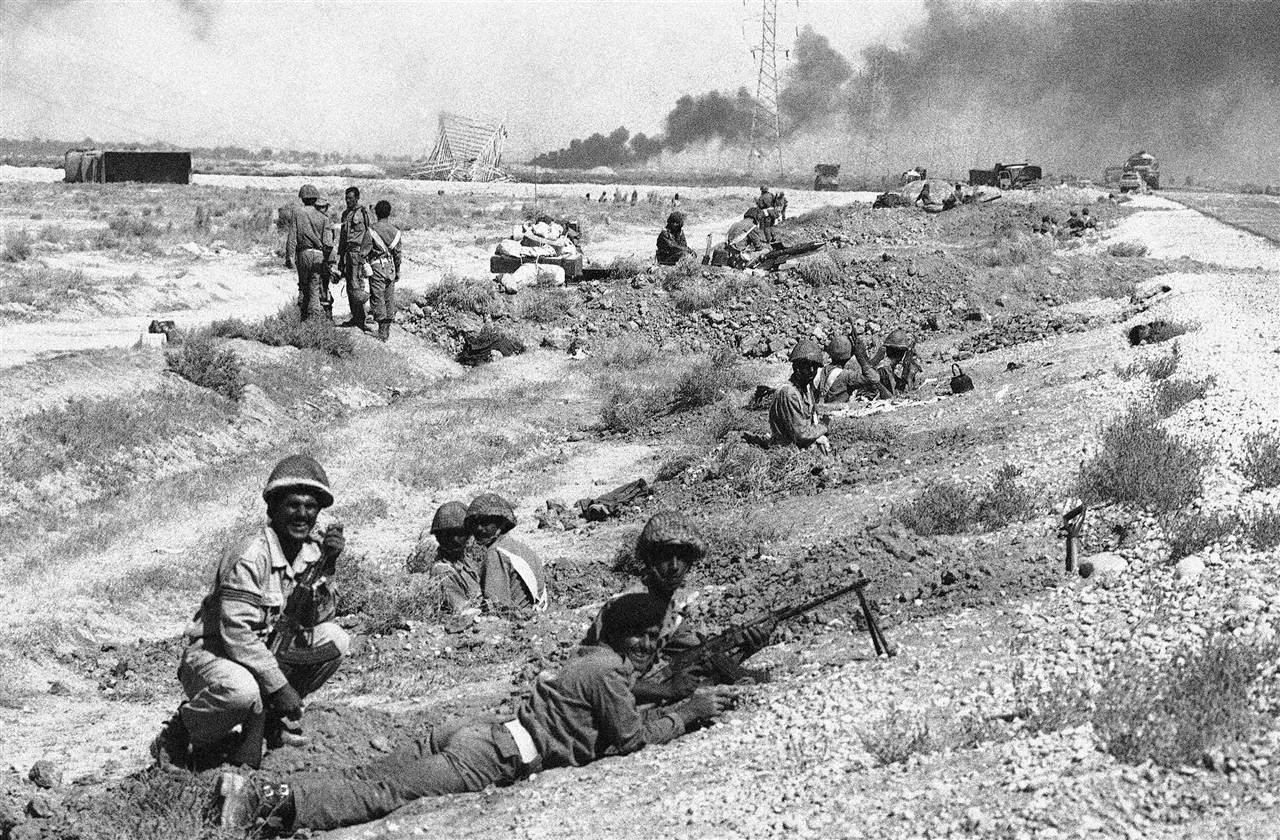
September 22, 1980: Iraq invades Iran, leaving Iran diplomatically isolated from the West, supporting Iraq, for the better part of the decade. A cease-fire wasn't declared until 1988, after an estimated 1 million lives were lost. Above: Iraqi troops entrenched along the highway connecting Abadan with Khorramshahr on Oct. 19, 1980 while smoke drifting in background comes from an oil refinery near Abadan, which was set by Iraqi artillery bombardment. © NBC News

22 Setembro 1980: O Iraque de Saddam  invade o Irão de  Khomeini. Os EUA ajudam Bagdad a vencer uma guerra que durou oito anos e causou cerca de um milhão de mortos 
© NBC News

Segredos do cientista paquistanês

No final dos anos 1980, Abdul Qadeer Khan,  o “pai” da bomba atómica do Paquistão, vendeu ao Irão, à Coreia do Norte e à Líbia tecnologia para enriquecer urânio. As transacções só são conhecidas em 2005, mas Teerão nega que tenha adquirido o material necessário para ser potência nuclear

Novo Supremo Líder

Em 4 de Junho de 1989, após a morte de Khomeini, um hojatoleslam (grau inferior a ayatollah) que durante oito anos foi Presidente, num cargo meramente protocolar, é promovido ao título máximo de velay-e faqi (Supremo Líder, celestial e terreno), assumindo gradualmente todos os centros de poder

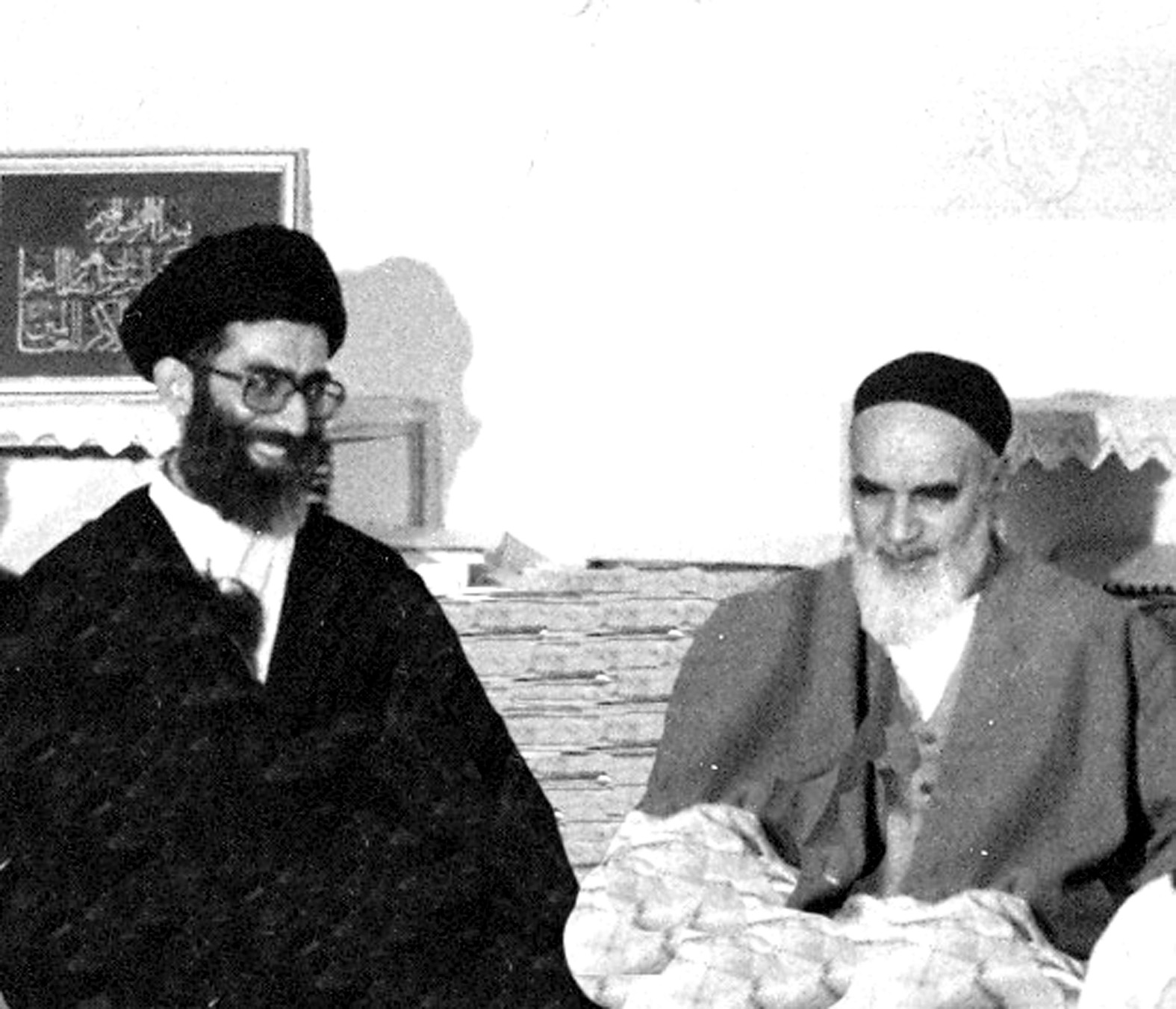
Ali Khamenei (à esquerda, um hojatoleslam - grau abaixo de ayatollah- não foi a primeira escolha de Khomeini (à direita) para sucessor. O herdero designado eta Ali Montazeri que caiu em desgraça por criticar os excessos da nova República Islâmica. © Direitos Reservados | All Rights Reserved

Ali Khamenei (à esq.), um hojatoleslam – grau abaixo de ayatollah – não foi a primeira escolha de Khomeini (à dir.) para lhe suceder como Supremo Líder. O herdeiro designado foi durante muito tempo Hussein-Ali Montazeri, que caiu em desgraça por criticar os excessos revolcuionários da nova República Islâmica

As primeiras sanções

Em Julho de 1996, suspeitando que Teerão estaria a construir a bomba, o Presidente Bill Clinton alarga às companhias estrangeiras as sanções já aplicadas às empresas norte-americanas com investimentos no Irão e na Líbia

Médio Oriente não-nuclear

Com a eleição de um reformador para Presidente, Mohammad Khatami, em 1999, o Irão aproxima-se das monarquias árabes do Golfo, defendendo um Médio Oriente “livre de armas nucleares”

A inesperada eleição, em 1999, de um reformador Mohammad Khatami assustou a linha dura do regime. Para Ali Khamenei, o Presidente que queria abrir o Irão ao mundo "era um radical imprevisível" e tudo fez para sabotar os seus mandatos. © Direitos Reservados | All Rights Reserved

A inesperada eleição, em 1999, de um reformador Mohammad Khatami assustou a linha dura do regime. Para Ali Khamenei, o Presidente que queria abrir o Irão ao mundo “era um radical imprevisível” e tudo fez para sabotar os seus mandatos

Os planos secretos

Em 2002, a organização  Mujahedeen-e Khalq (M.E.K. que quase decapitou a liderança iraniana em vários atentados e perdeu a confiança dos iranianos ao aliar-se a Saddam durante a guerra com o Iraque), divulga documentos revelando um programa nuclear clandestino que a ONU desconhecia. Este programa estaria a ser levado a cabo nas centrais de Natanz e Arak. A América de George W. Bush acusa Teerão de planear o fabrico de “armas de destruição maciça”, mas concentra-se numa nova guerra contra o Iraque de Saddam. O Irão de Khatami aceita inspecções da Agência Internacional de Energia Atómica (AIEA), mas não recua num acordo de 800 milhões de dólares com os russos, firmado em 8 de Janeiro de 1995, para concluir (em 2010) a construção de um dos dois reactores de água leve em Bushehr.

Suspensão do programa

Após a invasão do Iraque, em 2003, Khamenei manda suspender o programa nuclear militar, embora mantenha as actividades de enriquecimento de urânio, vestígios do qual são encontrados pelos inspectores da AIEA em Natanz. O Irão aceita uma vigilância mais rigorosa, após pressões da Alemanha, França e Reino Unido

Natanz retoma a produção

Em Janeiro de 2006, com o ultraconservador Mahmoud Ahmadinejad na Presidência, o Irão recomeça o enriquecimento de urânio em Natanz após o fracasso de negociações com os EUA e a Europa. A AIEA leva ao Conselho de Segurança uma resolução demonstrando “falta de confiança” na garantia iraniana de que o seu programa é apena para “objectivos pacíficos”

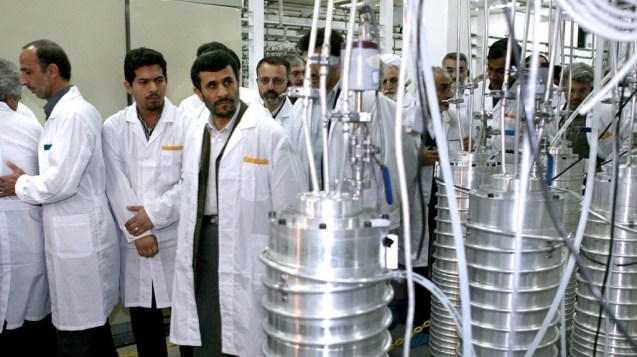
O ex-presidente iraniano Mahmoud Ahmadinejad, que acelerou o programa de enriquecimento de urânio, durante uma visita à central nuclear de Natanz, em 2008
© president.ir

Um novo reactor

Em 26 de Agosto de 2006, dias antes de ter de suspender o enriquecimento de urânio sob pena de ver adoptadas mais sanções, Ahmadinejad inaugura em Arak, um centro que permitiria fornecer plutónio para armas nucleares

Primeiras sanções da ONU

Em Dezembro de 2006, o Conselho de Segurança da ONU aprova por unanimidade, a primeira série de sanções contra o Irão, doravante impedido de importar e exportar materiais e tecnologia usados no enriquecimento de urânio e produção de mísseis balísticos

Ataques cibernáuticos

Em colaboração com os EUA de Barack Obama, Israel inicia, em 2008, um programa de ataques cibernáuticos, designados Olympic Games (Jogos Olímpicos), infiltrando o vírus Stuxnet nos sistemas de computadores em Natanz. Terão sido danificadas, irreparavelmente, até 2010, “mais de mil centrifugadoras”- um 1/5

Funeral do cientista nuclear iraniano Mostafa Ahmadi Roshan, em 13 de Janeiro de 2012, um dia depois de ter sido assassinado, quando uma bomba magnética fez explodir o seu carro, parado no trânsito caótico de Teerão
© Atta Kenare | AFP | Getty Images

Conversações regulares

Em 8 de Abril de 2009, a secretária de Estado norte-americana Hillary Clinton aceita participar em conversações com o Irão, iniciadas por iniciativa da Alemanha, China, França, Reino Unido e Rússia. Forma-se assim o grupo P5+1 (os cinco membros do Conselho de Segurança e Berlim)

Mais sanções

Em Junho de 2010, ao aprovar a quarta série de sanções, o Conselho de Segurança reduz as compras militares do Irão, proíbe transacções, comerciais e financeiras levadas a cabo pelos Guardas da Revolução (um dos pilares do regime), que controlam o programa nuclear. A ONU ordena ainda a inspecção da carga de todos os navios e aviões de e para o Irão. Os iranianos são impedidos de investir em centrais de enriquecimento, minas de urânio e tecnologias neste campo de outros países

Bombas contra cientistas

Em 29 de Novembro de 2010, dois cientistas do programa nuclear iraniano são alvos de ataques – um deles, Majid Shahriari, que dirigia “um projecto vital”, é assassinado; o outro, Fereydoon Abbasi, figura mais importante, fica gravemente ferido. Teerão responsabiliza Washington e Telavive. Em 11 de Janeiro de 2012, um bombista mata Mostafa Ahmadi Roshan, outro cientista em Natanz. Israel não confirma nem desmente envolvimento.

Isolamento financeiro

Em Novembro de 2011, as grandes potências ocidentais isolam o Irão do sistema financeiro, com sanções coordenadas visando o seu banco central e bancos comerciais. Os EUA agravam o castigo com sanções às empresas envolvidas nas indústrias nuclear, petrolífera e petroquímica. A AEIA desconfia que o Irão está a desenvolver um engenho nuclear na base militar de Parchin.

Uma série de sanções coordenadas visando o banco central e os bancos comerciais do Irão forçaram a República Islâmica a colocar na mesa das negociações o seu programa nuclear
© AFP

Novas centrifugadoras

Em Março de 2012, o Irão anuncia que está a construir cerca de 3000 centrifugadoras de enriquecimento de urânio em Natanz.

Petróleo e rial em queda livre

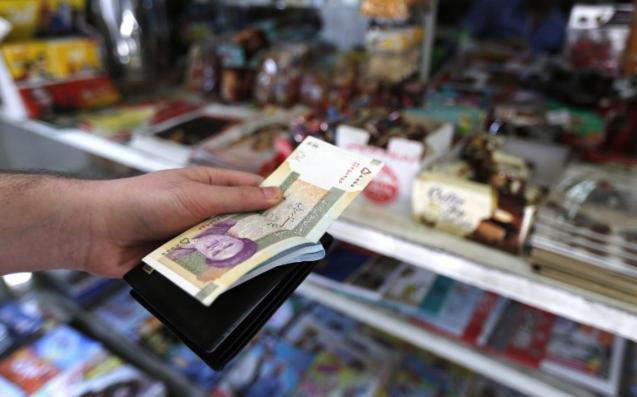
Em Julho de 2012, após mais um fracasso negocial, a UE impõe um embargo ao petróleo iraniano. Em Janeiro de 2013, o ministro iraniano responsável por este sector, Rostam Qasemi, reconhece, pela primeira vez, uma queda de 40% nas vendas do produto que é a principal fonte de receitas do seu país, com prejuízos de 4000 milhões a 8000 milhões de dólares por mês. O rial, a moeda iraniana, cai 40%, perdendo metade do seu valor, e fazendo aumentar os preços de bens essenciais em 60%. Ainda em 2012 e depois em 2013, são também agravadas as sanções impostas pelos EUA. Por esta altura, as exportações de petróleo iranianas já estavam a decrescer um milhão de barris/dia, o que não impediu Teerão de anunciar uma nova geração de centrifugadoras, “quatro a seis vezes mais potentes” do que as em funcionamento

A chegada de Rouhani

Em 15 de Junho de 2013, os iranianos elegem, por esmagadora maioria, um teólogo pragmático de 64 anos, Hassan Rouhani, defensor de maior liberdade individual e de maior conciliação em relação ao mundo. Já em 2004, ele desempenhara um papel fundamental na suspensão voluntária, por parte do Irão, do programa de enriquecimento de urânio. Para chegar a um compromisso, o sucessor de Ahmadinejad escolheu Mohammad Javad Zarif, um diplomata formado nos EUA e conhecedor do Ocidente. Afastou as personalidades da “linha dura” que dirigiam as agências de energia atómica iranianas e assumiu, pessoalmente, a responsabilidade pelas negociações com o P5+1

Hassan Rouhani é visto como um pragmático. O Supremo Líder tem permitido alguma margem de manobra ao novo Presidente, poupando-o às críticas da linha dura, porque sabe que só fim das sanções previsto no acordo assinado na Suíça permitirá a sobrevivência do regime. © iranliberty.net

Hassan Rouhani não está à sombra do defunto Khomeini. O novo presidente tem o “benefício da dúvida” do actual Supremo Líder, Ali Khamenei, consciente de que só fim das sanções permitirá a sobrevivência do regime
© iranliberty.net

Em busca de um acordo

Depois de os inspectores da AIEA terem detectado um abrandamento no enriquecimento de urânio, em 19 de Setembro de 2013, Rouhani envia uma carta a Obama afirmando que os iranianos estão empenhados em livrar-se das penosas sanções. O Presidente dos EUA prometeu o alívio pedido se o Irão “cooperasse com a comunidade internacional, cumprisse as suas promessas e abandonasse as posições de ambiguidade”

1º telefonema desde 1979

Em 27 de Setembro de 2013, Obama revela, na Casa Branca, que telefonou a Rouhani – primeiro contacto directo entre os dois líderes desde 1979. Ambos discutiram o programa nuclear iraniano e o Presidente dos EUA disse “estar persuadido de que existe base para um acordo”. Momentos antes, na sua conta no Twitter, Rouhani colocou a seguinte mensagem (entretanto apagada): In a phone conversation b/w #Iranian & #US Presidents just now: @HassanRouhani: “Have a Nice Day!” @BarackObama: “Thank you. Khodahafez

Irão aceita um “Roteiro”

Em 11 de Novembro de 2013, a AIEA anuncia que o Irão aceitou resolver “as questões pendentes”, prometendo acesso dos inspectores internacionais a duas importantes centrais nucleares, excepto a base de Parchin. A 14 de Novembro, a AIEA assegura que o Irão “travou” a sua expansão nuclear, e Obama pede ao Congresso que lhe dê espaço de manobra para concluir um acordo. Depois de várias tentativas, um “guia de parâmetros” foi definido na cidade suíça de Lausanne, em 2 de Abril de 2015. A assinatura do pacto definitivo foi agendada para 30 de Junho.

Sanam Vakil

Avner Cohen

Estes artigos foram publicados originalmente no jornal  EXPRESSO em 11 de Abril de 2015 | These articles were originally published in the Portuguese newspaper EXPRESSO, on April 11, 2015
Dos mandeus aos yazidis: Religiões sob ameaça

Coptas, drusos, mandeus, kalashas, samaritanos, yazidis e zoroastras são minorias perseguidas, do Nilo ao Hindu Kush. Com teologias secretas e incapacidade de organização, o exílio pode ser a única forma de sobreviverem. Entrevista com Gerard Russell, autor de Heirs to Forgotten Kingdoms,  obra que tem merecido elogios unânimes pela singularidade e erudição: (Ler mais | Read more…)

Os mandeus rejeitam Jesus e Abraão. Adoram um só Deus, “A Grande Vida”, veneram João Baptista como “o maior profeta” e, por isso, praticam o baptismo em várias cerimónias
© agencevu.com

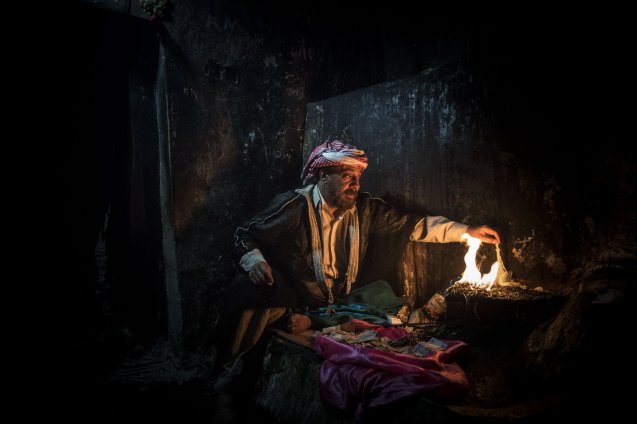
Um advinho yezidi em ritual de oração numa câmara ardente no templo sagrado de Lalish, no norte do Iraque. Por venerarem uma divindade a que chamam Anjo Pavão, o Daesh acusou-os de serem “adoradores do demónio”, desencadeando contra eles uma campanha de assassínios, escravidão e violações sexuais
© Benjamin Haselberger | Newsweek

Em Fevereiro e Março, várias esculturas do antigo Império Assírio (2500-605 a.C.) foram despedaçadas por martelos de forja e pneumáticos num museu de Mossul, no Norte do Iraque. Dias antes, “cerca de dez mil livros e mais de 700 manuscritos raros” haviam sido queimados na biblioteca nacional da cidade.

Estes actos de destruição ignara foram levados a cabo pelo autoproclamado “estado islâmico” (Daesh) num país onde as minorias religiosas enfrentam agora a maior ameaça existencial.

Os que mais correm “o risco de se extinguirem” são os mandeus, disse-me, numa entrevista por Skype, Gerard Russell, autor de uma obra que tem merecido elogios unânimes pela singularidade e erudição: Heirs to Forgotten Kingdoms: Journeys into the Disappearing Religions of the Middle East (“Herdeiros de Reinos Esquecidos: Viagens pelas Religiões em Vias de Desaparecimento no Médio Oriente”).

Em 2006, quando o católico britânico-americano Russel, na altura diplomata em Bagdad, foi convidado a visitar o Xeque Sattar, sumo-sacerdote dos mandeus, estes totalizavam “menos de cem mil”. Quando o livro estava prestes a ser concluído, “90% tinham sido assassinados ou forçados a exílio”. O Xeque Sattar foi um dos que teve de procurar refúgio, na Austrália.

Para os terroristas do Daesh, as minorias religiosas são “infiéis” e tudo que esteja associado à sua história constitui “heresia”. Escudam-se em Maomé, profeta do Islão, para “justificar” actos desumanos. No entanto, salientou Russell, “foi no Médio Oriente muçulmano que sobreviveram as religiões mais antigas e não na Europa cristã, onde não há vestígios de crenças equivalentes”.

Uma das razões, explicou, tem a ver com o facto de “as religiões no Médio Oriente serem mais sofisticadas do que as religiões pré-cristãs na Europa”.

Por exemplo, “enquanto os cristãos não tiveram grande dificuldade em dominar a fé dos celtas, muitos pagãos no Médio Oriente – profundamente conhecedores da filosofia grega e astronomia da Babilónia, e detentores de uma teologia complexa – garantiram a sua continuidade.”

Também é importante o facto de, embora Maomé ter tentado pôr fim à veneração de divindades pagãs, o Corão “ser relativamente benigno em relação às religiões monoteístas”, não apenas os “Povos do Livro” – judeus e cristãos –, mas também zoroastras e sabeus, ainda que estes fossem tratados como “legalmente inferiores”.

Cristãos coptas celebram a Páscoa numa igreja do Cairo: a minoria egípcia tem sido alvo de inúmeras pressões e perseguições, sob vários governantes, e aumenta o número dos que opta pelo exílio. © theorthodoxchurch

Cristãos coptas celebram a Páscoa numa igreja do Cairo: a minoria egípcia tem sido alvo de inúmeras pressões e perseguições, sob vários governantes, e aumenta o número dos que opta pelo exílio. Em Fevereiro, 21 cristãos coptas foram decapitados por jihadistas que juraram lealdade ao Daesh – a sua Igreja Ortodoxa canonizou-os como santos
© theorthodoxchurch.info

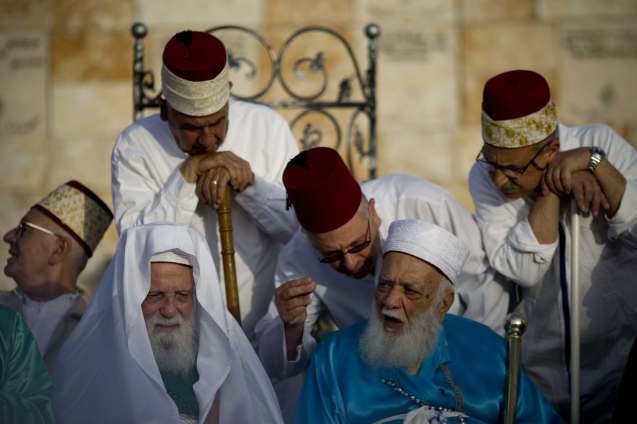
Os samaritanos são membros de uma pequena comunidade predominante na cidade de Nablus (Cisjordânia ocupada desde a guerra de 1967) e continuamente impelida a tomar partido entre judeus israelitas e árabes palestinianos
© flashbak.com

Só quando os muçulmanos se tornavam dominantes nos territórios que conquistavam e passaram a considerar as minorias como “forças subversivas” é que as perseguições se acentuaram. Os maniqueus, seguidores de Mani, quase se extinguiram no século XII (restará apenas uma pequena comunidade no Leste da China).

O austero pregador que via o mundo como “uma luta entre um mundo espiritual de luz e um mundo material de escuridão”, foi executado pelo xá sassânida Bahram I, em 276 d.C., no Irão.

“O conflito entre muçulmanos e outros crentes – os cruzados no Ocidente e os invasores mongóis no Oriente – minaram ainda mais a tolerância”, afirmou Russell.

“Só a partir do século XIX, é que os governos do Médio Oriente começaram a mudar de atitude em relação às suas minorias, talvez devido a pressões ocidentais ou inspirados por ideais progressistas.

O Império Otomano garantiu aos seus cidadãos um estatuto de quase igualdade. O mesmo aconteceu, entre 1860 e 1910, aos cristãos coptas no Egipto [reprimidos violentamente no século IX quando se insurgiram contra o peso dos impostos].

A revolução iraniana de 1906 [que aprovou a primeira Constituição da antiga Pérsia] deu aos zoroastras um lugar no Parlamento.”

Russell, que demorou quatro anos a escrever o seu livro, já era um conhecedor do Médio Oriente quando foi ao encontro das minorias em risco – falhou os alauitas, poder absoluto em Damasco até à guerra civil de 2011, mas diz que espera vir a falar deles, e também dos Bahá’ís (perseguidos no Irão), por exemplo, numa obra posterior.

Nascido nos EUA, em 1973, filho de pais ingleses, estudou línguas clássicas e filosofia na Universidade de Oxford. Trabalhou para o Foreign Office britânico e para a ONU no Cairo, Bagdad, Jidá (Arábia Saudita) e Cabul. É fluente em árabe, farsi e dari (um dos idiomas oficiais no Afeganistão).

“Tivessem as religiões antigas dominado o mundo moderno”, salientou Russel, “e seria o maniqueísmo, não o cristianismo, a ser disseminado na Europa pelo Império Romano”. Sebastianus, discípulo de Mani (que também cativou Santo Agostinho), quase se tornou imperador de Roma, em meados do século IV.

Mani admirava os mandeus, que se descrevem como “a religião mais antiga do mundo, descendente de Adão”. Contudo, enquanto ele incorporava elementos do judaísmo, cristianismo e budismo, os mandeus rejeitam Jesus e Abraão.

Adoram um só Deus, “A Grande Vida”, veneram João Baptista como “o maior profeta” e, por isso, praticam o baptismo em várias cerimónias.

O seu dia santo é o domingo, e tudo isto fez com que missionários europeus no século XVI os considerassem “uma seita cristã”. A realidade é diferente: “Eles acreditam no Céu, mas chamam-lhe ‘Mundo de Luz’ , e no Inferno, que não é Satanás mas uma mulher chamada ‘Ruha’.”

“O seu livro sagrado, Ginza Rabba (‘Grande Tesouro’) é diferente da Bíblia e do Corão, embora em cada página exista ‘uma espécie de cruz’, símbolo da imersão no rio Tigre, o rito mais santificado.” O nome “mandeus” deriva da palavra “manda”, que significa “sabedoria”, na sua própria língua.

Embora gozando de uma grande liberdade na sua comunidade, é entre as mulheres kalahsha que se regista o maior número de conversões. A pobreza e as pressões dos Taliban ajudam a explicar o abandono da fé original
© Kohi Marri | dawn.com

Os mandeus, “pacifistas que recusam a guerra mesmo se forem atacados”, são os que correm mais perigo de vida – “a sua existência no Iraque é quase insustentável, embora haja uma pequena comunidade protegida no Irão”, sublinhou Russell.

“Outro grupo sob ameaça é o dos yazidis mas, em termos numéricos, estes são muito mais. Centenas de milhares ainda vivem no Curdistão [Norte do Iraque] e também na Síria. Irão, Arménia e Geórgia. Provavelmente aqui permanecerão.”

Depois que conquistou Mosul, em Junho de 2014, o Daesh colocou os yazidis sob cerco e pressão impiedosos. Homens e rapazes são mortos de forma vil, degolados ou fuzilados, os seus órgãos vendidos para obter fundos (outras formas de financiamento são assaltos a bancos e tráfico de antiguidades). Mulheres e crianças são raptadas, violadas e escravizadas.

Com origens que remontam a cerca de 4000 anos e raízes no Zoroastrismo, os yazidis têm sido perseguidos devido a muitas das suas tradições, sobretudo por acreditarem na reencarnação e adorarem um anjo na forma de pavão (“um demónio arrependido cujas lágrimas secaram o Inferno”), Melek Taoos, “o verdadeiro senhor do Mundo, porque Deus tem uma forma abstracta”.

Na cordilheira do Hindu Kush, na fronteira entre o Afeganistão e Paquistão, Russell identificou outra “minoria indefesa”, uma das principais vítimas da “lei da blasfémia”, imposta pela primeira-ministra Benazir Bhutto (1953-207): os kalashas.

Louros, olhos azuis e tez clara, como muitos yaziditas, chamam-lhes frequentemente “descendentes de Alexandre, o Grande” ou dos soldados do general macedónio quando aqui se instalaram.

Uma comunidade onde as mulheres têm imensa liberdade, surpreendeu Russell que muitas delas aceitassem a conversão – voluntária (e não forçada pelos Taliban) – ao Islão. Uma das razões é a pobreza. Um casamento ou um funeral muçulmanos são menos onerosos do que os dos kalashas.

Algumas mulheres também se casam com polícias ou militares e, com isso, elevam o seu estatuto. Algo semelhante ao que se passa com convertidos ao cristianismo, que antes eram hindus da casta dos intocáveis.

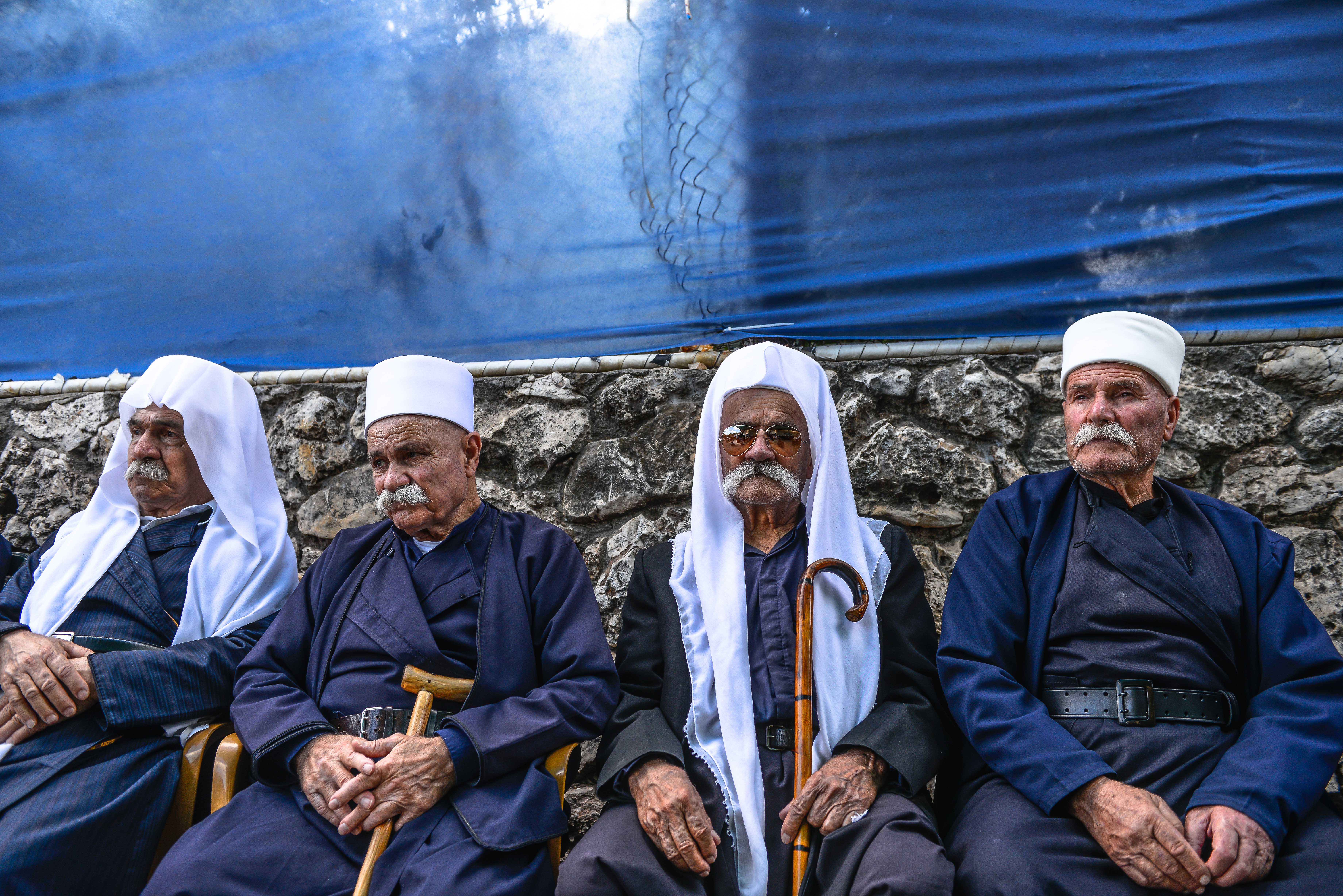
Xeques drusos, ou "anciães", os únicos que detêm o conhecimento da teologia esta minoria de mistura ritos judeus, cristãos e pagãos. © The Tower

Xeques drusos, ou “anciães”, os únicos que detêm o conhecimento da teologia desta minoria que vive espalhada pela Síria, Líbano e Galileia (norte de Israel)
© The Tower

Os zoroastras seguem a mais antiga religião do Irão. Fundada por Zaratustra por volta de 1800 a.C., era a fé que movia os reis persas Ciro e Dario. O Islão só chegou com os árabes no século VII
© alfredyaghobzadehphoto.com

Além dos mandeus, yazidis e kalashas, Russell incluiu também no seu livro os coptas, os drusos, os samaritanos e os zoroastras. Uns em situação de maior debilidade do que outros, alguns partilhando costumes (não explicados) como não usar a cor azul ou não comer alface, o que caracteriza quase todos é o secretismo das suas crenças, o facto de não possuírem textos escritos e acessíveis aos fiéis, mas também, por outro lado, “um grande sentimento de identidade”.

Um dos yaziditas que o autor encontrou era ateu, mas não abdicava da pertença à sua comunidade, mais importante do que identificar-se como iraquiano.

Há um outro problema”, explicou Russell. “Quando estas minorias emigram para a Europa, América ou Austrália, sociedades que são seculares, na sua maioria, é difícil manter a fé porque não existem manuais de Teologia.”

“Existir é um grande desafio. Isso pode ser feito, mas exigirá a criação de redes eficientes, sociais e económicas, para que as comunidades se mantenham unidas. Há um forte sentido de identidade, é certo, mas falta-lhes um sólido sentido de teologia.”

“Não creio que haja percepção, entre os ocidentais, de que estas religiões sejam problemáticas, mas elas têm de se dar a conhecer melhor”, aconselhou Russell. “Os cristãos do Médio Oriente na América, por exemplo, têm sido bons em criar centros comunitários, mas os yaziditas, os drusos e outros ainda não estão preparados.”

Repare-se a má reacção de alguns drusos ao casamento da famosa advogada de direitos humanos Amal Alamuddin com o não menos célebre actor George Clooney, por ser “uma união com um estranho”.

Terminemos com uma especulação de Russell: “Como seria diferente o mundo se o imperador Constantino não se tivesse convertido em 312, acontecimento que levou o Império [Romano] a adoptar o Cristianismo como religião oficial? Ainda haveria, certamente, muitos cristãos, embora em menor número devido a perseguições.”

“O Judaísmo seria uma grande religião, com base no Iraque, competindo com os samaritanos (que totalizariam milhões, dominando o que é hoje Israel e talvez o Sul da Síria. Os filósofos gregos não seriam apenas lidos, mas reverenciados. Quanto a nós, talvez seguíssemos uma religião misteriosa, conhecida apenas por selectos anciães.”

Gerard Russell © Direitos Reservados | All Rights Reserved

Gerard Russell, diplomata e escritor britânico, representou durante 14 anos o Reino Unido no Médio Oriente

Este artigo, agora actualizado, foi publicado originalmente na edição de Abril de 2015 da revista ALÉM-MAR” | This article, now updated, was originally published in the Portuguese magazine ALÉM-MAR, April 2015 edition

From Gaza to NASA: The odyssey of a Palestinian engineer

Soha Alqeshawi is a Palestinian from Gaza City. When she left the tiny territory where 1,82 million people live like prisoners in a total area of 365 square km, she entered the University of Houston in Texas. Upon graduation as top of the class with a Bachelor of Science in Computer Systems Engineering NASA offered her a job working on the Shuttle Program. “It was a dream come true”, as she tells me in this interview via email. Arabian Business.com included her in its list of “100 Most Powerful Arabs Under 40“. (Read more…)

Soha Alqeshawi - Engenheira sénior de software da nave espacial Orion ©Friends of NASA's photos

Soha Alqeshawi: My parents did their best to provide me and my siblings with a good education and shield us from the effects of the continuous horrific conflict that Gaza has been living under.
© Friends of NASA’s photos

For Portuguese readers who are not familiar with your personal story, would you please introduce yourself? 

My name is Soha Alqeshawi. I work as a senior software engineer on the Orion Project. I was born and raised in Gaza City, Palestine. I grew up in a large family of 10, two parents and 8 children.

My dad was an accountant and my mom was a housewife who dedicated her life to raising and guiding us to become the best we can. My dad who taught me early on in life how important education and hard work are to achieve my dreams passed away when I was in college.

My parents did their best to provide me and my siblings with a good education and shield us from the effects of the continuous horrific conflict that Gaza has been living under.

Living under constant fear and despair where everything is uncertain and basic life necessities such as electricity and sometimes water are unavailable for most of the day. Going to school was sometimes a dangerous journey that could have death waiting at any step of the way.

However, that made us more determined to achieve our dreams in receiving an education. Although I was the only one in my family who had the opportunity to leave Gaza for the US to study and work, all of my brothers and sisters are college educated with degrees in science, engineering, and business.

I am married with 3 children. My husband who is from Gaza too has a Ph.D. in Electrical engineering and works at NASA.

Can you give us  more details about your academic background? 

I grew up and spent my early life in Gaza, Palestine. I graduated from Bashir El-Rayes School in Gaza earning General Secondary Education Certificate which is equivalent to high school in the US. After finishing high school, I came to the US to study at the University of Houston, Houston TX [Texas].

Initially, I majored in computer science but later switched to computer engineering because I liked dealing with computer hardware and software integration. I graduated top of my class with a Bachelor of Science in Computer Systems Engineering.

Upon graduation I was offered a job at NASA working on the Shuttle Program which was a dream come true to me. The plan to pursue higher degree was postponed so I could pursue my dream of working on the space program.

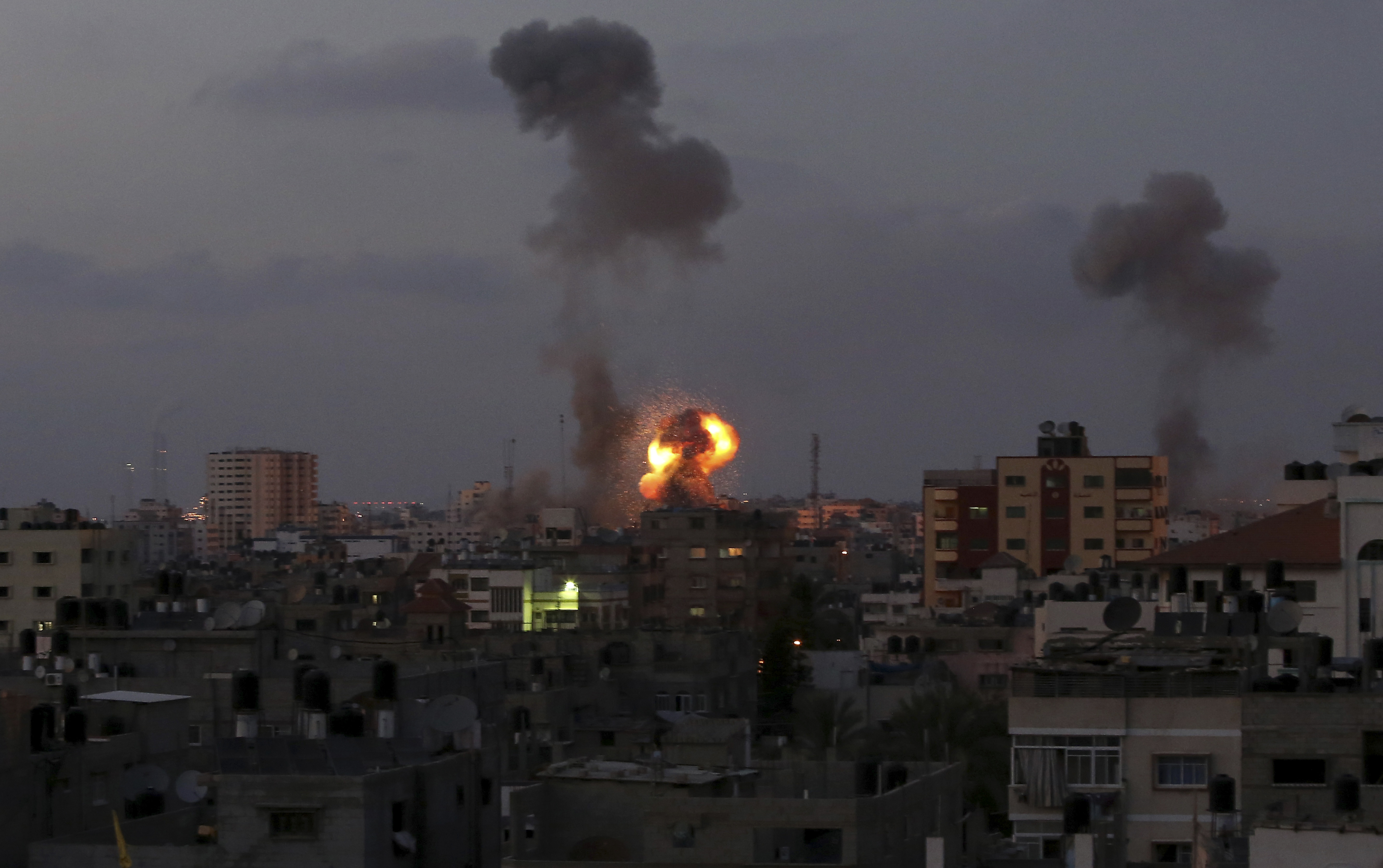
Smoke and a ball of fire rise after an Israeli missile strike in Beit Lahia, northern Gaza Strip, on July 8. © AP

July 8, 2014: Smoke and a ball of fire rise after an Israeli missile strike in  the city of Beit Lahia, northern Gaza Strip, near de 1949 Armistice Line
© AP

Would you specify the process that led you to become a NASA’s engineer? Was it hard to study and work in the US, being a Palestinian from Gaza, a place that many people associate with poverty and violence?

When people think of Gaza they imagine poverty and violence. What many people do not know about Gaza is that our people are subjected to inhumane blockade and embargo by the Israeli occupation.

The poverty and violence are forced on the people of Gaza. Gaza is rich with a people that are educated, hardworking and life loving.

I am just a simple example of what our oppressed yet motivated people can do. My education in the US was a rewarding challenge. But with the support of family and friends, I was able to overcome the barriers of language and culture.

Being a Muslim woman with Islamic headscarf caused me to look different from others but never made me doubt my abilities or the noble religion I belong to.

I always had the encouragement of my family and my husband at home, my professors at school and my managers and coworker at work.

As a woman, I want to say that women need to believe in themselves and work to prove themselves before asking others to believe in them.

A Middle East Monitor’s article identified you as “leading figure in operating NASA’s Orion Spacecraft, responsible for software/hardware integration and testing to ensure the spacecraft is functioning properly.” For those who are not accustomed to scientific language, would you explain in more simple words what is your job?

As a senior software engineer working on the Orion spacecraft, I am responsible for software/hardware integration and testing to ensure all the spacecraft’s hardware and software perform as expected for America’s next generation spacecraft destined for deep space.

We simulate each planned mission. The software that simulates the mission needs to be developed and integrated with the hardware in modules. After testing each module individually, we get to integrate all modules together.

We perform very extensive testing on flight software and hardware and all interfaces to verify the functional, performance and reliability of requirements. We find all issues, fix them and retest to ensure the safety and the success of the mission.

During those simulations, we test each phase of the mission from the moment it launches to the moment it lands. to ensure a smooth and safe flight for our future crew.

A NASA Orion capsule on top of a Delta IV rocket lifts off on its first unmanned orbital test flight from Complex 37 B at the Cape Canaveral Air Force Station, Friday, Dec. 5, 2014 at Cape Canaveral, Fla. © Marta Lavandier | AP

A NASA Orion capsule on top of a Delta IV rocket lifts off on its first unmanned orbital test flight from Complex 37 B at the Cape Canaveral Air Force Station (Florida), Friday, Dec. 5, 2014 
© Marta Lavandier | AP

Would you enlighten us on what consists and how important for the world is the Orion’s project?

Orion is the spacecraft NASA needs in order to take humans into deep space, for very long periods of time, and bring them safely home.

On December 5, 2014, we had a successful Exploration Flight Test-1, sending Orion 3,600 miles beyond Earth – 15 times further that the International Space Station. The 4.5 hour mission ended with a splashdown in the Pacific Ocean.

The next step for the Orion program is Exploration Mission-1, an un-crewed mission that will last 22 days and travel a total distance of 275,000 into deep space.

I believe that the space exploration is in a great march to the next era-the era of long missions to Mars and beyond.

How many hours a day do you dedicate to your job? Being married and with children, how do you combine motherhood and profession?

My working hours usually average 10-11 hrs a day. Occasionally during formal testing and mission support testing, it extends even longer.

Being married with 3 children, it becomes a challenge sometimes to meet jobs’ expectations while maintaining a normal family life. It was very difficult at first to balance my life at work and home. However I was very fortunate to have a very supportive husband and family that made it possible.

My husband understands the nature of my job and is willing to support in every way possible. With his support and encouragement, I was able to balance my life commitments, multitask, and have the ability to plan ahead.

Are you coordinating a team as a leader or is it a solitary occupation?

I am the technical lead for integration testing. In addition to performing the integration testing that I do daily, I am also responsible for training the individuals on the team, schedule testing time and oversee the overall integration process for each phase of the flight.

What are the necessary qualities to perform your job?

Some of the necessary qualities that my job requires are leadership, teamwork, hardworking, dedication, alertness, willingness to learn new material frequently, ability to grasp the big picture, ability to solve issues as they arise quickly and with no errors, ability to work in a high stress/pressure and very dynamic environment, good communication and technical skills.

Is NASA fulfilling a childhood dream or did you want to have a different profession when you were a kid?

Since I was a young girl, I was always fascinated with the space shuttle. Watching the shuttle taking off on TV was captivating experience to me. The great amount of fire and smoke it produced in the takeoff was stunning and made me want to be an astronaut one day.

All I wanted is to ride on a powerful space ship and go to outer space. NASA had made my dream come true by working on the Space Shuttle then working on the Orion Spacecraft. I always found encouragement and support from my managers to excel, do my best and follow my dream.

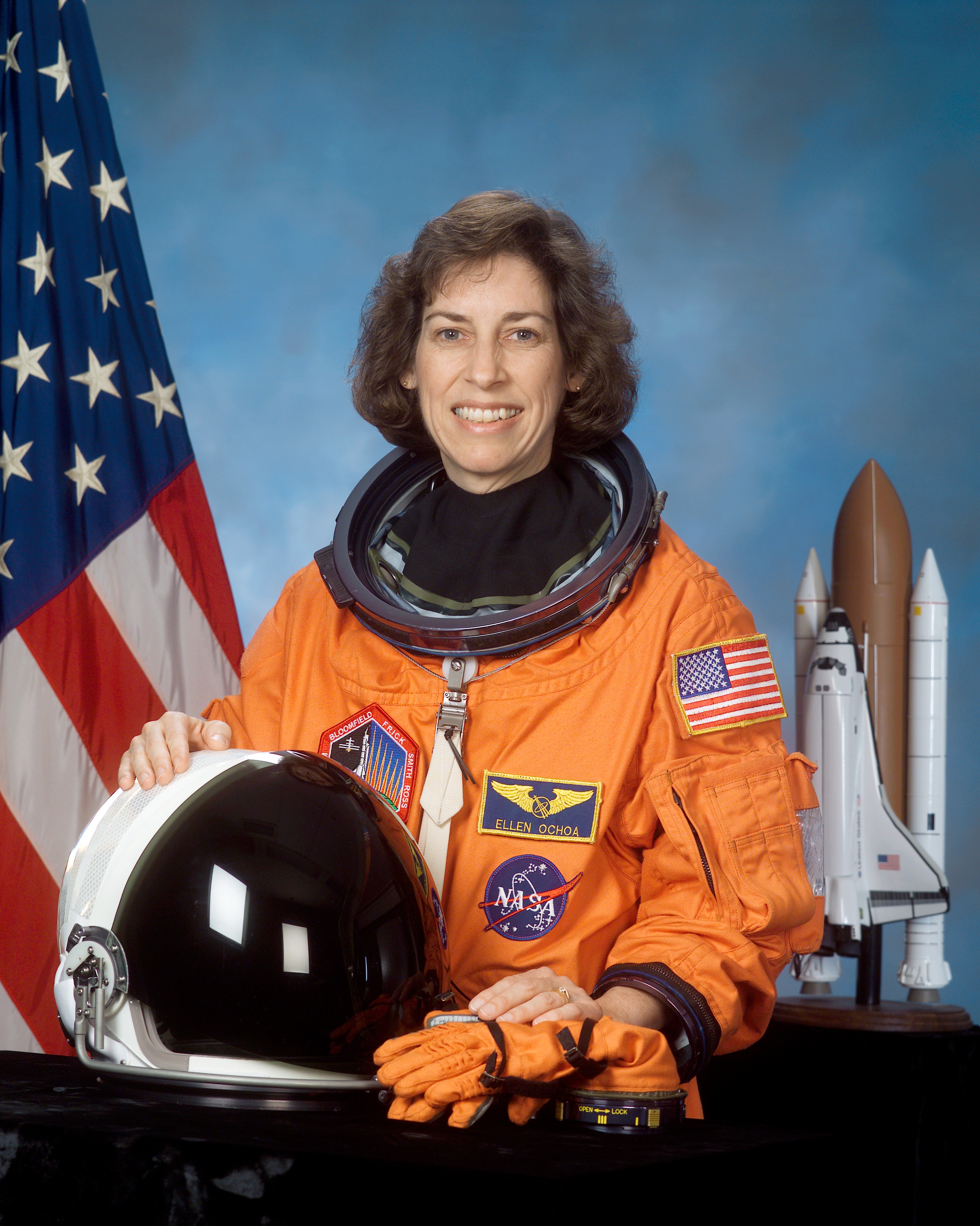
Dr. Ellen Ochoa, former astronaut and ... of the John Space Center is the idol of engineer Soha Alqeshawi. © NASA

Ellen Ochoa, former astronaut, director of the John Space Center, is Soha Alqeshawi’s idol
© NASA

Do you consider yourself a source of inspiration? 

I hope my story would be an inspiration for anyone especially women who want to succeed in life. I do not think it is hard for women to make a good career. We have many examples of successful women everywhere around us in NASA and other work fields. Hard work is what it takes.

I believe women involvement in science and technology has increased significantly in the last decades and hence more opportunities have become available to them.

It is up to women to make use of such opportunities and establish themselves in the workplace. They just need to believe in themselves and follow their dreams.

Who are the idols that have been influencing your life?

JSC director Dr. Ellen Ochoa is one of the leaders that I admire. She is role model for a minority female leader who can be at the top of her field in science and engineering as well as in leadership of a large organization such as Johnson Space Center.

In a world still misogynist, where women are still denied equal payment and, above all, basic human rights, do you see yourself as an inspiration? What would be your advice to little and adult girls who would like to follow their dreams but face so many obstacles hindering their plans?

There are always a way for girls to find success. I would advise every little and adult girl to believe in herself, to have a big dream, work hard to achieve it, and never give up or let anyone tell her what she can or can’t do.

Life is never easy, but with determination and working hard you can make your dream come true, become successful in life and reach the highest places that your heart desires.

Ms. Soha Alqeshawi © All Rights Reserved

Soha Alqeshawi

An artist's impression of the first Orion spacecraft in orbit attached to a Delta IV Upper Stage during Exploration Flight Test-1. © NASA

An artist’s impression of the first Orion spacecraft in orbit attached to a Delta IV Upper Stage during Exploration Flight Test-1
© NASA

This interview, now updated, was included in an article originally published in the Portuguese news magazine VISÃO, on March 26, 2015

De Gaza para a NASA: A odisseia de uma engenheira palestiniana

Desde criança que Soha Alqeshawi queria ser astronauta. Hoje, é uma das principais responsáveis na nave Orion, projectada para transportar seres humanos ao espaço profundo. Os pais investiram na sua educação e ela escapou à ocupação israelita para realizar um sonho. “Nenhuma mulher deve permitir que lhe digam o que pode e não pode fazer.” A publicação Arabian Business.com acaba de a incluir na sua lista dos “100 Árabes mas poderosos com menos de 40 anos“. (Ler mais | Read more…)

Soha Alqeshawi © NASA | Radislav Sinyak

Soha Alqeshawi foi encorajada pela família a não desistir dos seus sonhos
© NASA | Radislav Sinyak

A televisão mostrava o primeiro lançamento do Space Shuttle Columbia, em 1981, e Soha Alqeshawi, uma criança na Cidade de Gaza, onde nasceu, ficou fascinada.

“Foi uma experiência inesquecível, aquela enorme quantidade de fogo e fumo. Desejei desde logo ser astronauta. Queria viajar numa potente nave e entrar no espaço sideral. A NASA concretizou o meu sonho ao abrir-me as portas, primeiro do Space Shuttle e, depois, do Projecto Orion.”

O sonho de Soha consumou-se, acima de tudo, porque foi encorajada a não desistir. “Somos uma família numerosa: pai, mãe e oito filhos”, conta a engenheira palestiniana, numa entrevista que me deu por e-mail. O meu pai era contabilista e a mãe trabalhava em casa. Dedicou a vida a educar-nos e a orientar-nos para sermos o melhor que podíamos. Desde miúda que me ensinaram a importância da educação para realizar as minhas aspirações.”

“Os meus pais também deram o seu melhor para nos proteger dos efeitos do contínuo e horrífico conflito que vivemos em Gaza”, adianta Soha. “É uma vida sob medo constante e desespero. Tudo é incerto. A maior parte dos dias não temos acesso às necessidades básicas, como água e electricidade. Frequentar a escola pode ser uma viagem perigosa. A morte espera-nos a qualquer passo no caminho. Tudo isto fez de nós mais determinados.”

Embora Soha fosse o único elemento da família que teve oportunidade de sair de Gaza para estudar e trabalhar nos Estados Unidos – não revelou o ano nem como conseguiu sair do território mais densamente povoado do mundo (1,8 milhões de habitantes em 360 quilómetros quadrados) – todos os seus irmãos e irmãs têm formação universitária, com licenciaturas em Ciência, Engenharia e Gestão de Empresas.

O marido, também natural de Gaza, é doutorado em Engenharia Eléctrica e trabalha igualmente para a NASA. Sobre ele, ela não deu mais pormenores.

Guerra de 2014: Bombardeamentos israelita na Cidade de Gaza, onde nasceu Soha Alqeshawi, que alerta: "Estamos sujeitos a um embargo e a um boqueio desumanos [desde 2007]". © Direitos Reservados |All Rights Reserved

Guerra de 2014: Bombardeamentos israelita na Cidade de Gaza, onde nasceu Soha Alqeshawi, que alerta: “Estamos sujeitos a um embargo e a um bloqueio desumanos [desde 2007]”
© shutterstock.com

Conquistada por Israel ao Egipto na guerra de 1967, e quase arrasada numa ofensiva militar contra o movimento Hamas, em 2014, que causou mais de dois milhares de mortos, Gaza é, para muitos, sinónimo de “violência e pobreza”, admite Soha.

Mas ela questiona: “Saberão que o nosso povo está sujeito pelos ocupantes israelitas a um embago e bloqueio desumano [por terra, mar e ar, desde 2007]? A violência e a pobreza são-nos impostas. A riqueza de Gaza está na sua população, que é culta, trabalhadora e apaixonada pela vida. Sou apenas um exemplo simples do que pessoas motivadas e oprimidas podem fazer.”

“A minha educação nos EUA foi a recompensa de um desafio”, acrescenta. “Ultrapassei as barreiras da língua e da cultura. Ser uma muçulmana que cobre o cabelo com um lenço [hijab] faz com que me olhem de forma diferente em relação a outros, mas nunca duvidei das minhas qualidades ou da religião nobre a que pertenço.”

“Contei sempre com o apoio da minha família e do meu marido, em casa; dos meus professores, na faculdade; e dos meus chefes e colegas, no trabalho. A outras mulheres eu digo que precisam de acreditar em si próprias antes de pedir aos outros que acreditem nelas.”

Soha reforçou a confiança pessoal quando, na Escola Bashir El-Rayes, em Gaza, obteve um Certificado de Educação Secundária Geral, equivalente ao currículo dos liceus nos EUA. “Segui depois para o Texas, para estudar na Universidade de Houston.”

“Inscrevi-me, de início, em Ciências de Computação mas, depois, mudei para Engenharia de Sistemas de Comunicação. Terminei como a melhor aluna do curso.

Após a licenciatura, a NASA ofereceu-me logo emprego, no projecto Space Shuttle – o sonho que se tornou realidade.” Não prossegui os estudos superiores para manter vivo este sonho de trabalhar num programa espacial.”

Primeiro lançamento da nave espacial Orion, a partir do Cabo Canaveral, na Florida, em 5 de Dezembro de 2014. © NASA Bill Ingalls

Primeiro lançamento da nave espacial Orion, a partir do Cabo Canaveral, na Florida, em 5 de Dezembro de 2014
© NASA | Bill Ingalls

Como engenheira sénior na Orion, Soha é responsável pela integração do software/hardware e pelos testes que garantirão o bom funcionamento da próxima geração de naves espaciais. Também coordena o treino dos membros do seu grupo, a definição do tempo de testes e supervisão de todo o processo de integração para cada fase do voo.

“Algumas das qualidades necessárias que me são requeridas são liderança, trabalho em equipa, dedicação total, disponibilidade para aprender sobre novos materiais, capacidade para resolver rapidamente problemas que surjam, sem erros, além de aptidão para enfrentar situações de stress, engenho técnico e talento para comunicar.”

“Simulamos cada uma das missões planeadas”, explica. “O software que simula a missão precisa de ser desenvolvido e integrado em módulos com o hardware. Levamos a cabo testes complexos sobre software e hardware de voo e de todos os interfaces para assegurar as exigências de fiabilidade, funcionalidade e performance.”

“Detectamos e reparamos todas as falhas, voltando a testar tudo para garantir a segurança e o êxito da missão. Durante estas simulações, testamos cada fase da missão desde o momento em que é lançada até à aterragem.”

“A Orion é a nave espacial de que a NASA precisa para poder levar seres humanos para o espaço profundo, durante longos períodos de tempo, e trazê-los de volta em segurança”, especifica Soha.

“A 5 de Dezembro de 2014 tivemos um bem sucedido Exploration Flight Test-1 (Teste-1 de Voo Exploratório) a 3.600 [mais de 4800 quilómetros] de distância da Terra – 15 vezes superior à da Estação Espacial Internacional.”

“Esta missão de 4,5 horas terminou com a amaragem no Oceano Pacífico. A próxima etapa é a Exploration Mission-1 [Missão-1 de Exploração], uma missão não tripulada que irá durar 22 dias 22 e percorrer um total de 275.000 milhas [mais de 440.000 quilómetros] no espaço profundo.”

O ídolo de Soha é a directora do Johnson Space Center e antiga astronauta, Ellen Ochoa © NASA

O ídolo de Soha é Ellen Ochoa, directora do Johnson Space Center e antiga astronauta
© NASA

A engenheira palestiniana diz-se convencida de que “a exploração espacial está numa marcha avançada para a próxima era – a das longas missões a Marte, e mais além.” Para que isto seja viável, ela trabalha “umas 10 a 11 horas por dia”.

Podem ser mais, durante testes formais ou testes de apoio à missão. “Com três filhos, por vezes é um desafio combinar as expectativas do emprego mantendo, simultaneamente, uma vida familiar normal”, confessa.

“De início, foi difícil, mas sou afortunada por ter um marido que compreende a natureza do que eu faço, e está disponível para me ajudar em qualquer circunstância. Incentivada por ele, tenho sido capaz de combinar os compromissos e múltiplas tarefas da minha vida – e ainda ser capaz de fazer planos futuros.”

Soha Alqeshawi espera que a sua história seja uma inspiração. “Acredito que o envolvimento das mulheres na Ciência e na Tecnologia aumentou significativamente nas últimas décadas e, por isso, há mais oportunidades.”

O ídolo de Soha é a directora do Johnson Space Center e antiga astronauta, Ellen Ochoa: “É uma das líderes que mais admiro. O exemplo de uma mulher que se mantém no topo na área da Ciência e Engenharia e, ao mesmo tempo, está na liderança de uma grande organização como o JSC.”

“Há sempre uma maneira de encontrar o sucesso”, conclui Soha Alqeshawi. “Aconselho todas as jovens e adultas a jamais deixarem que alguém lhes diga o que podem ou não podem fazer. A vida nunca é fácil, mas com determinação os sonhos materializam-se, e chegamos aos lugares elevados que os nossos corações anseiam.”

Soha Alqeshawi - Engenheira sénior de software da nave espacial Orion ©Friends of NASA's photos

Soha Alqeshawi : Engenheira sénior de software da nave espacial Orion
©Friends of NASA’s photos

Orion: A cápsula do futuro

Em 2011, os vaivéns do programa espacial dos Estados Unidos foram para a reforma – após 33 anos de serviço – e a NASA teve imediatamente de trabalhar nas naves que lhes sucedessem.Um processo que tem sido acompanhado desde então pela engenheira Soha Alqeshawi. O grande objectivo do Programa Orion é colocar os americanos na frente da corrida espacial – incluindo uma viagem a Marte.

8913 Kg

É o peso da cápsula de tripulação.

11,3 m

É a área habitável.

4

É o número de astronautas na tripulação.

5 metros

É o diâmetro.

32.000 km/h

É a velocidade máxima.

18.000 milhões

São as previsões de quanto custará o Programa Orion até 2021.

CRONOLOGIA

© Direitos Reservados | All Rights Reserved

2014: A 5 de Dezembro, a Orion teve o seu voo de baptismo. Durou quatro horas e meia, sem ninguém a bordo. Cumpriu duas órbitas à volta da Terra.

2018: A nave deve cumprir o segundo voo com um novo e mais potente lançado, ainda sem tripulação.

2021: Data prevista para o primeiro voo com astronautas. Nos anos seguintes deverá rumar numa missão tripulada a um asteróide ou à Lua.

2010: Ano a partir do qual está prevista uma possível missão a Marte.

A nave Orion © NASA

A nave Orion
© NASA

Este artigo, agora actualizado, foi publicado originalmente na revista VISÃO em 26 de Março de 2015 | This article, now updated, was originally published in the Portuguese news magazine VISÃO, on March 28, 2015

Os palestinianos de Israel fizeram história

A Lista Conjunta, que uniu quatro partidos árabes sob a liderança do advogado Ayman Odeh, tornou-se a terceira força política no Knesset. O palestiniano Rami Younis e a judia mizrahi Revital Madar explicam por que votaram numa aliança não sionista considerada “revolucionária”. (Ler mais | Read mo(re..)

Abdullah Talash, 74 anos, palestiniano de cidadania israelita escolhe um boletim de voto numa assembleia a aldeia de Umm Al-Fahm, no norte de Israel
© Muhammad Muheissen | AP

Residente na cidade a que chama Lyd, mas que retomou o nome bíblico de Lod após a criação de Israel, o palestiniano Rami Younis boicotava todas as eleições. Este ano, decidiu votar na Lista Conjunta – que se tornou a terceira força política no Parlamento –, mas mantém a convicção de que este Parlamento “representa tudo menos uma verdadeira democracia”.

“Votei, desta vez, apesar de a Lista Conjunta entrar no Knesset e não porque terá uma bancada parlamentar”, explicou o escritor e activista Younis, numa entrevista, por email.

“O discurso do boicote é importante, mas não oferece quaisquer alternativas de momento. Precisa de ser mais trabalhado. A nossa unidade é um passo na direcção certa.”

“Primeiro, mostramos que somos capazes de nos unir. Depois de termos a certeza de que atingimos um nível elevado de consciência política, podemos começar a pensar em outras alternativas de representação.”

A Lista Conjunta é uma espécie de “feitiço que se virou contra o feiticeiro”. Foi a resposta a uma provocação do ex-ministro dos Negócios Estrangeiros, o imigrante moldavo Avigdor Lieberman, que fez aprovar uma lei alterando o limiar de votos necessário para entrar no Knesset (de 2 para 3,25% dos votos), esperando excluir os palestinianos de cidadania israelita – 20% da população.

Todavia, num gesto sem precedentes, os principais partidos árabes (Balad, Ra’am, Ta’aal e Hadash) que sempre se mostraram divididos formaram uma aliança e conquistaram 13 lugares no Parlamento: resultado descrito como “histórico” e “revolucionário”.

Lieberman iria ainda mais longe no seu racismo quando sugeriu que os palestinianos de Israel “que não forem leais ao Estado deveriam ser decapitados”.

Ayman Odeh, o líder da Lista Conjunta, numa foto, com a mulher e os três filhos, partilhada na sua conta de Twitter © @Ayman_Odeh_TJL

Ayman Odeh, o líder da Lista Conjunta, numa foto, com a mulher e os três filhos, partilhada na sua conta de Twitter
© @Ayman_Odeh_TJL

O homem que conseguiu a proeza de união é um advogado de 40 anos, Ayman Odeh, dirigente do Hadash, a quem Lisa Goldman, directora da Iniciativa Israel-Palestina da New American Foundation, chamou “o mais estimulante líder árabe no Médio Oriente.”

Foi ele que conseguiu superar as divergências entre facções nacionalistas seculares, comunistas e islamistas, apresentando um programa centrado na defesa da igualdade e direitos sócio-económicos dos palestinianos de Israel, mais do que nas reivindicações dos palestinianos sob ocupação.

“Esta aliança é natural contra o fascismo e o sionismo”, disse Rami Younis, 30 anos, amigo do famoso rapper Tamer Nafer, dos DAM, que fez um vídeo, com o refrão “Nunca votei na vida – até agora”, para encorajar uma nova geração rebelde.

“Os palestinianos são perseguidos e espancados nas ruas de Israel. Há massacres em Gaza e dezenas de detenções diárias na Cisjordânia. O povo palestiniano está finalmente unido contra um inimigo feroz. Bem, pelo menos uma parte de nós.”

A aliança do muçulmano Ayman Odeh, que é agora, pela primeira vez na história do Estado de Israel um dos principais líderes da oposição, só atraiu “cerca de 2000” eleitores judeus, lamenta Younis.

“Creio que é ainda um sonho longínquo uma verdadeira coligação de judeus e árabes em luta pela justiça e a igualdade genuínas.”

© Rami Younis

© Rami Younis

Um dos judeus que votaram na Lista Conjunta foi Revital Madar, 32 anos, formada em Filosofia e colunista do suplemento cultural do jornal Ha’aretz. Filha de pais provenientes da Tunísia, ela pertence a um grupo que se considera também discriminado, os Mizrahim (judeus oriundos do Médio Oriente].

Sobre o seu voto, diz-me, por e-mail: “Não sei se a Lista Conjunta ‘mudou a face da história israelita’ [como escreveu o blogue +972], já que isso depende da capacidade de intervenção no Knesset. No entanto, criou uma grande mudança no discurso político e fez com que muitos [judeus] israelitas se apercebessem de que há um grande grupo de palestinianos em Israel e que estes se tornaram uma força importante.”

“A influência da Lista Conjunta [se Netanyahu não ganhasse] poderia ser exercida em comissões parlamentares como a das Finanças, impedindo que os dinheiros públicos sejam desviados para os colonatos em vez de investidos em habitação social.”

“Temos de nos lembrar que a sociedade palestiniana – tal como os Mizrahim em Israel – são os mais afectados pela pobreza, por isso muita da legislação que tem sido apresentada – mas não aprovada – pelos deputados árabes é de cariz social.”

Revital Madar escolheu a Lista Conjunta por considerar que o trabalhista Isaac Herzog não era uma alternativa. “O seu partido é sionista e o seu discurso durante a campanha eleitoral, não foi muito diferente do de Netanyahu.”

Ela lamenta a exclusiva e contínua hegemonia dos Askhenazim [judeus de origem europeia] nos centros de poder, ainda que a segunda e terceira gerações de Mizrahim já não sejam isolados como os seus antepassados em campos de trânsito (Ma’abarot) onde, à chegada, eram pulverizados com desinfectante para “purificar o seu Judaísmo”.

© Ravital Madar

© Ravital Madar

“Não queria contar histórias pessoais, mas basta ver que nunca houve um primeiro-ministro Mizrahi e que todos os postos elevados em Israel, nos tribunais, no Governo, na academia, são ocupados por Ashkenazim. E mesmo que mizrahi seja escolhido jamais será apresentados como tal a nível político. Precisamos de lutar por tudo se quisermos sair da estrada que pavimentaram para nós.”

Rami Younis, por seu turno, considerou lastimável que os Mizrahim mesmo os que não se consideram sionistas, tenham votado principalmente no [partido ultra-ortodoxo] Shas ou no Likud. “É uma vergonha. Basicamente, eles votaram em quem os mantém pobres.”

“A maioria dos israelitas é motivada pelo medo incutido nas suas mentes, sobretudo pelos sionistas da direita. Netanyahu foi uma vez mais capaz de canalizar em votos – e em muitos – o medo que ele instila.”

Há receios de que o ressurgimento de divisões possa conduzir ao colapso da Lista Conjunta mas Younis não está preocupado. “Não me interessava o número de deputados. Votei para demonstrar o meu apoio e impedir que leis fascistas sejam aprovadas. Também nós [palestinianos de Israel] estamos sob ocupação, uma ocupação que se prolonga desde 1948.”

“Não somos cidadãos iguais e sentimo-nos um alvo depois de as nossas famílias terem sofrido horrores com a Nakba [a primeira guerra Israelo–árabe e subsequente êxodo palestiniano]. Muitos de nós sabem que a Nakba nunca acabou.”

“É um processo que ainda dura e se arrasta lentamente. A Polícia dispara sobre nós nas ruas. O Governo destrói frequentemente as nossas casas e somos mantidos na pobreza. Não é por ter 14, 15 ou até 20 lugares num parlamento israelita de apartheid que a situação mudará.”

Uma foto de Benjamin Netanyahu misturada com panfletos eleitorais no chão da sede do Likud , em Telavive, depois da festa da vitória do partido, em18 de Março de 2015 © Amir Cohen | Reuters

Uma foto de Benjamin Netanyahu misturada com panfletos eleitorais no chão da sede do Likud , em Telavive, depois da festa da vitória do partido, em18 de Março de 2015
© Amir Cohen | Reuters

A vitória de “Bibi” e o fim da ocupação

Na segunda-feira, 16 de Março, Benjamin Netanyahu deixou bem claro que põe em prática o que o antigo ministro israelita da Defesa Moshe Dayan (1915-1981) disse um dia: “Os americanos dão-nos dinheiro e conselhos; nós ficamos com o dinheiro e ignoramos os conselhos”. Se reeleito, prometeu “Bibi”, não haverá criação de um Estado palestiniano.

“Penso que quem quer que tente estabelecer um Estado palestiniano e evacuar território [ocupado na Cisjordânia e Jerusalém Leste] está a ceder terreno a ataques de radicais islamistas contra Israel”, disse Netanyahu ao website NRG, de que é proprietário o seu maior financiador, o magnata judeu americano Sheldon Adelson. “A esquerda tem enterrado na cabeça na areia e há anos que ignora isto, mas nós compreendemos e somos realistas.”

Durante a entrevista, em campanha eleitoral e quando as sondagens atribuíam vantagem à União Sionista de Isaac Herzog e Tzipi Livni, Netanyahu acusou esta aliança de “se comprometer demasiado com as exigências da comunidade internacional” e de “cooperar com aqueles que pretendem o regresso de Israel às fronteiras de 1967”.

No próprio dia das eleições, um Netanyahu ainda mais nervoso escreveu na sua página de Facebook: “Os árabes [referência à Lista Conjunta] acorrem em massa às urnas. (…) Despertem, levem os vossos amigos e família, e votem no Likud para impedir o avanço da esquerda.”

As palavras de “Bibi”, perito em instilar medo num eleitorado para quem a segurança é o bem mais valioso, ofereceram-lhe uma vitória na qual ele próprio já não acreditava: 30 lugares no Knesset e um amplo leque de potenciais parceiros de coligação.

Hebron, na Cisjordânia ocupada por Israel: Crianças observam e são observadas por um soldado na cidade onde só os judeus têm liberdade de movimentos. Durante a campanha eleitoral, Netanyahu prometeu que, so a sua liderança, Israel jamais permitirá a criação de um Estado aos palestiniano. © Lior Mizrahi |Getty Images

Hebron, na Cisjordânia ocupada por Israel: Crianças observam e são observadas por um soldado na cidade onde só os colonos judeus têm liberdade de movimentos. Durante a campanha eleitoral, Netanyahu prometeu que jamais permitirá a criação de um Estado palestiniano
© Lior Mizrahi | Getty Images

Este cenário, que conduzirá, segundo alguns analistas, ao “governo de direita mais extremista de Israel”, terá causado calafrios na Casa Branca, em Washington, e em países europeus, sobretudo a Alemanha. A porta-voz do Departamento de Estado Jen Psaki admitiu que a Administração Obama (que Netanyahu tem abertamente hostilizado) “admite a possibilidade de uma mudança de posições [menos vetos] na ONU”.

Nem todos os palestinianos, sob ocupação ou no exílio, ficaram chocados e muitos até regozijaram pelo facto de, finalmente, Netanyahu ter posto fim à sua ambiguidade num “processo de paz” errático e moribundo.

Num artigo de opinião, publicado pelo New York Times (Netanyahu’s win is good for Palestine | “A vitória de Netanyahu é boa para a Palestina”), o escritor e analista político Yousef Munayyer, director executivo da campanha End the Israeli Occupation, mostrou-se optimista de que “Netanyahu ao leme irá acelerar o fim das políticas de apartheid de Israel”.

Em seu entender, os “maiores derrotados” foram os que acreditaram que “a mudança viria de dentro de Israel – não pode vir e não virá.” Porque os israelitas se sentem “muito confortáveis com o statu quo”. Porque num país que mantém milhões de pessoas sob ocupação – serão cinco décadas em 2017 –, “os maiores escândalos não são os colonatos, a morte de civis ou os crimes de ódio, mas coisas mundanas como o preço do queijo”.

Para Munayyer, “a única esperança de mudar a política israelita está em elevar o preço da ocupação.” E explica: “As sanções contra a África do Sul nos anos 1980 aumentaram o seu isolamento internacional e forçaram o regime de apartheid a negociar.”

“Quando os israelitas forem obrigados a decidir entre uma ocupação perpétua e serem aceites pela comunidade internacional, talvez elejam um líder mais moderado” que adopte um novo modelo de “direitos em troca de paz”.

Munayyer e outros palestinianos anseiam por um reforço do movimento BDS (Boicote, Desinvestimento e Sanções), por um papel mais activo na ONU, pelo fim da cooperação de segurança com o Exército e pela instauração de processos por crimes de guerra contra Israel no Tribunal Criminal Internacional.

Se isto fará ceder Netanyahu é difícil de antever, mas poderá constituir o fim da ineficaz Autoridade Palestiniana (AP).

Assembleia de voto em Kafir Qasim, uma aldeia palestiniana, na “linha verde” que separa Israel da Cisjordânia ocupada
© Amir Levy | Getty Images | NPR

Estes artigos, aqui na íntegra, foram publicados originalmente no jornal EXPRESSO em 21 de Março de 2015 | These articles, here in the expanded version, were originally published in the Portuguese newspaper EXPRESSO, on March 21, 2015.

“Freedom of expression should not be turned into freedom to incite hatred”

Shaykh David Rosser-Owen, also known as Shaykh Daoud, is the caretaker Amir (leader) of the Association of British Muslims (ABM or AOBM), that claims to be “the oldest such organisation”, created in 1889. Born in Swansea in South Wales, he considered himself “a fairly devout and practicing Christian” of the Presbyterian Church, until his conversion to Islam. He is now a khalifa of the Naqshbandia major spiritual order of Sufism. His personal journey is described here. He gave me this interview for an article centred on freedom of expression and religion. (Read more…)

A group of young British Muslims has launched a campaign to reject ISIS, whose violent acts in recent weeks have drawn international condemnation. Led by East London-based charity Active Change Foundation, #notinmyname gives a voice to young muslims in the UK who have come together against the hate and violence espoused by the terror group. © All Rights Reserved

A group of young British Muslims has launched a campaign to reject ISIS, whose violent acts in recent weeks have drawn international condemnation. Led by East London-based charity Active Change Foundation, #notinmyname gives a voice to young muslims in the UK who have come together against the hate and violence espoused by the terror group
© CNN

The Koran, the Hebrew Bible and the New Testament have been used, from time to time, as “war manuals”. Let us take, for instance, the attack on Charlie Hebdo and the murder of a Jordanian pilot by the so-called “Islamic State” (ISIS/Daesh). While the brutal death of the Hashemite officer generated an overwhelming condemnation by Muslim leaders, the assault on the French newspaper was somehow justified on the allegation that all depictions of Prophet Muhammad are a “blasphemy”. How do you assess both cases?

The displeasure about the cartoon lampooning of the Prophet was felt among all Muslim communities, and even among many non-Muslims, it being seen as taking excessive liberties with the right to freedom of expression in a distasteful way.

Strictly speaking, there is no concept of blasphemy as understood in Christianity in Islam. The existence of a Blasphemy Law in Pakistan is a legacy of British rule in India where it was added to the Indian Penal Code as an instrument for the police to use to avoid or control inter-communal rioting.

It is also a point of debate whether graphic representations of the Prophet are permitted or not. Suffice it to say that probably a majority of the world’s Muslim populations believes that it is not permitted, which fuelled the response to the Danish cartoons as well as the Charlie Hebdo ones.

That both the marginal circulation French magazine and the major Danish daily Jyllands-Posten clearly went out of their ways to be provocative should not have produced the responses that they did.

It should be a matter of conscience, and particularly journalistic professionalism, in western countries that freedom of expression should not be turned into freedom to incite hatred. We should be conscious that it was just over a generation ago that the German language newspapers Völkischer Beobachter and Der Sturmer published similar hatemongering cartoons.

However, it ought to be noteworthy that the excessive protests and violent demonstrations about either did not take place among Muslims in western countries, but in Pakistan, India, Indonesia, and Egypt. The most recent demonstration here was a peaceful gathering of some 100,000 (according to the Metropolitan Police) mainly British Pakistanis outside Downing Street this past week-end.

Most UK Muslims, as with most French Muslims, were appalled by the murders of the Charlie Hebdo staff, and it should be said that the community leaders in both countries denounced the atrocity and expressed their condolences to the families of the murdered staff.

This does not mean, of course, that they were not upset by the scurrilous nature of the cartoons, but that they do not believe that objecting to such things justifies murder, or even bodily assault. There is, even so, a widespread feeling that the Charlie Hebdo magazine had exceeded the bounds of acceptability.

The murder of First Lt (posthumously promoted to Captain) Muath el-Kasasbeh is a different matter. Warfare under Islamic Law is conducted under strict legal constraints – something that most Muslims are aware of, even if they are unclear about the details.

Among the things that they will almost universally know is that it is not legitimate to kill (or injure) children, women, the old, the sick and infirm, or priests, monks, nuns, or rabbis.

They also know that to kill someone by fire is forbidden and considered an act of rebellion against God. Muslims are fundamentally opposed to cremation of the dead even. So the action of ISIS/Da’esh was viewed with a special kind of revulsion and horror.

It may be a sad comment on the world we live in that, possibly because of TV or films, people seem to accept death or injury by firearms as almost normal, yet to burn someone alive is a horror.

Zulfi Karim, secretary of Bradford Council of Mosques, and Rabi Rudi Leavor inside Bradford Synagogue, a model of cross-cultural co-operation. According to British daily The Guardian, Rudi Leavor, the synagogue's 87-year-old chairman, reluctantly proposed the nuclear option: to sell the beautiful 132-year-old building, forcing the congregation to go 10 miles to Leeds to worship. It was a terrible proposition, coming just after the city's only Orthodox synagogue had shut its doors in November 2012, unable to regularly gather 10 men for the Minyan, the quorum of 10 Jewish male adults required for certain religious obligations. But rather than close, Bradford Reform Synagogue's future is brighter than ever after the intervention of Bradford's Muslim community, which according to the 2011 census outnumbers the city's Jews by 129,041 to 299. A fundraising effort – led by the secretary of a nearby mosque, together with the owner of a popular curry house and a local textile magnate – has secured the long-term future of the synagogue and forged a friendship between Bradfordian followers of Islam and Judaism." ©Gary Calton

Zulfi Karim, secretary of Bradford Council of Mosques, and Rabi Rudi Leavor inside Bradford Synagogue, a model of cross-cultural co-operation. According to British daily The Guardianfacing serious damages in the structure of the beautiful 132-year-old building, Leavor proposed to sell the building, forcing the congregation to go 10 miles to Leeds to worship. It was a terrible proposition, coming just after the city’s only Orthodox synagogue had shut its doors in November 2012, unable to regularly gather 10 men for the Minyan, the quorum of 10 Jewish male adults required for certain religious obligations. But rather than close, Bradford Reform Synagogue’s future is brighter than ever after the intervention of Bradford’s Muslim community, which according to the 2011 census outnumbers the city’s Jews by 129,041 to 299. A fundraising effort – led by the secretary of a nearby mosque, together with the owner of a popular curry house and a local textile magnate – has secured the long-term future of the synagogue and forged a friendship between Bradfordian followers of Islam and Judaism
©Gary Calton

Some Muslims blame everyone and everything (colonialism, social discrimination, racial profiling, the “war on terror”…) for their problems, but is this the way forward? One analyst, Anas Abas said: “If past grievances and atrocities are considered to be reasons [for the attack in Paris] then by this logic all Indians living in the UK would be retaliating to avenge the suffering their ancestors faced during British Colonialism.” And professor Muqtedar Khan noticed a contradiction: “While some Muslims criticize the West for its interventionist policies they also complain that the West has not intervened to remove Bashar al-Assad from power.” What’s your assessment?

We all have a tendency to blame someone or something else rather than face up to our own responsibilities and to look for ways in which we ourselves can improve our lot.

Muslims are no different. And the post-colonial mentality does tend to place blame on the colonial power uncritically. It makes reform of the communities difficult, especially when there is a large element of truth in the effects of the present rounds of interference in the countries of origin of many of the immigrant Muslims.

For example, many British Pakistanis are at most three generations away from Pakistan. That means that their grandparents’ kinsmen may still be living there, and so the migrant generations are treated to first-hand accounts of drone strikes, and so on.

Following Professor Pitirim Sorokin’s sociological treatment of eastern European migrants in Chicago in the mid-20th Century, we can say that it will take at least four or five generations before these British Pakistanis feel themselves to be more British than Pakistani.

That being said, a report published by the Demos think-tank a couple of years’ ago demonstrated that by and large British Muslims exhibited a stronger loyalty and patriotism to the UK than many “native” Britons.

The solution to the problem, it strikes me, is a generational one as identified by Sorokin. Already many of the newer imams and community leaders are better educated (including in Islamic sciences) than the earlier ones, and increasing numbers of mosques are delivering the sermon of the Friday Prayers in English.

Most younger Muslims in the UK have only the vaguest notion of the history of British India, for example, and so those post-colonialist ideas that might have given substance to Anas Abas’s comment are fading.

And those who do study British India soon learn that things under the British were not that bad, and that the Indian princes who were built up as demigods in the popular narratives of their grandparents’ generation were frequently exceedingly barbaric.

The comment such as made by Dr Muqtedar Khan can be offset by quite a widespread view that Bashar al-Assad is not the ‘bad guy’ here – in a way this image is benefitting from the utter chaos of Iraq and Libya after their dictators (Saddam Hussein and Muammar Gaddafi) were removed by western intervention – so quite a lot of the UK’s Muslims feel that regime change in Syria will produce just the same chaos there.

The Muslim Brotherhood does not have much support among the UK’s Muslim Communities, and I think that any such perceived support elsewhere is exaggerated.

A petition is delivered to 10 Downing Street by Mrs Amarah Hannan (2nd L) and Peer Munawwar Hussain Shah (3rd L) during a protest near Downing Street in central London on February 8, 2015. Hundreds of demonstrators denounced the depictions of the Prophet Muhammad printed in the French satirical magazine Charlie Hebdo, on a day when, in an interview to be broadcast Sunday, Britain's Prince Charles said the numbers of vulnerable young Muslims being radicalised by "crazy stuff" on the Internet was "frightening". © AFP

A petition is delivered to 10 Downing Street by Mrs Amarah Hannan (2nd L) and Peer Munawwar Hussain Shah (3rd L) during a protest near Downing Street in central London on February 8, 2015. Hundreds of demonstrators denounced the depictions of the Prophet Muhammad printed in the French satirical magazine Charlie Hebdo
© AFP

Most of the migrant Muslims in the UK, Europe, North America, or Australia and New Zealand actually either belong to one or other Sufi order or come originally from villages where the local culture is steeped in Sufism, such as is typical in Morocco or Algeria. And so there is a natural disconnect from the activities of Muslim radical organisations like the Brotherhood.

The Arab World, I think, suffered more than many areas of the Muslim World from the policies of the colonial powers (particularly France and Italy) and the successor regimes that were left behind and which have perpetuated themselves.

For example, in Egypt Field Marshal Sisi is only the fourth ruler (ignoring the brief presidency of Morsi) since the removal of King Fuad II (who ruled for just over a year) in July 1953.

During that time the governments have repressed the ulema along with dissidents like the Muslim Brotherhood, and infrequently have also arrested the sufi sheiks. This has made the re-establishment of a vibrant ulema difficult. Analogous patterns can be seen elsewhere.

Associated with this has been the spread, facilitated by its oil wealth, of Saudi sponsored Wahhabism, which is an extreme deviant heresy from Islam that most scholars reject any claims for it to be viewed as “Sunni”.

© mcb.org.uk

© mcb.org.uk

This has led to the almost clandestine growth and spread of the Sufi Orders. This pattern can be seen in Turkey, where now the influence of these orders has meant that all political parties, for example, have to incorporate an “Islamic agenda” as a part of their programmes.

This path is being followed in Morocco, Algeria, Tunisia, and Jordan. Lebanon and Syria are somewhat different in that they have large Shia populations (and Lebanon a large Christian one), but what can be seen there is a collusion between sufi sheikhs and shia clergy to guide their followers.

It may be instructive that several of these sheikhs, and some others, have drawn analogies with the period of the Mongol Invasions when civil society in the Middle East broke down. This was interestingly the time when the sufi orders themselves emerged as uprooted peoples coalesced around the zawiyah (chapel) of a sheikh.

That this is being cited may be an indicator of how people are seeing their current situation. These shaikhs tend to be quite “liberal”, “progressive”, and “forward looking” – and example would be the late Shaykh Nazim al-Haqqani or his successor Shaykh Muhammad or Shaykh Gibril Haddad (in the USA) of the Naqshbandi Order, or even Fethullah Gülen.

Probably, what the Arab World needs most is a period of stability. In such an environment, these shaykhs will deliver the consensual reform path even utilising the traditional methods of scholarship as they provide quite a flexible methodology and the traditional sources of knowledge offer considerable scope.

Originally published by Morten Morland in July 2005, “Mind the Gap…” satirizes the kind of paranoia prevalent in some countries during a period in which public perceptions of British Muslims were significantly affected by the attacks of 7 July. © muslimpoliticalparticipation.org/

Originally published by Morten Morland, “Mind the Gap…” satirizes the kind of paranoia prevalent in some countries during a period in which public perceptions of British Muslims were significantly affected by the attacks of 7 July 2005
© muslimpoliticalparticipation.org/

In some majority-Muslim states, Shia are persecuted by Sunni and vice-versa. Women and gays are denied basic rights. On the other hand, in some Muslim communities in Europe, I’ve got the feeling that an increasing number of believers are defending that sharia must have precedence over the secular laws of their host countries

…I think, probably, the short answer is “education”. And also education in what Islam really teaches. Governments have a huge role in this, too.

They can stop the casual demonization of Islam and Muslims – they should continually recall where the similar demonization of Jews led in western Europe in the 1930s and 1940s.

They can also stop the missionizing by the Saudis: it is their Wahhabism that is spreading the rejection of authority and the rise of extremism.

The tragedy of the Sunni-Shia communities in Iraq is directly the responsibility of the USA and the NATO powers, because under the previous regimes (from King Faisal to Saddam Hussein) Sunni and Shia got on well enough and frequently intermarried.

Pakistan is a special case, and there the problem is the far too strong an influence of the ill-educated mullahs (in Islam as in other things) and the weakness of governments to bring them to heel.

Again, although it is a big problem there, the solution may well be education – there is, for example, no effective universal state secondary school system for boys let alone girls.

“Secularism” as expressed in Germany, the UK, Canada, USA etc, although different from each other, is a different matter from the militant anti-religiousness of France, for example. Nevertheless, Muslim migrant communities have adjusted to the realities of life in those countries. Problems arise, frequently, through ignorance – of all parties.

According to Th Daily Mail: "About half of all mosques and Muslim centres in Britain have been subjected to Islamophobic attacks since 9/11, it has been revealed." The figures, from the Islamophobia watchdog Tell Mama, found that between 40 and 60 per cent of mosques and other Islamic centres - about 700 - have been targeted in Britain since the 2001 attack on New York's World Trade Center. © wewillinspire.com

According to The Daily Mail: About half of all mosques and Muslim centres in Britain have been subjected to Islamophobic attacks since 9/11.”The figures, from the Islamophobia watchdog Tell Mama, found that between 40 and 60% of mosques and other Islamic centres – about 700 – have been targeted in Britain since the 2001 attack on New York’s World Trade Center
© wewillinspire.com

“Sharia” is one of the cases in point. To the average Muslim, it incorporates (for comparison) everything that a Catholic would understand from the Catechism to the Canon Law of the Church, but for the most part in their daily lives it is simply the mundane matters of prayer, fasting, marriage, birth, death, inheritance.

Few would consider – except in the most academic of ways – issues of governance, trade, laws of interstate relations, criminal law and punishment and most would consider these redundant in the modern world.

So, when several years ago, the British newspaper The Daily Telegraph published the result of a survey it had conducted under the sensational headline the Forty percent of Britain’s Muslims want Sharia.

This is still cited. What the paper didn’t do was to make clear to the respondents what they understood by ‘sharia’ and discover what the respondents understood by ‘sharia’ in their daily lives. It needs to be stated that there are no states in the world that apply Sharia/Islamic Law other than Malaysia which applies the Civil Code.

What is applied by Saudi Arabia, Iran, Nigeria, Pakistan is rejected by reputable scholars as constituting a recognizable form of Islamic Law.

It may well be an encouraging point for the future, but many Muslim communities in the Muslim World look to the Muslim Communities settled in “the West” to help in the lifting of them from out of the rather depressed state they find themselves in. And I believe education, and visits (even on holiday), will form a major part of that interaction.

Shaykh David Rosser Owen © All Rights Reserved

Shaykh David Rosser Owen
© All Rights Reserved

Parts of this interview, via email and edited for clarification, were included in an article published in the Portuguese magazine “Além-Mar”, March 2015 edition

“All religious ideas should be open to criticism, mockery and ridicule”

Professor of Religion and Theological Studies at the Concordia University, in Montreal (Quebec, Canada), André Gagné gave me this interview, included in an article (published in Portuguese) on freedom of expression, after an attack against Charlie Hebdo newspaper. “If anyone feels insulted by caricatures or satirical comments, they can retaliate with the ink and paper, not by trying to extinguish the life from those who disagree with them”, he said.(Read more…)

©

© Cartoon Movement

The attack against Charlie Hebdo has been generating an intense debate on the freedom of speech versus the right of respect for others’ religions. It looks like both claims are sacrosanct, untouchable. Are there any red lines that must not be crossed (in what circumstances?) or everything should be permissible?

Freedom of expression should not be contrived in any way. Ideas should be open to criticism, mockery and ridicule. There is nothing sacrosanct or untouchable.

One should never prevent the criticism of ideas, especially notions purported by religions. Such claims are for the most part empirically unverifiable. A secular society could choose, however, to limit the freedom of expression of people who incite others to violent actions against individuals.

If  freedom of expression shouldn’t have any limits, why are you implying that there is at least one exception. In this case, Muslims might argue that Muhammad’s cartoons are also “incitement to violence”, no? 

The kind of limit would be if someone called people to kill and commit violent actions directly against other individuals. When people use words that threaten your security, they should be denounced to the authorities and arrested.

The call to violence must be a clear one; no sentimentality issues like hurt feelings or making someone look like a fool counts as violence.

Pope Francis seems to agree that not everything is permissible: If my good friend Dr Gasparri says a curse word against my mother, he can expect a punch. It’s normal. It’s normal. You cannot provoke. You cannot insult the faith of others. You cannot make fun of the faith of others.

There is nothing in the Pope’s example which gives him the right to punch someone. In fact, he is calling people to violent retaliation because of hurt feelings, which in my opinion is quite a bad thing to say. He might feel hurt, but no one is threatening him or his mother with violence!

“A call to violence would be something like: “Let’s exterminate Jews, Christians or Muslims. Let’s kill all who worship other gods.”

It would therefore be incorrect for Muslims to see caricatures as “incitement to violence” because no one has called people to commit violent actions against them.

What the caricatures are doing is rather mocking the ideas in Islam, not saying that we should violently hurt Muslims. The only “hurt” Muslims can feel is one related to their religious ideas, no life threatening statement was given.

© Plantu

© Plantu

To illustrate my point, I would like to mention an event we recently encountered in Montreal. A self-proclaimed imam ask the city to grant him a permit to open a Muslim community center for religious activities on the East-end of the city.

After investigating the kind of activities and message this “imam” was proclaiming, the city decided to deny the request by saying that the he incited young people to embrace a radical brand of Islam.

If fact, this “imam” had himself been shown the door by another Muslim community in Montreal because of his radical ideas (justification of sharia law such as cutting the hands of robbers; degrading comments on women, etc.).

This “imam” is now accusing the city of limiting his “freedom of expression”, saying that he has never incited people to radicalism (but there are taped recordings which say differently).

Can we limit someone’s public discourse when he acts a possible agent of radicalization toward young people? I think it is our duty and responsibility to shut down such individuals before it’s too late. We need to denounce them publicly, and prevent them from inciting others to harm.

What does satire really insult: the “sacred” or the ideas and images of what is sacred in the minds and hearts of the believers?

There is nothing sacred in itself. Traditions and communities attribute “sacredness” to books, rituals, people, supernatural beings, and places.

What is “sacred” for one group of individuals is not for other people. Those who use satire do not consider the object of their critique to be “sacred” in any way.

originally thought to be by Graffiti artist Banksy, was liked more than 82,000 times on Instagram. It appears to be the work of illustrator Lucille Clerc © Daily Mail

Originally thought to be by graffiti artist Banksy, was liked more than 82,000 times on Instagram. It appears to be the work of illustrator Lucille Clerc
© Daily Mail

People say: in case of disagreement or offense, you can always go to a court of justice and fill a complaint, but you do not have the right to kill”. Is it possible to find an explanation (not an excuse) for religious fanaticism in the Hebrew Bible, the New Testament or the Koran since all these texts have multiple references to violence?

The Hebrew Bible, the New Testament and Qur’an all contain texts which refer to some form of violence. There are stories in the Hebrew Bible where God ordered the Israelites to exterminate pagan nations, in order for them to inherit the “promised land”.

The New Testament also speaks of destruction on those who reject the gospel message. Here the violence is differed after physical death, at a time when God will judge all humankind.

The Qur’an also contains violent texts, where it is ordered to kill apostates and those who wage war against Allah. All three of these “sacred” texts contain references to violence. Now the question is whether or not people believe they must re-enact such violence in today’s world.

Some Muslims, offended by Muhammad’s caricatures, argue that satirists are more respectful of other religions, and of Judaism in particular, to avoid anti-Semitism accusations. Is this a fair critique?

This is not a fair assessment. Caricatures and satirical comments of Judaism and Christianity are found everywhere. Here in North America, both of these religions are constantly criticized for their actions and beliefs.

After the Charlie Hebdo attacks, there is more restraint on the part of certain newspapers to reproduce caricatures of Muhammad. They fear of being texted with racism or Islamophobia. There can also be a fear of retaliation by Islamic extremists.

First of all, we need to understand Islam is not a race, so the charge of “racism” cannot be labeled against those who criticize or satirize on this religion.

Second, ‘Islamophobia’ literally means “fear of Islam”. It is not those who speak against Islamic ideas who are “’Islamophobic”, but rather those who censor themselves by fear of retaliation.

If anyone feels insulted by caricatures or satirical comments, they can retaliate with the ink and paper, not by trying to extinguish the life from those who disagree with them.

erasure

Muslims also complain that after any attack by extremists there are always demands that “moderate Islam should distance itself” from the criminals, as if they were representatives of their religion and not citizens, while the same pressure is not applied on Christians or Jews. What’s your assessment?

If “moderates” do not wish to be associated to particular acts, they must denounce them loud and clear! This would be expected of “moderate” Christians and Jews if violence emerged from their own ranks. The issue of “moderate” versus “radical” Islam is an important one.

We often hear proponents of the “moderate Islam” say that the violent actions perpetrated against Charlie Hebdo are not reflective of “true” Islam. But there is really no such thing as a “true” or “false” Islam.

When it comes to religious ideologies, people like to pick and choose from their holy books what fits their own needs and justifies their ways of living. It is not surprising for people to say that their religion is “peaceful” and all who act violently misrepresent the “true” essence of their tradition.

Either way, holy books do contain both the good and the bad. Remember that Muslims fighting each other in the Middle East all claim to represent and act according to the “true” Islam, even if they belong to competing factions of the tradition.

© Dave Brown | The Independent

© Dave Brown | The Independent

The discussion about Muhammad’s caricatures also revealed religious fault lines on the Muslim side. Many believers insist that the representation of Islam’s prophet is sacrilegious and should be punished with death. Some Muslim academics, on the other hand, tried very hard to demonstrate “a rich tradition of devotional Islamic art that began with miniatures from the 13th century”, depicting the “God’s Messenger”. How can education play a role in shattering doctrinal misunderstandings, no only in Muslims countries but also in western countries with Muslim communities?

The right to education is a constant battle in Muslim countries; just remember Malala Yousafzai’s fight for education, and last December’s attach against a school in Peshawar.

Education needs to start with the leaders of Muslim communities. In Western secular societies, leaders of mosques or community centers should be required to have a recognized university degree.

For example in France, anthropologist and philosopher Malek Chebel, in his most recent book entitled, Changer Islam (“Changing Islam”), stresses on the importance of training for the “profession” of imam.

Many religious groups already require leaders to earn a university degree related to their field of work. A person cannot simply proclaim himself to be an imam, priest, pastor or rabbi strictly on the basis of “God’s calling.”

Without training, there should be no certification, nor any recognition! In short, a person should not be a member of the clergy without the required skills. Is this not what is expected for most other professions in the Western world? Why should it be different for leaders of religious groups?

After a big demonstration in Paris, many observers noted the hypocrisy of having on the front row despotic leaders marching in support of “freedom of expression” while in their own countries journalists, bloggers, artists… are in jail or sentenced to death. Those same leaders would later on condemn the first edition of Charlie Hebdo after the brutal assassination of their staff because its cover depicted, once again, a cartoon of Muhammad. Where is the rationality here?

It was extremely hypocritical on the part of representatives of oppressive countries to pave the streets of Paris alongside François Hollande after the Charlie Hebdo attacks!

No true dialogue will be possible until these countries abandon their archaic worldviews; their ways of life incompatible with the realities of the 21st century.

The West needs to understand that the battle is ideological in nature. Our modern secular societies need to uphold a critical stance toward all oppressive religious ideologies and political systems. Ideas that promote violence should be denounced and resisted.

This is why Islam, or any other religious tradition which stifles human dignity, should be critiqued. Human rights should guide our principles.

We need more than ever political leaders who will have the courage to dissociate themselves from leaders who baffle our democratic values. It is the only way we can protect ourselves and the future generations from destructive ideas.

André Gagné, Professor of Religion and Theological Studies at the Concordia University, in Montreal (Quebec, Canada) © All Rights Reserved

André Gagné, Professor of Religion and Theological Studies at the Concordia University, in Montreal (Quebec, Canada)

Parts of this interview were included in an article published in the Portuguese magazine ALÉM-MAR, March 2015 edition