Arafat: “Even the Falklands have the right to self-determination”

A consummate and perfectly self-contained actor and the subject of newly selected audiences, Yasser Arafat received a group of journalists in Tunis (October 30, 1991). He accused Yitzhak Shamir of repeating ideas but, for two hours, he showed that he did not renew his own speech either. (Read more…)
© stephangladieu.fr

Yasser Arafat’s loud question, “Are you against the resolutions of the United Nations?”, echoed through the small and crowded room when I asked him what kind of independent State he sought for the Palestinians?

In a constantly changing world, with new concepts of borders and sovereignty, what is the definition of an independent Palestinian State? How is the PLO leader going to link the West Bank and the Gaza Strip in the future?

In replying to these questions, that I raise on a Thursday night [October 30, 1991], in the course of an interview with journalists, in  Tunis, sponsored by the United Nations, Arafat did not hesitate but neither was he conclusive: “In accordance with the UN maps! I am not asking for the moon, only for the UN Resolutions to be implemented. And, according to the resolutions formulated by the UN, there is a link between the West Bank and Gaza.”

We asked about this link passing through the territory of Israel. “In accordance with what was agreed by the United Nations,” he curtly replied. Pointing his finger and with an enigmatic expression in his eyes, he then asks me: “Are you against the UN Resolutions?”

With extraordinary aplomb, Arafat manages to set the pace of conversation as it suits him. He is an actor, familiar with the stage on which he makes his case.

He only needs to captivate the audience. His English often misleads him and occasionally he has to resort to his assistants in order to fin a better term corresponding to the Arabic equivalent.

“Israel’s birth certificate is Resolution 181 and you, in Europe, in America, throughout the world, from Stalin to Truman, recognized Israel in accordance with Resolution 181”, Arafat recalled in a bitter tone.

“But Israel’s birth certificate is for two States, not one State: the Arab State of Palestine and the Jewish State, subsequently designated as Israel. And what are the results?, Arafat asks in exasperation. “We lost our homeland: we do not even have identity cards.”

Then, crossing his arms on the table and with a cold and threatening gaze he murmurs: “You do not know what it means to be a refugee, without an identity card. We do not even have cemeteries. The Palestinian is a problem for birth to death. I for one do not know where I will be buried *
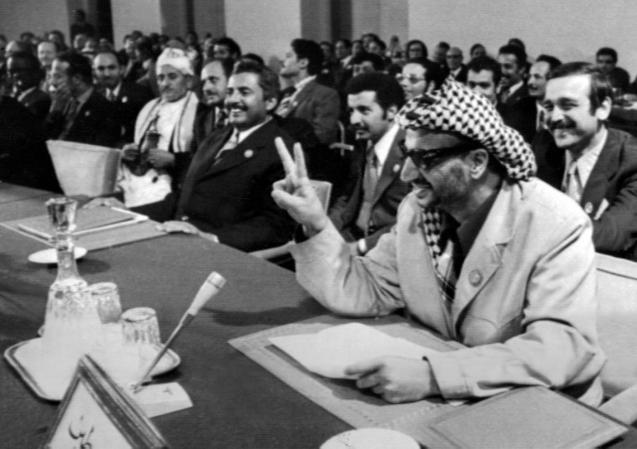
© Middle East Eye

“When an Israeli air attack [‘Operation Wooden Leg’, on October 1, 1985, after the Lebanon invasion forced into exile almost 8,000 fighters], was carried out against the PLO headquarters in Tunis where 104 people were killed, 47 of them Palestinians some bodies waited for a week to be buried.”

“Their families beseeched me to bury them over there in Palestine, but to no avail. I then asked my brother, President Ben Ali, to enable me to bury them here in Tunisia. Did you know this?”

In an intimate paternalistic tone, he continued: “I will tell you a story. Perhaps you did not know it, but one of the official representatives of the United Nations in Kuwait was a Palestinian.”

“When he died, his wife got in touch with me and asked ‘Where are going to bury him?’ Believe me, it took precisely five days to find a place. It was along the Green Line separating East and West Beirut where he was laid.”

Being a master in the art of manipulative – a skill which has enabled him over the years to keep together the various and even the belligerent factions of the PLO – Arafat always twists the situation to suit himself and did not give a clear reply to our questions.

After emphasizing the tragedy of the Palestinians once again, he suddenly switches from a victim to an accuser: “You in the West agreed to the solution of two states and now… [you say] no to the PLO, no to the Palestinian State, no to self-determination for the Palestinian people. Can you imagine our tragedy?”
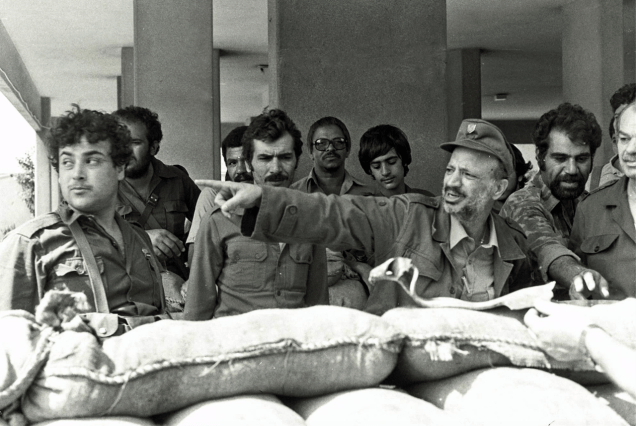
© Courrier Internacional

In a mixture of anger and irony, Arafat declares: “Every people has a right to self-determination, including the 1,400 inhabitants of the Falkland Islands, but we – more than 6 million of us – do not have a right to self-determination. The Baltic States achieved their independence. All three [Estonia, Lithuania and Latvia] have less than 6 million inhabitants.”

The reply to my questions was perhaps the longest part of this meeting with the correspondents, to which Arafat agreed with a certain goodwill, as his companions acknowledged, because the event was an assignment sponsored by the United Nations.

Now that he is back on the stage, having being forced to cross the desert during the Gulf crisis, which he calls “the Third World War”, Arafat can indulge in the luxury of selecting his listeners again.

The non-stop pace of his life, travelling through the world by night and day, reflected in his appearance: the face is older, the body is leaner and, in the course of our conversation, he had even to take a pill to alleviate his pains, probably the result of nervous tension.
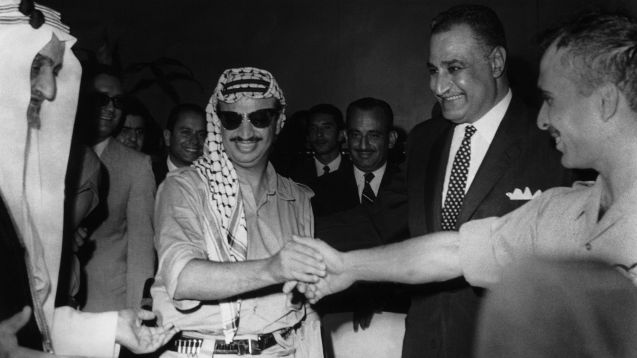
© alaraby.co.uk

He received the journalists on the same day as the Jordanian-Palestinian and Israeli delegations were discussing in Madrid. It was a day of great emotion.

When an editor of the London The Guardian inquired about his reaction to Yitzhak Shamir’s speech, Arafat described the Israeli prime minister [who went Madrid, under pressure from the American secretary of State James Baker – the US threatened to freeze financial aid -, but refused to open a dialogue with the PLO] as prisoner of his own antiquated ideas and clichés. But during the two-hour interview with the journalists, Arafat was also unable to refurbish his statements.

The Palestinian leader also repeated old clichés although he was obviously aware of the dangers that could arise for the Middle East unless peace was achieved.

“Utter confusion. More disorders, with all the fanatical groups backed up by the world”, Arafat said, adding as a warning: “And the West will pay the price!”
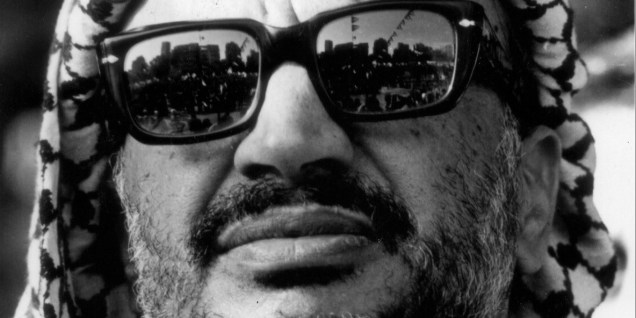
© L’Economiste Maghrébin

This article was originally published in the Portuguese newspaper PÚBLICO, on November 3, 1991, and in a UN special edition called “Peace in the News” 
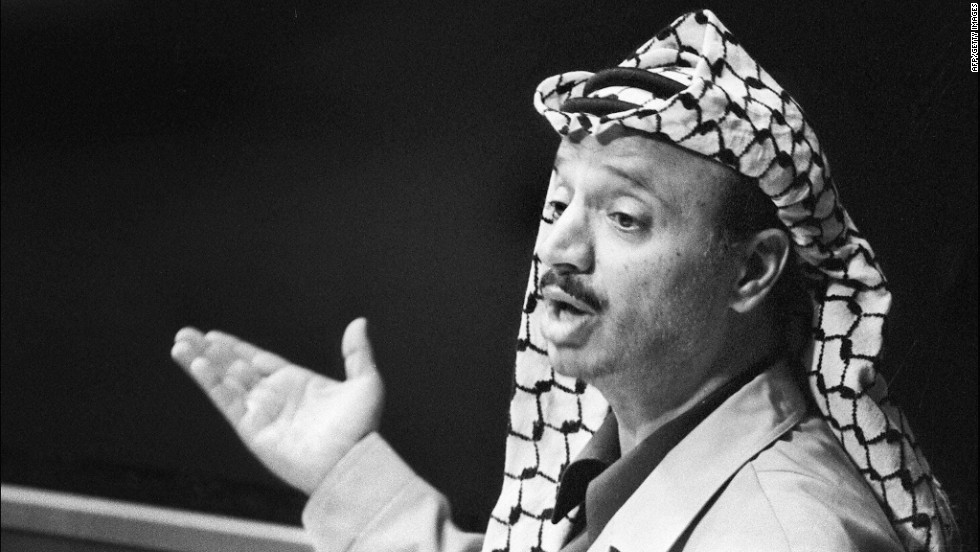
Arafat: “Até as Falklands têm direito à autodeterminação!”

Actor consumado, de autodomínio perfeito e audiências de novo selecionadas, Yasser Arafat recebeu em Tunes um grupo de jornalistas europeus. Acusou Yitzhak Shamir de repetir velhas ideias mas, durante duas horas, demonstrou que o seu próprio discurso não se renovou. (Ler mais | Read more…)

© CNN

O grito de Yasser Arafat ecoou pela exígua sala apinhada de gente quando lhe perguntámos que tipo de Estado independente pede ele para os palestinianos: “Você é contra as resoluções das Nações Unidas?”

Num mundo em constante mudança, com novos conceitos de fronteira e soberania, qual a definição de um Estado palestiniano independente? Como vai o líder da OLP ligar a Cisjordânia e a Faixa de Gaza num futuro Estado?

A estas perguntas, feitas durante um encontro em Tunes com jornalistas europeus patrocinado pelas Nações Unidas, Arafat não hesitou mas também não foi concludente: “De acordo com os mapas da ONU! Não peço a Lua, só que as resoluções das Nações Unidas sejam aplicadas. E segundo as resoluções elaboradas pela ONU há uma ligação entre a Cisjordânia e Gaza”.

E esta ligação passa pelo interior do território de Israel, voltámos a perguntar. “ De acordo com o que foi aceite pelas Nações Unidas”, respondeu secamente.

E apontando com o dedo indicador, com uma expressão enigmática nos olhos, interrogou: “ Você é contra as resoluções das Nações Unidas?”.

Com um extraordinário autodomínio, Arafat dá à conversa o ritmo que lhe pretende imprimir. Ele é um actor, conhece o palco onde está a representar. Só precisa de cativar a audiência.

O seu inglês atraiçoa-o frequentemente e tem de recorrer várias vezes à ajuda dos seus colaboradores para encontrar a melhor palavra com o significado equivalente em árabe.

“O certificado de nascimento de Israel é a Resolução 181 e vocês na Europa, na América, em todo o Mundo, de Estaline a Truman, reconheceram Israel de acordo com a Resolução 181”, lembrou Arafat, frisando com a voz alterada: “Mas o certificado de nascimento de Israel é para dois Estados, não um Estado; o Estado árabe da Palestina e um Estado judaico, posteriormente designado por Israel.

E quais são os resultados?”, pergunta  Arafat, exasperado. “Perdemos a nossa pátria, não temos sequer bilhetes de identidade”.

© Middle East Eye

Então, Arafat cruza os braços sobre a mesa e com o olhar frio, ameaçador, sussurra: “Você não sabe o que significa ser refugiado, sem bilhete de identidade. Nós não temos sequer cemitérios? O palestiniano, do berço até à morte, é um problema.”

“Eu pessoalmente não sei onde serei sepultado. Quando houve o ataque aéreo [israelita, contra o quartel-general da OLP, em Tunes] em que 104 pessoas foram mortas, 47 das quais palestinianos, alguns cadáveres esperaram uma semana para ser enterrados. As suas famílias pediram-me para os sepultar lá [na Palestina] mas não tive êxito. Então pedi ao meu irmão Presidente [da Tunísia, Zine El Abidine] Ben Ali para poder enterrá-los aqui na Tunísia, sabia?”

Num tom paternalista, intimista, prosseguiu: “ Vou contar-lhe uma história. Talvez não saiba, mas um dos representantes oficiais da ONU no Kuwait era um palestiniano. Quando morreu, a sua mulher contactou-me e perguntou-me: ̔Onde vamos sepultá-lo?’. Acredite-me: foram precisos cinco dias até encontrar um lugar. Foi ao longo da Linha Verde que separada Beirute Oriental e Ocidental que ele ficou.”

Mestre na arte de manobrar – uma capacidade que lhe tem permitido ao longo dos anos manter unidas as diferentes e até beligerantes facções da OLP –, Arafat contorna a situação sempre a seu favor e não respondeu claramente à nossa pergunta.

Depois de realçar uma vez mais o drama dos palestinianos, transforma-se repentinamente de vítima em acusador: “Vocês no Ocidente aceitaram a solução de dois Estados e agora… [dizem] não à OLP, não ao Estado palestiniano, não à autodeterminação para o povo palestiniano. Pode imaginar a nossa tragédia?”

Num misto de raiva e ironia, Arafat constata: “Toda a gente tem direito à autodeterminação, incluindo os 1.400 habitantes das Ilhas Falklands, mas nós, mais de seis milhões, não temos direito à autodeterminação. Os Estados bálticos [Estónia, Letónia e Lituânia] alcançaram a sua independência. Os três têm menos de seis milhões de habitantes”.

© STF | AFP | Getty Images

A resposta às minhas perguntas foi, talvez, a mais longa, neste encontro com os jornalistas a que Arafat acedeu com uma certa benevolência, admitiram os seus colaboradores, porque se tratava de uma missão patrocinada pelas Nações Unidas.

Agora que voltou a estar na ribalta, forçado à travessia do deserto durante a guerra no Golfo de 1991  – que ele chama de “terceira guerra mundial” –, Arafat pode dar-se ao luxo de escolher novamente as suas audiências.

[A intervenção militar internacional, liderada pelos EUA, seguiu-se à invasão do Kuwait pelo Iraque – o apoio de Arafat a Saddam Hussein custou-lhe o apoio das petromonarquias árabes e mais um fluxo de refugiados].

Um ritmo incessante de vida, viajando por todo o mundo, de noite e de dia, reflecte-se na sua fisionomia: o rosto está mais envelhecido, o corpo mais magro e, durante a nossa conversa, Arafat teve mesmo de tomar um comprimido para aliviar dores, provavelmente provocadas por tensão nervosa.

Afinal, recebeu os jornalistas no mesmo dia em que as delegações palestiniana e israelita discursaram em Madrid. Foi uma jornada plena de emoções.

Inquirido por um editor do diário The Guardian, de Londres, sobre a sua reacção ao discurso de Yitzhak Shamir [então primeiro-ministro], Arafat acusou-o de estar preso às mesmas velhas ideias e slogans. Mas durante as quase duas horas que durou o encontro com os jornalistas, o próprio Arafat foi incapaz de renovar o seu discurso.

Também ele reafirmou velhas palavras de ordem, embora se tenha revelado consciente dos perigos que poderão advir para o Médio Oriente se a paz não se concretizar.

“Uma completa confusão. Novos sarilhos, com todos os grupos fanáticos espalhados pelo mundo”, advertiu: “E o Ocidente pagará o preço!”

© newscastimages.com

Este artigo, agora revisto e actualizado, foi publicado originalmente no jornal PÚBLICO em 3 Novembro de 1991 | This article, now revised and updated, was originally published in the Portuguese newspaper PÚBLICO, on November 3, 1991

Farouk Kaddoumi: “Mr. Bush is a good boy”

The man in charge of the PLO diplomacy appears to be a somewhat pragmatic politician who even goes so far as to eulogize the President of the United States, a country that he used to consider an enemy. Kaddoumi says that he is prepared to set ideologies aside and to promote the commitments necessary for the world peace. (Read more…)

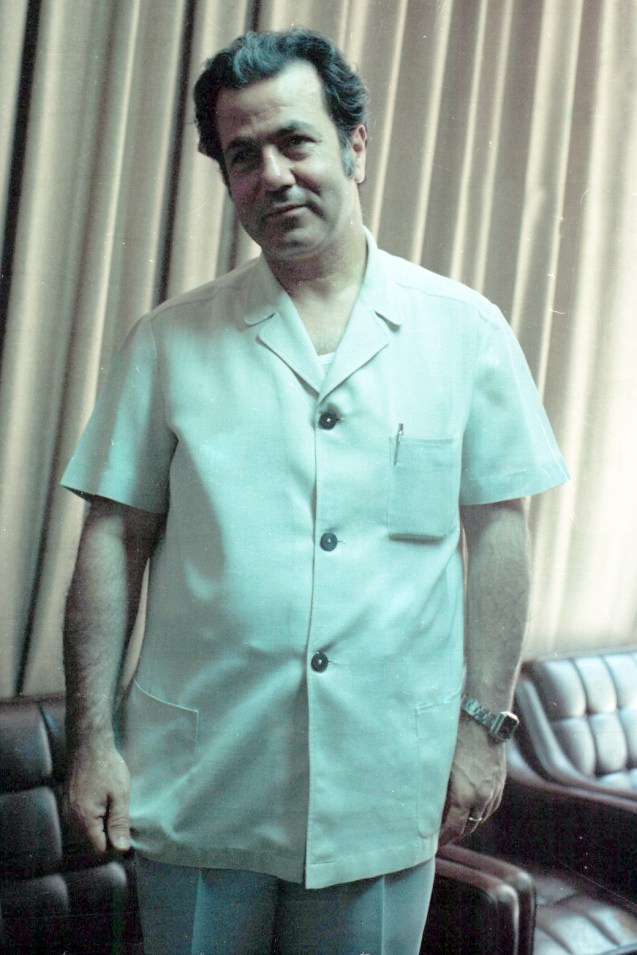
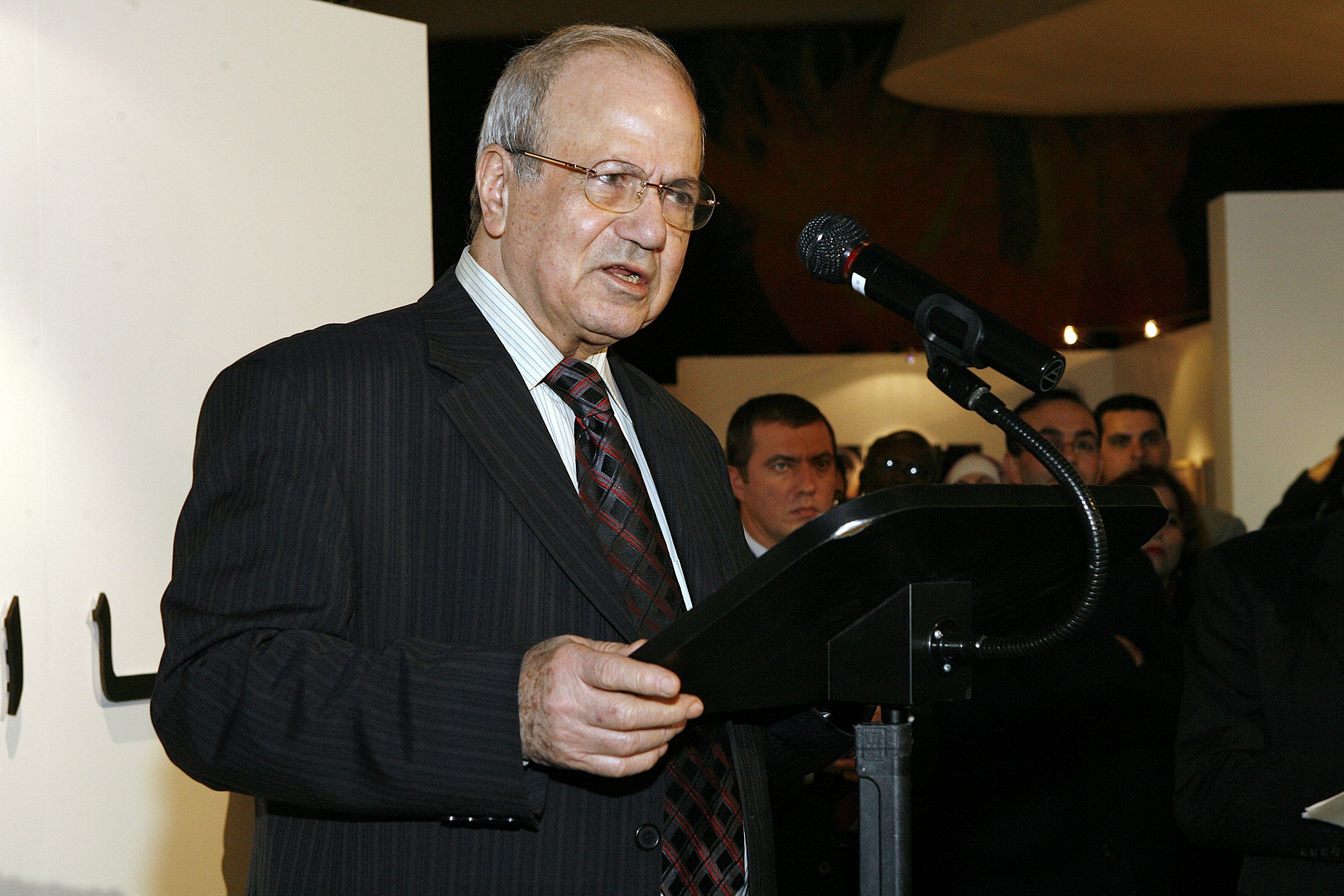
Farouk Kaddoumi, also known as Abu al-Lutf, was a powerful figure in the PLO, an apparatchik more than a feday (combatant), with direct access to Yasser Arafat

Farouk Kaddoumi, Foreign Affairs Minister of the Palestine Liberation Organization (PLO), does not worry about the insults which Israel and Syria exchanged at the Madrid Conference [October 30, 1991]. On the contrary, he seemed convinced that the two parties would finally come to an agreement.

“They look like two fighters”. Said the PLO’s number two man, who is allegedly connected with the hardliners of the organization. “When they reach the point of exhaustion they will come to a draw after the struggle.”

These humorous comments, plus some more serious statements and a few stories, took up about 90 minutes of a meeting held in Tunis with a group of European journalists (where I was included) sponsored by the United Nations.

Kaddoumi received his guests in a middle-class neighborhood of the Tunisian capital, in one of the several houses used by the Palestinian leadership, which has its headquarters here.

The room’s atmosphere was thick with cigar smoke; everywhere we could see maps of Palestine and photographs of Yasser Arafat, late Egyptian President Gamal Abdel Nasser, considered the pan-Arabism “father”, and other friends.

Bodyguards, openly displaying their machine-guns, were diligently keeping an eye, some superficially and others meticulously, on the whole building both inside and outside.

Inside there was a sense of danger – this man has many enemies –but when he started to speak the tension relaxed.

Kaddoumi has been a friend of Arafat’s more than 30 years. They were colleagues at Cairo University and founding members of Al Fatah, the main PLO faction, in Kuwait. The huge differences in personality between them finally faded out because they were complementary.

Former American President George H. W. Bush addressing the Madrid Conference, hosted by the Spanish Government and sponsored by the United States and the former Soviet Union, on the inauguration day (October 30, 1991)

Kaddoumi’s passivity stands in contrast with Arafat’s constant restlessness. Kaddoumi’s monotonous voice is the opposite of the passionate tone that Arafat applies to his words; one shows simplicity and the other charisma; one resembles a grocer and the other an obvious warrior; one is an addicted cigar-smoker.

Kaddoumi is a reality and Arafat is a myth. But each of them in his own way knows how to captivate his listeners, because basically they are experts.

“I am not a pessimist, but neither am I an optimist as regards the peace process”, Kaddoumi said. “The difference between Syrians and Palestinians is that we are used to negotiate with the Israelis, inside and outside the occupied territories, and not with the Arabs.”

The man who placed all his hopes in Arab nationalism, who believed in the victory of Saddam Hussein up to the end and who did not conceal his satisfaction when the coup d’etat gang in Moscow tried to overthrow Gorbachev admitted that ideologies do not lead to practical results. “We are starting to cross to the other sides”, he remarked.

“Three cheers for Mr. Bush – he is a good boy”. This eulogy for President George H. W. Bush, coming from a man who has always shown his hostility towards the United States, may be explained by the phobia that Kaddoumi confessed he felt towards the British.

“I was born before the State of Israel, 61 years ago [in 1991], in Jaffa, Palestine, and I was shocked by the way which the Mandate authorities treated us at that time. The British bear the main responsibility for the catastrophe [in the Middle East].”

A Italian journalist asked Kaddoumi to comment on Saddam Hussein’s being compared with a serpent. He smiled sarcastically, took a deep puff from his cigar and said: “Christ once told us that we must be as wise as the serpents. Has Saddam read the Bible? I don’t think so.”

Kaddoumi believs that, with the USSR collapse and the end of the Cold War, Israel lost [its status as] a strategic asset for the United States in the region. “The Israelis have no alternative but to settle with the Palestinians. If they are unwise, they will be the main losers.”

Always refusing to show his cards, the PLO’s diplomacy chief did not indicate what type of territorial compromises the Palestinians would be prepared to accept with Israel.

In addition, he postponed for a later stage a solution for the thousands of Jewish settlers living in the West Bank and in Gaza Strip, the territories claimed for a Palestinian state.

Farouk Kaddoumi was considered a representative of the PLO “hardliners”. His ideology had to be “adjusted” to “pragmatism” when the Soviet Union collapsed, inaugurating a new world order

Arafat’s “right arm” is convinced that most Israelis are in favor of the “land for peace” principle, and appeared confident about a good relationship with a new generation of politicians of the Likud block in power.

More than once Kaddoumi could not avoid telling a story: ‘A few years ago, when I was in the United Nations, I approached [Israeli Prime Minister Yitzhak] Shamir and I asked him: ‘Why do you not speak to me?’ Shamir looked at me dumbfounded until someone explained: ‘It is Kaddoumi, the terrorist’, and he then ran off.”

Israel does not recognize the PLO or its parliament in exile; it adopted a law forbidding all contacts with members of the Palestinian organization.

As a realist, the PLO’s number two believes that the Palestinians do not have to do what the Angolans and Mozambicans did with the Portuguese. “I advised them: ‘Don’t send the white man away. Learn from him and, after an interim period for more or less five years, you take over the control. In Zimbabwe they were experts.”

In what concerns Israel’s accusations that, during the Intifada, there were more Palestinians killed by Palestinians than by the army, he blamed the occupier’s actions and the an atmosphere of suspicion generated by the occupation. “To a court of law, who is the criminal: who has instigated the crimes or committed the crime?”

The slump in living conditions, mainly in the Gaza Strip, was also pointed out by Kaddoumi as one of the main factors contributing to “Islamic extremist movements”, such as Hamas.

Kaddoumi is confident about the relations with other Arabs. Saudi Arabia already resumed financial aid to PLO. “Under the table”, he quipped.

“In Damascus, I met the Saudi Minister of Foreign Affairs and everything was arranged. Arabs know that they can count on us, because we are all Arabs. If I were an Iraqi, he would not have received me.”

Kaddoumi is now the Secretary-general of Fatah's central committee and PLO's political department in Tunisia. @All Rights Reserved

Unlike Arafat, Farouk Kaddoumi did not end his exile. He din’t follow the leader who entered Palestine (Gaza first, and afterwards Ramallah, in the West Bank), in 1984

This article, now revised and updated, was originally published in the Portuguese newspaper PÚBLICO (November 3, 1991) and in a UN special edition called “Peace in the News”
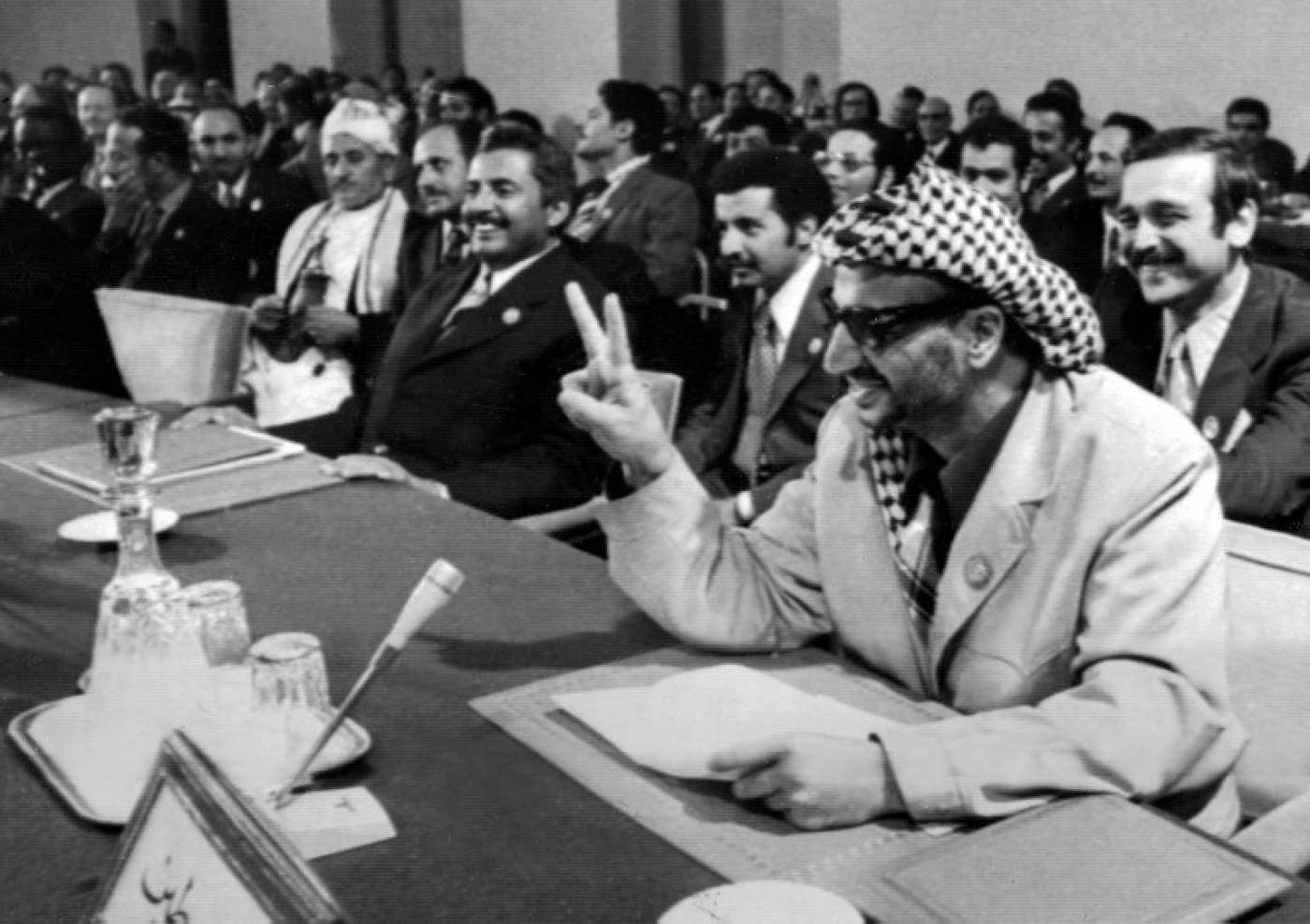
Arafat: “Shamir is ‘Mr. No’ – not the Prime Minister of Israel”

The Prime Minister of Israel (1915-2012) forced the PLO out of the Madrid Peace Conference and only accepted the presence of a Jordanian-Palestinian delegation. Abu Ammar does not forgive him. (Read more..)

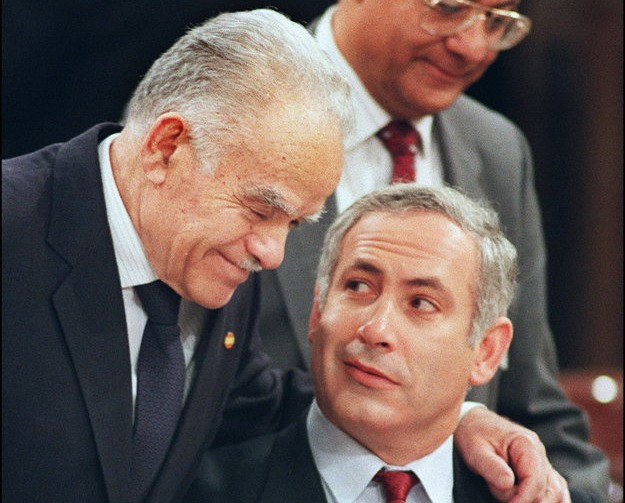
Then-Israeli Prime Minister Yitzhak Shamir (left) confers with his Deputy Foreign Minister and spokesperson Benjamin Netanyahu at the Madrid peace conference in October 1991
© Associated Press | huffpost.com

“Mr. No is out of place, both in space and in time, as are his antiquated slogans and out-of-date dreams”. These were the carefully weighed and strongly pronounced words which Yasser Arafat, the PLO leader, used in response to the speech of the Israeli prime Minister, Yitzhak Shamir, at the Peace Conference in Madrid.

“Shamir continues to be obstinate stressing the he is not accepting the new situation following the third world war [a reference to the 1991 Gulf war], said Arafat at a meeting in Tunis, sponsored by the United Nations with a group of journalists (I was one of them) from several European newspapers.

“He [Shamir] continues to use the old language; he continues to speak of a Greater Israel”, complained Arafat, without hiding the deep-rooted antagonism that exists between the two leaders.

Arafat also availed himself of the opportunity to repeat the accusation that the Herut Party’s ideology., one of the members of the Likud bloc and of the Israeli governmental coalition, “is to annex not only the West Bank but also the East Bank of the Jordan River, from Jordan to the Euphrates.”

Donning his military uniform and the traditional kaffiyeh to cover his baldness, and with a hand partly covered in an elastic bandage, Arafat showed himself to be a real actor.

He raised or lowered his voice to heighten the effect of his words, crossing his arms on the table, sticking out his finger like a prosecuting attorney, or pinning his eyes on his adversary, as if appealing for understanding.

His timbre gained further impetus when he mentioned Jerusalem and denied that the Jews and Israel had an exclusive right to that city.

Israeli Premier Yitzhak Shamir during a session of the Middle East peace conference, which started 30 October 1991 in Madrid
© Patrick Baz | AFP | Getty Images

The name “Jerusalem” derives from the term “Olsalim”, meaning the city of Salim, one of the kings of Canaan who built it, Arafat explained.

In order to make sure that his words were not misinterpreted, Arafat referred several times to his advisers who filled the room, where one of the walls was completely covered by a photograph of the Dome of the Rock, in Jerusalem.

“Shamir repeated antiquated and blatant lies and the old cliché about peace in exchange for peace”, Arafat remarked.

“Why did the Israelis come to Madrid, if the first item on President [George H. W.] Bush’s agenda, which we appreciate, was ‘land for peace’? I regret to say it, but Mr. Shamir is Mr. No, not the Prime Minister of Israel.”

What angered Arafat most were the conditions that Israel imposed on the Palestinian delegation to the Conference, forcing a joint one with Jordan, and excluding the PLO.

Only Palestinians from the occupied territories, as Faisal Husseini, Hanan Ashrawi and Haidar Abdel-Shafi, were allowed to participate, even if Israel and the US were aware that they were in permanent contact with their exiled leader in Tunis.

“Schwarzkopf did not select the Iraqis with whom to speak after the war… In the Cambodian peace process, no one dictate the names of the delegations. The exception is Shamir as regards to the Palestinians.”

For about two hours of conversation, Arafat showed himself several times to be conciliatory vis-à-vis the United States, having adopted an unusually severe tone towards Europe.

“I regret to tell you this, but you Europeans have pampered and spoilt your naughty boy, Israel”.

The unchangeable figure of  “Mr. Palestine”

© Sugimoto Hiroshi

Yasser Arafat’s character – like his speeches – never changes. The PLO leader received his guests in a military uniform, with a gun in his holster and a kaffiyeh covering his baldness.

Although his right hand was bound in an elastic bandage, he firmly shook the hands of the successive journalists who greeted him as if he were a head of State.

“A pleasure to meet you, Mr. President!” This is how he likes  – and expects – to be treated, except if among friends. For the latter he is only Abu Ammar, his nom de guerre.

Like a ruthless child, he is constantly reaching down to hid hip – on alert; his expression changes quickly from anger to a beaming smile, and his gaze is piercing and penetrating.

He revels in being treated like a “star” and willingly poses to be photographed alongside journalists who seek the “privilege” of being next to “Mr. Palestine”, as Playboy magazine called him.

The security surrounding him was indescribable. The meeting scheduled for 7 p.m. on Wednesday [October 30, 1991]. It was postponed for the same night at a time to be determined.

An unexpected trip by Arafat to Morocco changed the rendezvous to the following day. At 7:30 p.m. everyone was in his place, but confirmation was not given until 9 p.m.

Two of Arafat’s messengers in a Mercedes led the bus to a residential zone two minutes away from the hotel. Traffic in the street was interrupted.

At the door of a modest house with a fence covered in a green plastic screen, dozens of men in plain clothes stood on guard, some of them showing machine-guns and others unsuccessfully hiding their weapons below their jackets.

Limousines surrounded the whole area around the house. In spite of the smoked-glass windows, it was possible to see that security officers were presumably occupying them. Several bodyguards searched the clothes and bags before allowing access to Arafat’s quarters.

There was a white house, in an indeterminate Arab style, a hastily built annex, a carved marble pillar in the doorway and windows with green wooden shades on the first floor. Several Merced were parked in the garage.

The inside was in complete disarray, which showed that it had not been well kept. The entire wall was covered with photographs of Arafat.

The Palestinian flag was everywhere. Behind Arafat’s desk there was a photograph of the Islamic sanctuary Dome of the Rock in Jerusalem.

The PLO leader in Lebanon, before being expelled to Tunis. Until the Oslo Accords, signed in 1993, Israel considered Yasser Arafat a master terrorist, its public enemy number 1. In 1994, he became president of the Palestinian National Authority but after the Second Intifada, in 2000, he was again demonised and kept like a prisoner in Ramallah. @All Rihgts Reserved

Yasser Arafat in Lebanon, before being expelled to Tunis, “the exile of the exile”, as Palestinian poet Mahmoud Darwish said

These two articles, now revised and updated, were originally published in the Portuguese newspaper PÚBLICO (November 1, 1991) and in a UN special edition called “Peace in the News”

“Shamir continua a ser o ‘Sr. ̔ Não’”

O primeiro-ministro de Israel excluiu a OLP da Conferência de Madrid e impôs uma delegação jordano-palesiniana como condição para estar presente no seu primeiro frente-a-frente com líderes árabes – sob pressão dos EUA. Arafat não gostou, mesmo que seja ele a ditar as regras aos que foram representar o seu povo. (Ler mais | Read more…)

Yitzhak Shamir e o presidente dos EUA, George H.W. Bush, que forçou a sua presença na Conferência de Madrid, em 1991
© The Tower

As palavras foram cuidadosamente ponderadas e pronunciadas. “O Sr. Não [Mr. NO] está deslocado no espaço e no tempo, com os seus antigos ̔ slogans̕ e velhos sonhos”, disse, com toda a ênfase. Yasser Arafat, o líder da OLP, reagindo ao discurso do primeiro-ministro israelita, Yitzhak Shamir [1915-2012], na Conferência de Madrid [em 1991]. 

Shamir “continua a ser obstinado […], insistindo em não aceitar a nova situação, após o fim da terceira guerra mundial” (referência à guerra do Golfo), disse Arafat num encontro em Tunes com um grupo de jornalistas de vários diários europeus (eu incluída), numa iniciativa das Nações Unidas.

“Ele [Shamir] continua a falar a velha linguagem, continua a falar de uma grande Israel”, queixou-se Arafat, sem esconder o profundo antagonismo entre os dois líderes.

Aproveitou também a ocasião para repetir a denúncia de que a ideologia do partido Herut, um dos membros do bloco Likud e da coligação governamental israelita, “é anexar não só a margem Ocidental, mas a margem Oriental do rio Jordão, da Jordânia ao [rio] Eufrates”.

Envergando um uniforme militar, com o tradicional kaffiyeh, tapando a sua calvície e com uma mão parcialmente enrolada numa ligadura elástica, Arafat revelou-se um verdadeiro actor, elevando ou baixando a voz para dar mais realce às suas palavras, cruzando os braços sobre a mesa, mexendo-se irrequietamente na cadeira, apontando com o indicador como um advogado de acusação.

Também fixava o interlocutor profundamente nos olhos, como que pedindo compreensão. O timbre da sua voz ganhou um novo ímpeto quando se referiu a Jerusalém, negando aos judeus e a Israel o direito exclusivo à cidade.

O irredutível primeiro-ministro Yitzhak Shamir, na inauguração da Conferência de Madrid, em 1991, com Benjamin Netanyahu, que era, na altura, o seu porta-voz
© AFP | Getty Images | Foreign Policy

Jerusalém deriva da expressão Olsalim, que significa a cidade de Salim, um dos reis de Canaan, que a construiu, explicou Arafat. Para que as suas palavras não fossem mal interpretadas, Arafat recorreu várias vezes aos seus conselheiros, que enchiam a sala, onde uma das paredes estava totalmente coberta com uma fotografia da Cúpula do Rochedo, em Jerusalém.

“Shamir repetiu antigas e grandes mentiras e o velho e tonto slogan da ‘paz em troca da paz’”, observou Arafat. “Por que é que eles (israelitas) foram a Madrid se o primeiro item da iniciativa do Presidente [George H. W.] Bush, que nós apreciámos, foi ̔ território em troca da paz̕ ? […] Lamento dizer, mas ele [Shamir] é o sr. ̔ Não ̕ , não é o primeiro-ministro de Israel.”

O que mais indignou Arafat foram as condições que Israel impôs à representação palestiniana à conferência. “[Norman] Shwarzkopf não escolheu os iraquianos com quem falou depois da guerra (…). No processo de paz do Camboja, ninguém ditou os nomes das delegações. A excepção é Shamir em relação aos palestinianos.”

Durante quase duas horas de conversa, Arafat mostrou-se algumas vezes conciliatório em relação aos EUA, tendo adoptado um tom invulgarmente duro em relação à Europa. “Lamento dizer-vos mas vocês, europeus, mimaram e estragaram o vosso naughty baby̕ Israel.

A imutável imagem de Mr. Palestine

© Ynetnews

Se o seu discurso se mantém praticamente imutável, a imagem de Arafat também não se alterou. O líder da OLP recebeu os convidados em uniforme militar, de pistola no coldre e o kaffiyeh a cobrir a cabeça calva. Apesar de ter a mão direita enrolada numa ligadura elástica, cumprimentou com firmeza todos os jornalistas que, em fila, o saudavam como a um chefe de Estado.

“Muito prazer, senhor Presidente”. É assim que ele gosta e exige ser tratado, excepto entre os amigos. Para esses é apenas Abu Ammar, o nome de guerra.

Como uma criança irrequieta, mexe-se constantemente na cadeira, vigilante; a sua face passa facilmente de uma expressão de raiva para um sorriso amplo, com os olhos salientes e penetrantes.

Adora ser tratado como uma “estrela” e prontificou-se para tirar fotografias ao lado dos jornalistas que quisessem ter o “privilégio” de posar ao lado do “Mr. Palestine” (Sr. Palestina), como a revista Playboy em tempos o intitulou.

A segurança que o rodeia é indescritível. O encontro estava marcado para o dia 30 [de Outubro de 1991]  às 19h00. Depois foi adiado para a mesma noite a uma hora a determinar. Uma inesperada viagem de Arafat a Marrocos transferiu o rendez-vous para o dia seguinte. Às 19h30 todos estavam a postos, mas só às 21h00 chegou a confirmação.

Dois enviados de Arafat num Mercedes conduziram o autocarro a uma zona residencial a dois minutos de distância do hotel. O trânsito estava cortado na rua.

À porta de uma modesta vivenda com um gradeamento coberto por um taipal plástico verde, aguardavam dezenas de homens à paisana, uns exibindo metralhadoras, outros disfarçando mal as suas armas debaixo dos casacos.

Todo o perímetro da casa estava rodeado de carros de luxo. Apesar dos vidros fumados era possível ver que estavam ocupados, presumivelmente por agentes de segurança. Vários guarda-costas revistaram as roupas e sacos antes de permitirem o acesso aos aposentos de Arafat.

Era uma casa branca, com um estilo árabe pouco definido, um anexo construído à pressa, uma coluna de cantaria trabalhada no portal e janelas com estores de madeira verde no primeiro andar. Na garagem, vários Mercedes estavam estacionados.

A decoração interior era totalmente descuidada, revelando falta de conservação. Por todo o lado se viam fotos de Arafat. A bandeira da Palestina estava omnipresente. E por detrás da secretária de Arafat uma fotografia da Cúpula do Rochedo, em Jerusalém. 

© AFP | Getty Images | Foreign Policy

Estes dois artigos, agora revistos e actualizados, foram publicados originalmente no jornal PÚBLICO em 1 e 3 de Novembro 1991 | These two articles, now revised and updated, were originally published in the newspaper PÚBLICO on November 1 and 3, 1991